
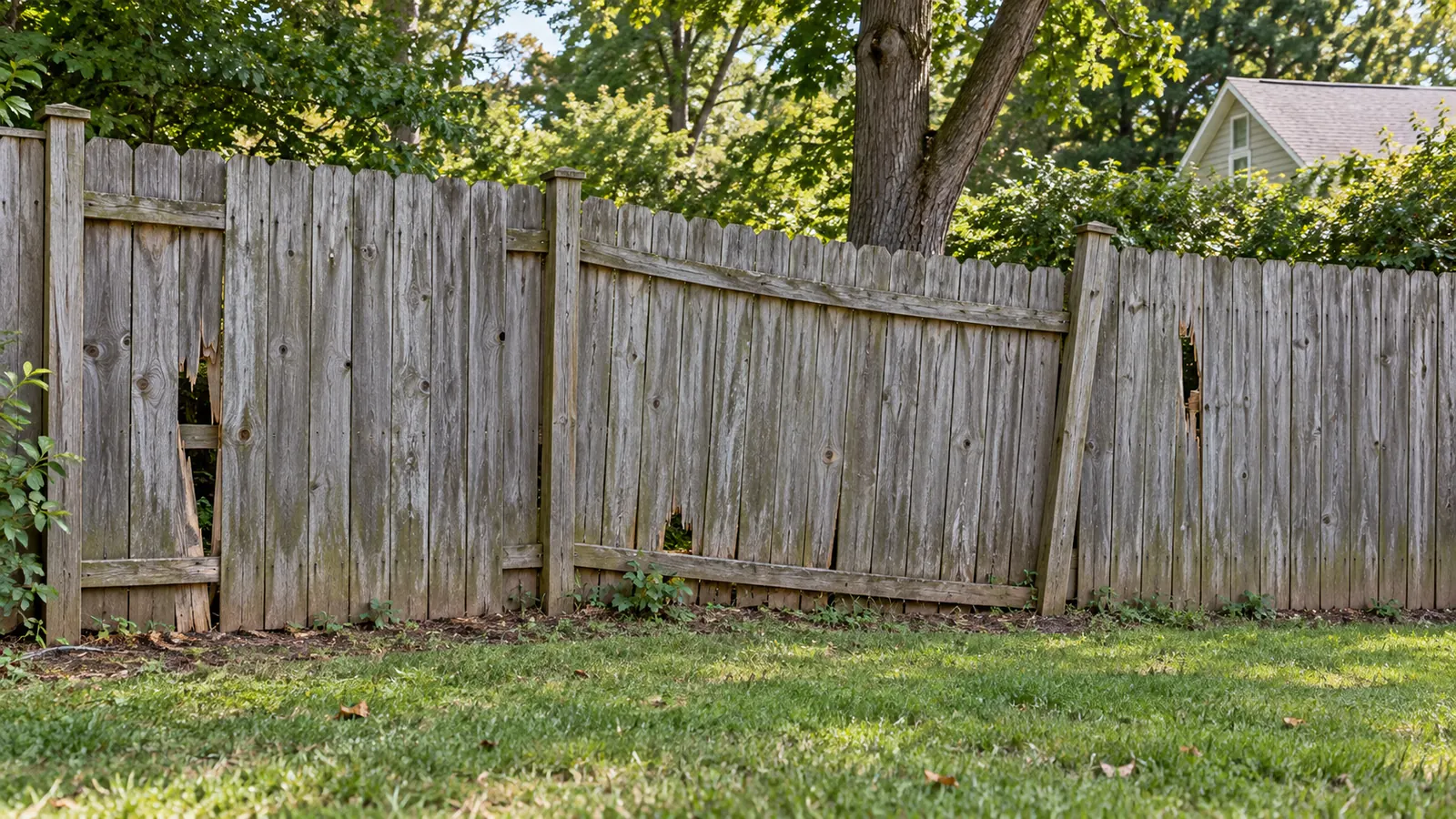
Replacing Worn-Out Fences in Glen Burnie and North County
A lot of fences around Glen Burnie went up decades ago, and plenty of them are rusted chain link or wood that has been patched too many times. Our Glen Burnie crew takes out the old fence, hauls it away, and builds a new one sized for your lot, your side yard, and the way you actually use the backyard.
- Glen Burnie based
- Serving a 20-mile radius
- Wood · Vinyl · Aluminum · Chain link
When an Old Glen Burnie Fence Has Simply Worn Out
Glen Burnie grew fast after World War II, and many of the Cape Cods and ranchers built then got a chain link fence around the back lot. On an old chain link run we usually find the zinc coating worn off the top rail, rust eating the posts right where they enter the concrete, and fabric that has stretched loose so the bottom edge curls up.
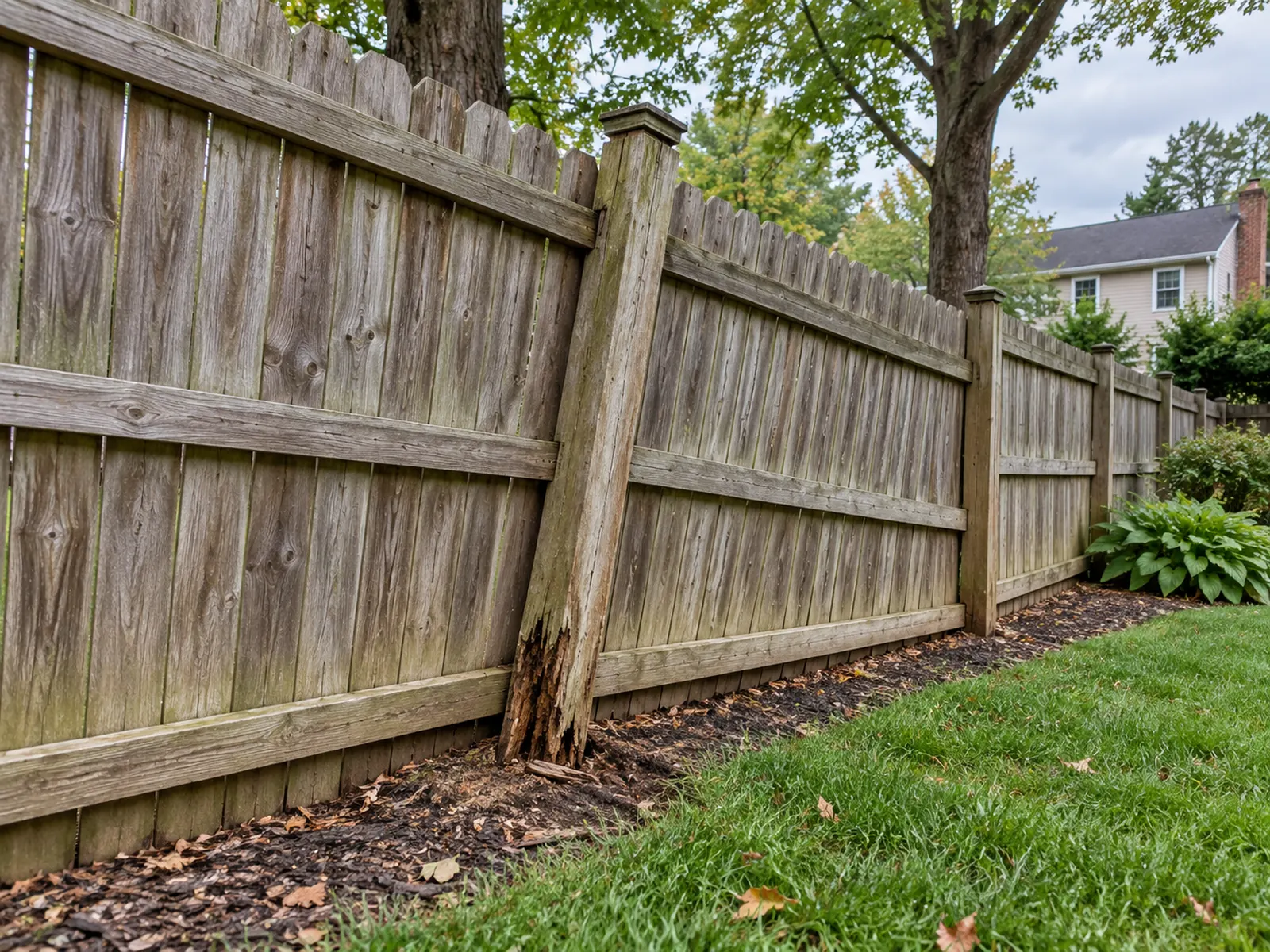
Wood fences from later decades have their own end point. Boards go silver, split along the grain, and soften at the bottom where grass clippings and leaves hold moisture against them. Posts rot at grade and the whole run leans toward the yard that drains downhill.
Fence repair is what we do most, so we always look for a fix first. We probe each post at the ground, pull on the rails, and check whether boards still hold a screw. When most of the run fails those checks, a repair would mean rebuilding it piece by piece, and a full replacement makes more sense.
Trading Chain Link for Privacy: What Has to Change
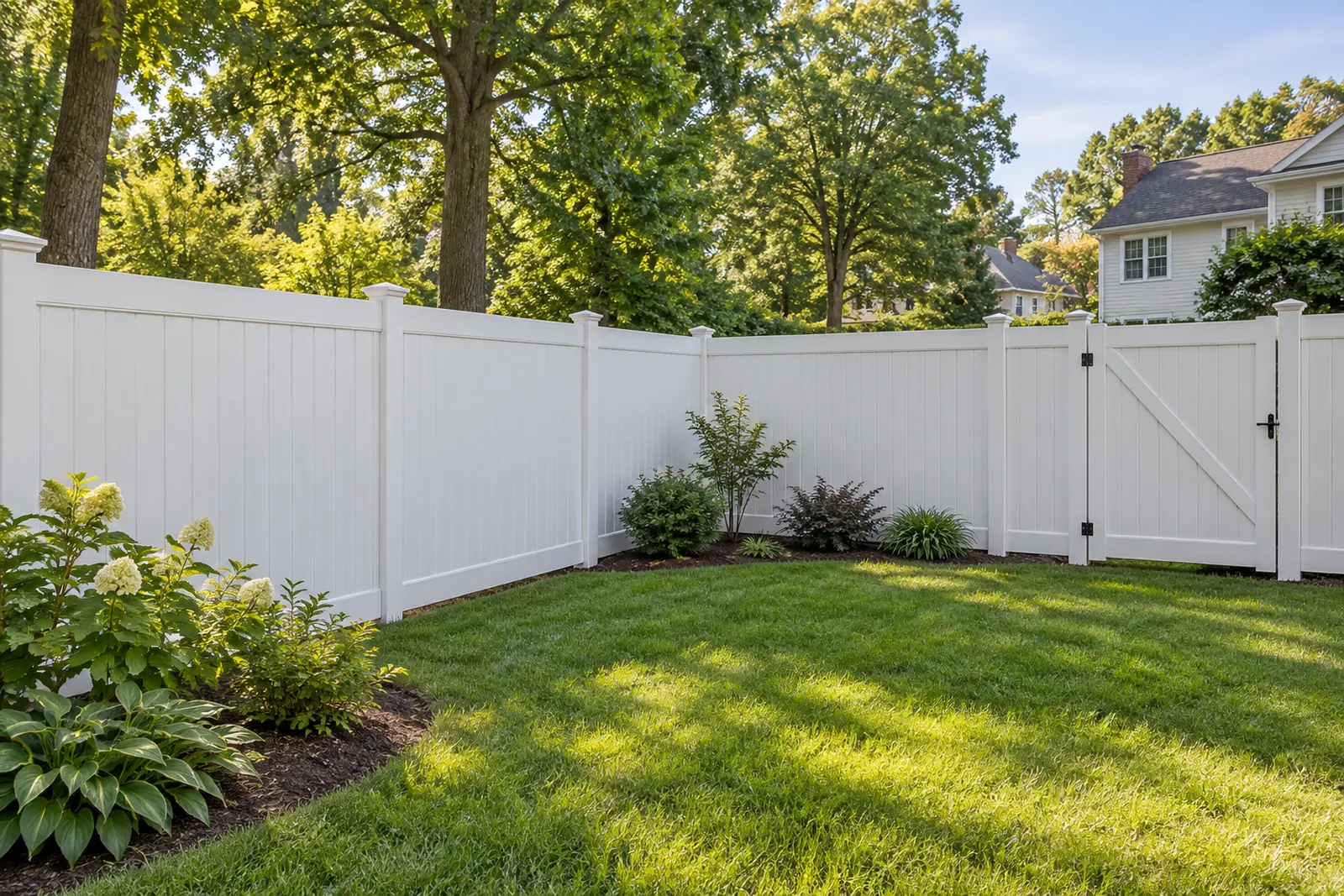
The most common replacement we do in north county is a chain link fence coming out and a wood or white vinyl privacy fence going in. Homeowners want screening from the street, from the neighbors, or from a busy road like Ritchie Highway or Crain Highway behind the lot.
Chain link lets wind pass straight through. A six-foot privacy fence is a solid wall, and in a strong gust it acts like a sail. That load goes into the posts. The thin steel line posts that held chain link were never meant to carry it, so we do not hang boards or panels on them. They come out with their footings.
The new posts are heavier wood or vinyl-sleeved posts set deeper, on a gravel base, with concrete crowned so rain runs off instead of pooling at the post. Gates usually get rebuilt from scratch because a privacy gate weighs several times what a chain link walk gate does, and the hinge post has to carry that weight without leaning.
Not sure if it needs a repair or a replacement? We’ll look at it and tell you straight.
Call (443) 292-6998Narrow Side Yards and Tight Lots
Many Glen Burnie, Brooklyn Park, and Ferndale lots have a side yard barely wider than a lawn mower, with the house on one side and the neighbor's fence or driveway on the other. That squeeze shapes how a replacement gets done.
There is often no room for a powered auger or a wheelbarrow full of concrete to turn around. In those spots we break out old footings with a bar and hand tools, dig new holes with clamshell diggers, and carry materials in by hand.
Side yards also hold the things nobody wants hit: the gas meter, the air conditioner condenser, a dryer vent, a downspout, a basement window well. We note each one on the walk-through and lay out posts around them, keeping enough clearance that a utility worker can still reach the meter. If the side yard fence is the only way into the back, we plan the gate first, and we size it for the widest thing you need to roll through, usually a mower or the trash cans.
Rear Yards on an Alley
Closer to the city line and into Baltimore, a lot of homes back onto an alley. Rowhouses in Baltimore often have a short rear yard, a fence along the alley, and a gate where the trash cans go out.
Alley access actually helps on a replacement. We can stage material close to the work. The tricky part is concrete. When posts sit in a slab, we cut or core through it to set new posts properly in the ground below, rather than bolting into the surface where a bumped post would snap the anchors.
Fences between attached homes are often shared, so we talk through who owns which run before anything comes down. Baltimore City and Baltimore County have their own permit offices, and we confirm permit, HOA, and rowhome or shared-fence requirements for the address before work starts. More on city work is on the page from The Fence Repair Guys of Glen Burnie.
Keep the Good Runs, Replace the Failed Ones
Not every fence fails evenly. The back run under a row of old maples stays wet and rots out, while the side runs in full sun hold up for years longer. The section along a low corner where water collects goes first.
Because repair is our specialty, we treat a fence as a set of runs, not one object. We replace the sections that have truly failed and keep the ones that test solid. Where new meets old, we set a new post at the transition so the old run is not hanging off a tired post, and we match board height, rail layout, and the top line so the change in material is the only thing that shows.
This approach also lets you spread out the work. If you are not sure which parts of your fence can be saved, start with an inspection from The Fence Repair Guys of Glen Burnie, and we will mark which posts and runs pass and which do not.
Keeping Dogs and Kids In While the Fence Is Down
The question we hear most before a replacement is not about wood or vinyl. It is about the dog.
We sequence the job around that. We take down only the runs we can rebuild before the crew leaves for the day, and where an opening has to stay open overnight, we stretch a temporary barrier across it. New posts set in concrete need time to cure before panels or rails go on, so we plan the post day and the panel day with that in mind and tell you which nights the yard will be secure.
Before any digging, Miss Utility marks the public lines. Private lines are on you to point out: an invisible dog fence wire, lighting, a shed feed, or irrigation. Invisible fence wire runs along the old fence line more often than not, and we work around it. If you want to see what the material options look like new, the installation page from The Fence Repair Guys of Glen Burnie walks through them.
The rest of what we do
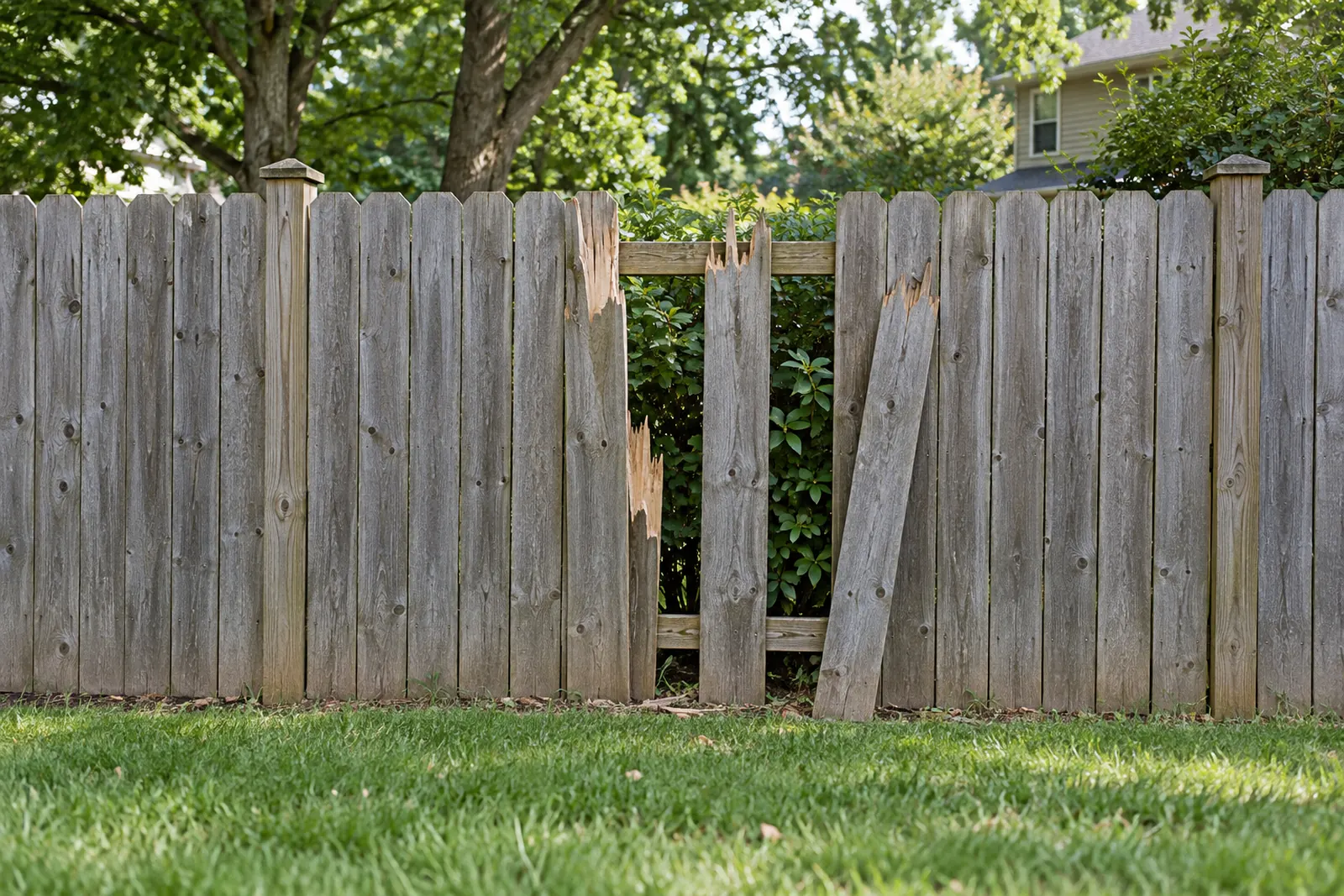
Fence Repair
Posts gone soft at grade, chain link pulled loose from its rail, split pickets and leaning runs. Repair is the job we lead with, on any material.
Fence Repair details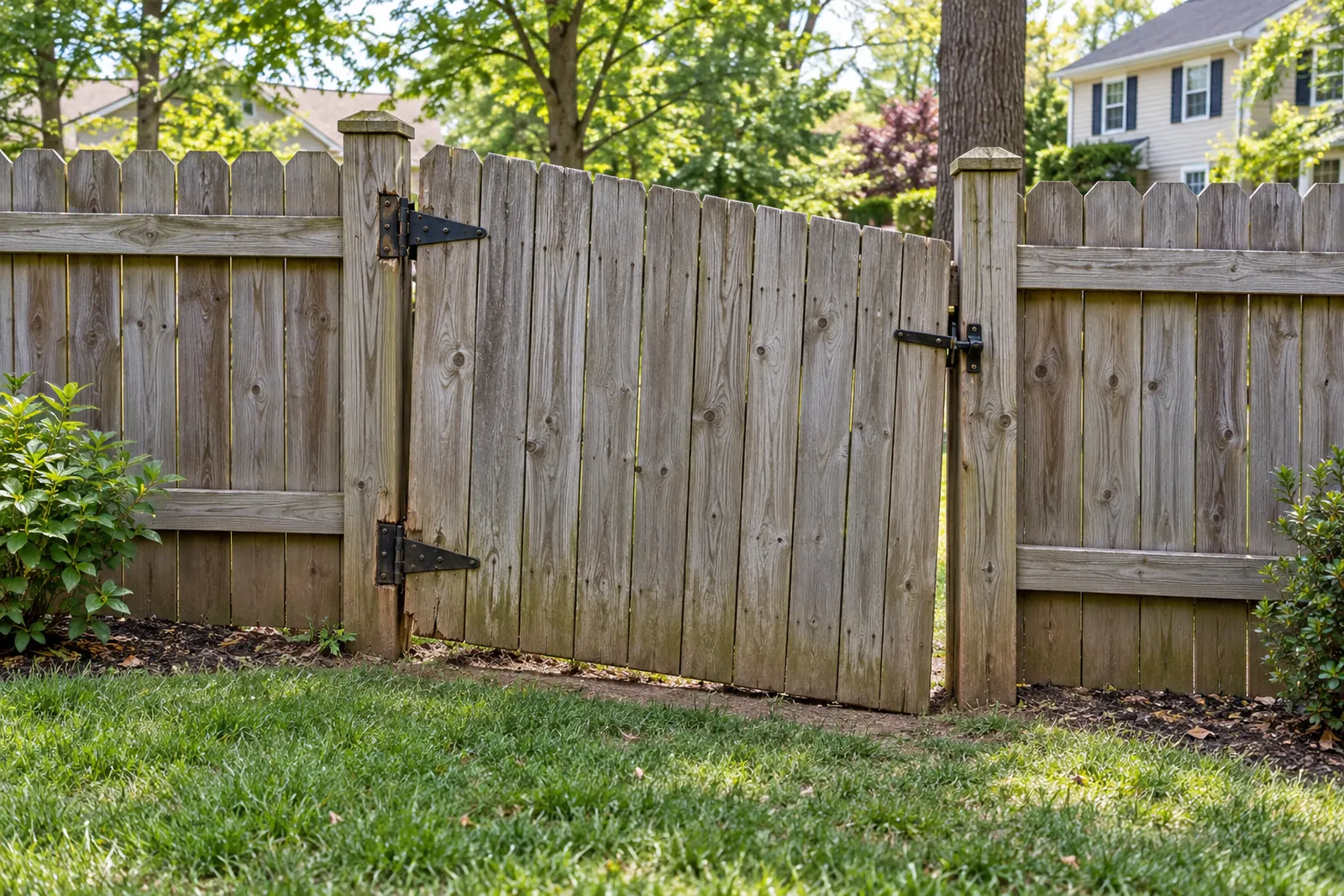
Gate Repair
Alley gates, walk gates and drive gates that sag, scrape or refuse to latch get squared, braced and hung on hardware sized for them.
Gate Repair details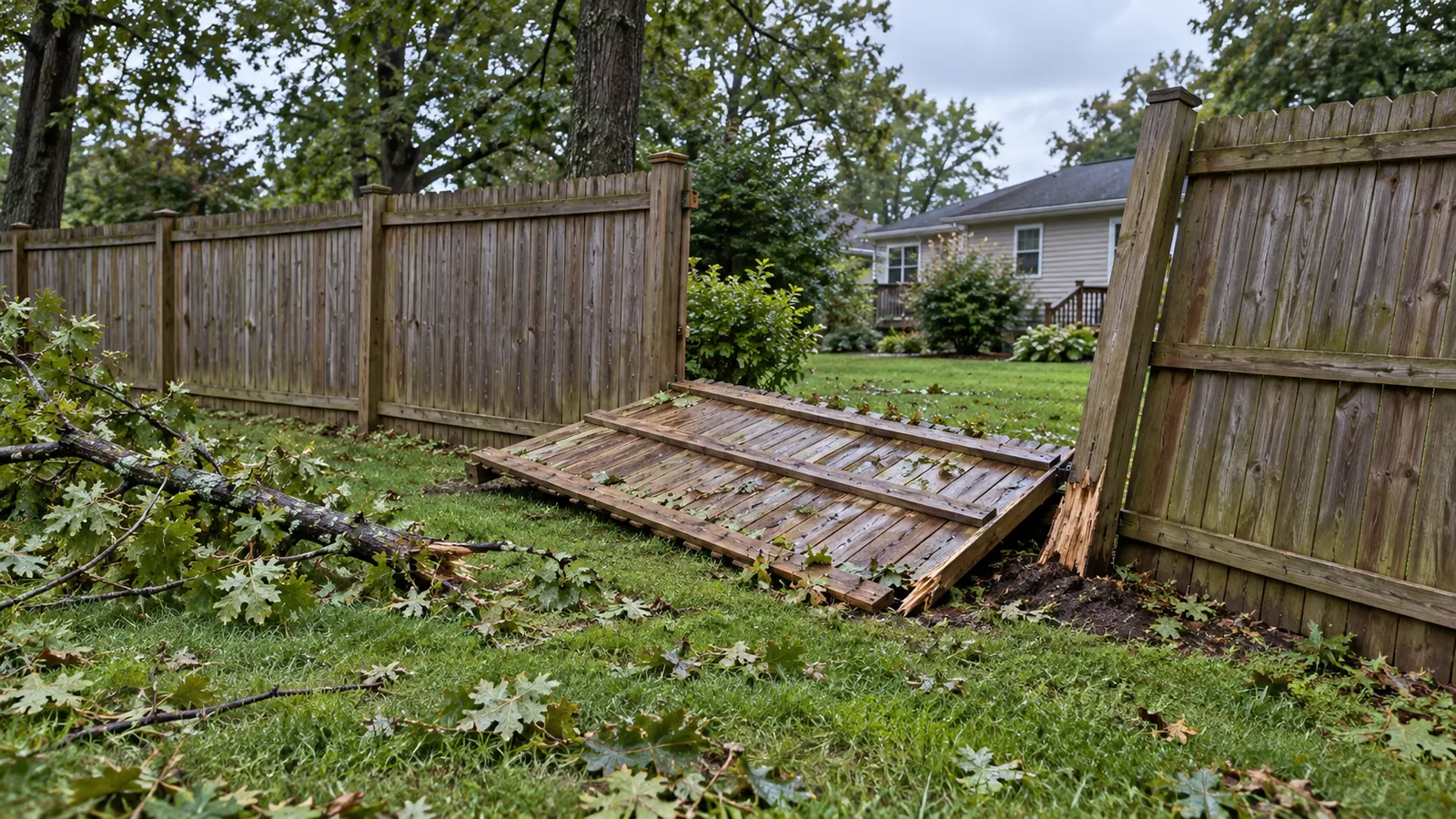
Storm Damage Repair
Wind off the creeks and falling limbs knock runs flat. We close the yard back up first, then rebuild what broke.
Storm Damage Repair details
Fence Installation
Dog runs, pool barriers, rowhome rear yards and townhome privacy fences in wood, vinyl, aluminum or chain link.
Fence Installation details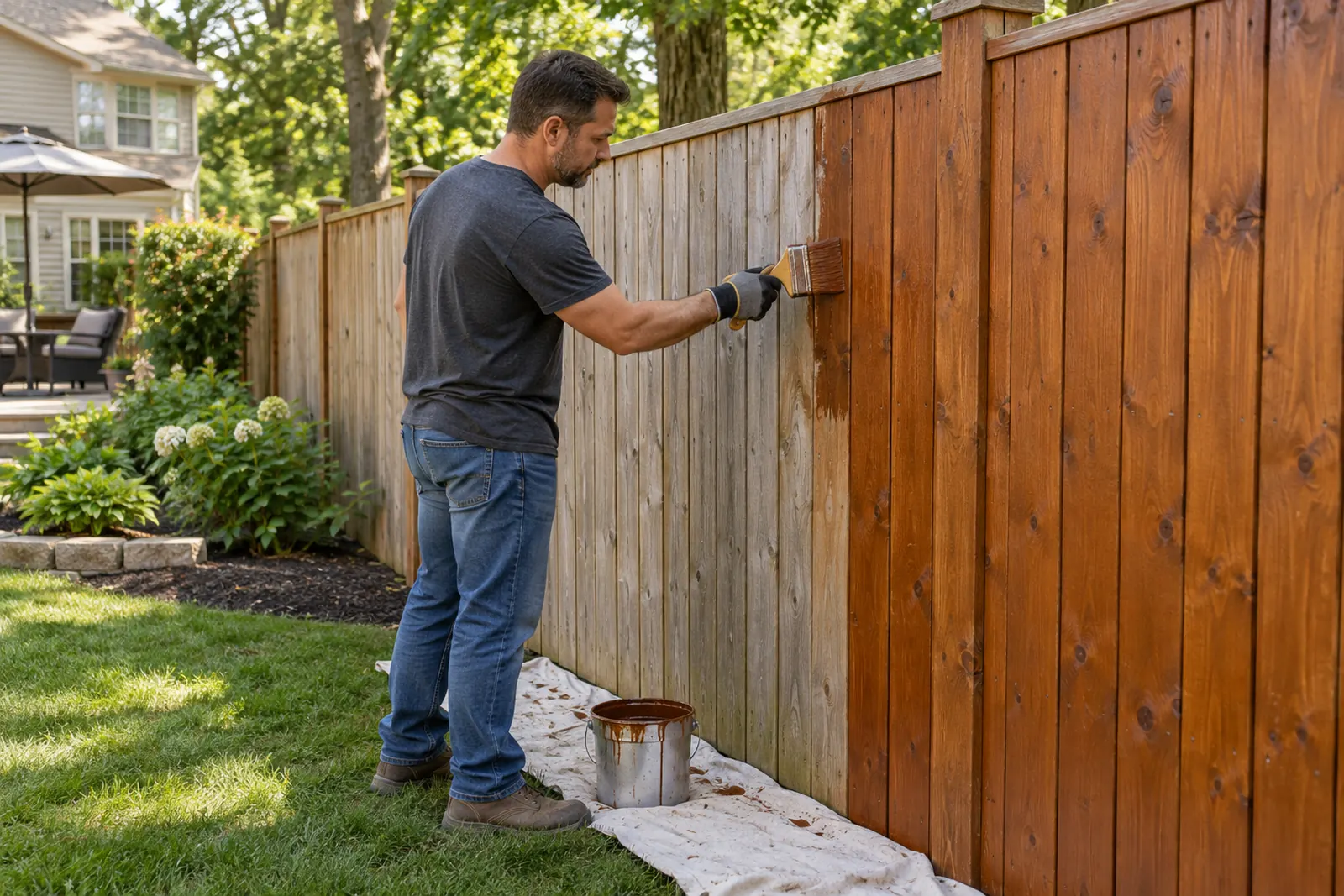
Fence Staining
Cleaned, brightened and stained wood that holds up to humid summers, shade and salt air near the water.
Fence Staining detailsFence Replacement questions, answered
My chain link fence is rusty but still standing. Should I replace it?
A rusty chain link fence that is still standing should be replaced when the posts are rusted through at the ground, not just stained on the surface. Rust at the base of a post is structural, because that is where the steel meets wet concrete and thins out first. Push on each post near the ground. If it flexes, or if you can see flaking metal or holes, the fence is near its end. If only a few posts are bad, those can be swapped. If most are, replacement is the better move.
Can you attach wood boards to my old chain link posts to make a privacy fence?
Attaching wood boards or privacy panels to old chain link posts is something we do not do, because thin steel line posts are not built for the wind load of a solid fence. Chain link lets air pass through, so its posts carry very little force. Cover that frame with boards and every gust pushes on the whole surface, which bends the posts or cracks their footings. A proper privacy fence gets new posts set deeper in fresh footings, with spacing that matches the boards or panels. That is what keeps it standing through a stormy summer.
How do you replace a fence in a side yard that is only a few feet wide?
Replacing a fence in a narrow side yard means doing the work by hand: hand-dug post holes, hand-carried materials, and footings broken out with a bar instead of a machine. Before we lay out posts, we locate the gas meter, the air conditioner, dryer vents, downspouts, and window wells, and we place posts so none of them get hit and the meter stays reachable. Gates in tight side yards are planned first and sized for what you roll through most often, usually the mower or trash cans.
Can my rowhouse fence be replaced from the alley?
Yes, a rowhouse fence that backs onto an alley can usually be replaced from the alley side, which makes staging materials and removing the old fence much easier. Many rowhouse yards have a slab poured up to the fence, so we cut or core through it to set new posts in the ground below. Fences between attached homes are often shared, so we confirm with you which runs are yours before anything comes down. Baltimore City and Baltimore County each have their own permit offices, and we confirm permit and shared-fence requirements for your address before work starts.
The fence between my house and my neighbor's is falling apart. How does replacing a shared fence work?
Replacing a shared fence between two houses goes most smoothly when both owners agree on the line, the material, and the height before work starts. First, settle where the property line is, using your plat or the survey pins. If you and your neighbor disagree, a surveyor should settle it before we build. Next, agree on what goes up, since you both look at it every day. We can give both households the same layout and material details so nobody is guessing. We do not take down a run that a neighbor has not agreed to.
Can my new fence be taller than the old chain link I am replacing?
A replacement fence can often be taller than the old chain link, but height is one of the details we confirm for your address before work starts, along with permits and any HOA rules. Many old chain link fences around Glen Burnie are four feet tall, and owners often want six-foot privacy. Going taller changes the build, not just the look. A taller solid fence catches more wind, so posts go deeper and footings get bigger. Front yard and corner lot sections are where height limits most often come up, so we look at those runs closely.
What do you do with the old fence and the concrete footings?
The old fence, posts, and concrete footings are removed and hauled away as part of a fence replacement, so nothing gets left piled in your yard. When an old footing will not come out cleanly, or a snapped post stub is buried where a new post wants to go, we either break it out or shift the new hole so every footing sits in firm, undisturbed soil. Setting a new post in a hole full of old concrete chunks is why some replacement fences lean within a couple of years.
Will my dog be able to get out while you replace the fence?
Your dog should not be able to get out during a fence replacement, because we take down only the runs we can rebuild that day and close any overnight opening with a temporary barrier. New posts set in concrete have to cure before panels or rails go on, so a replacement usually spans more than one visit. We plan around that and tell you which nights the yard is fully secure and which nights it has a temporary section. If your dog is a jumper or a digger, mention it on the walk-through.
Should I replace my gate at the same time as the fence?
Replacing the gate at the same time as the fence is almost always the right call, because the gate hangs from posts that are being replaced anyway. An old gate rehung on new posts usually still drags, since the gate frame itself has racked out of square. A new gate gets a braced frame, heavy hinges, and a hinge post set deeper than the line posts so it does not lean under the weight. This is also the time to move or widen the opening. If the fence is fine and only the gate fails, we repair just the gate.
Will the new section match the parts of my fence you are keeping?
A new fence section can match the runs you are keeping closely in height, style, and layout, though new wood will look brighter until it weathers or gets stained. We measure the existing board height, rail positions, post spacing, and top line, then build the new run to line up with them. At the transition we set a new post, so the old run is not hanging off a weak one. For wood, the color difference fades as the new boards dry out, and a stain coat over the whole fence blends the two.
The Fence Repair Guys of Glen Burnie
6709 Ritchie Hwy, Glen Burnie, MD 21061 · (443) 292-6998. Open in Google Maps →
Fence leaning, broken, or down? Let’s get it standing straight.
Call or send a request and we’ll set up a time to look at the fence in person, figure out what actually failed, and tell you straight whether it needs a repair, a rebuild of one section, or a full replacement.
(443) 292-6998 The Fence Repair Guys of Glen Burnie6709 Ritchie Hwy, Glen Burnie, MD 21061
Serving Glen Burnie, Baltimore, and a 20-mile radius