
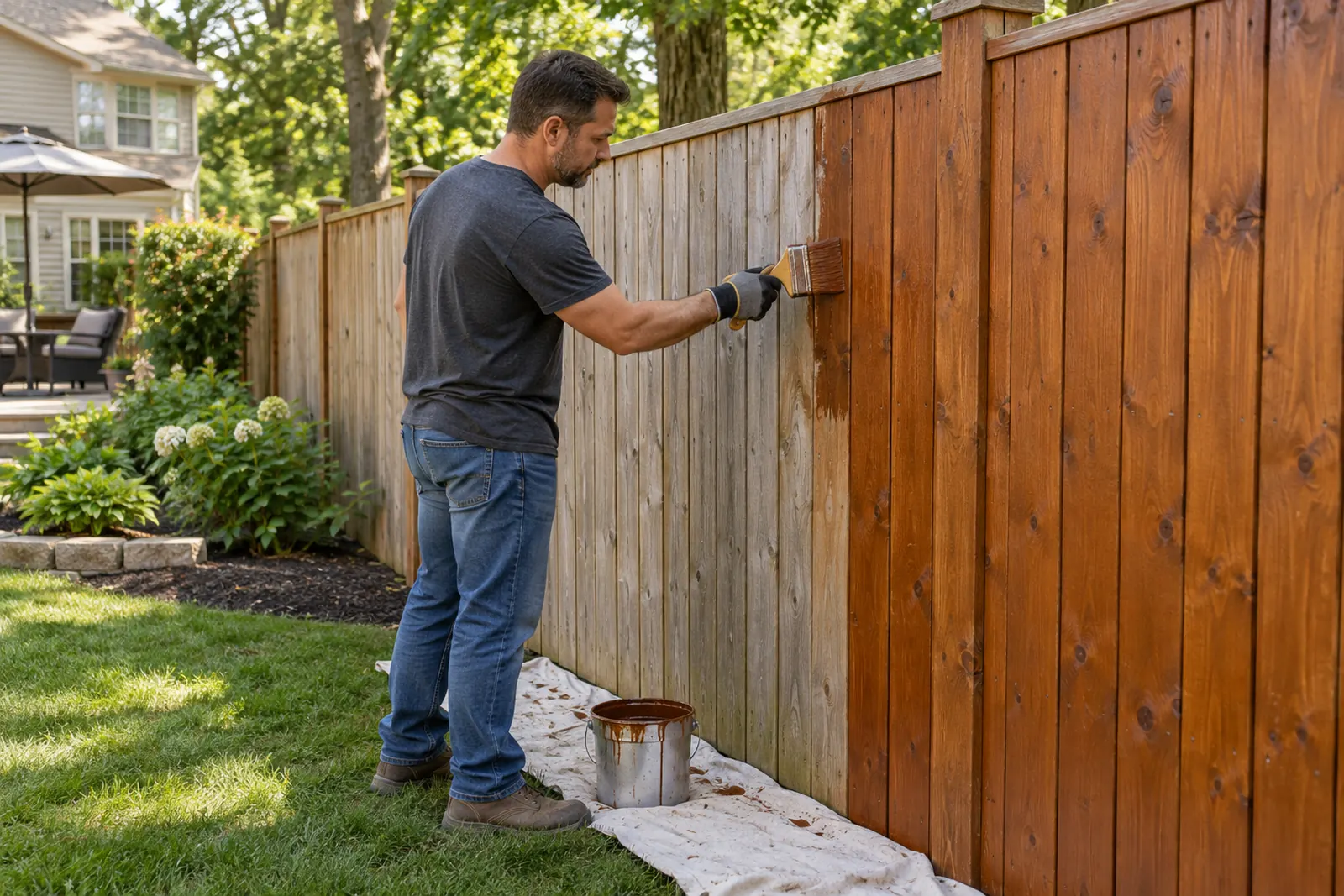
Fence Staining Planned Around North County Weather
Wood fences around Glen Burnie deal with sticky summers, deep shade under old trees, and salt air along the creeks. Our Glen Burnie crew cleans the wood, waits until it is dry, and works stain into cedar and pressure-treated fences so each side holds up to the exposure it actually gets.
- Glen Burnie based
- Serving a 20-mile radius
- Wood · Vinyl · Aluminum · Chain link
Humid Summers and Picking the Right Staining Day
Summer in the Baltimore area is humid, and humidity is a bigger problem for stain than heat. Wood that has been sitting in muggy air, collecting morning dew and catching afternoon thunderstorms, is often damp below the surface even when it looks dry.
So we do not pick a staining day off the calendar. We pick it off the wood. We check boards with a moisture meter in a few places, including the shaded bottom of the fence and the side facing away from the sun. If the readings are high, we wait. We also look at the forecast for the day after, since stain needs time to cure before rain hits it.
On the day itself, timing matters. Early morning boards can still be wet with dew. Midday sun on the south face can dry stain on the surface before it soaks in. Most summer staining happens in the window after the dew burns off, working the shade around the yard.
Fences Under Mature Oaks, Maples, and Tulip Poplars
Many older Glen Burnie, Linthicum, and Severna Park-area neighborhoods have big trees along the back lot lines. Shade keeps a yard cool, but it is hard on a wood fence. Boards under a canopy dry slowly after rain, and slow-drying wood grows green algae and black mildew. Leaves pile up against the bottom boards every fall and hold moisture right where rot starts.
A shaded fence needs more prep than one in open sun. The cleaning step uses a cleaner that kills mildew and algae, not just one that lifts dirt, and we rinse until the water runs clear. The fence then gets extra drying time, because shaded boards hold water longer.
We also recommend a few things you can do. Trim branches that touch or hang over the fence so air moves along it. Rake leaves away from the base each fall. Keep mulch and soil a few inches below the bottom boards. Stain cannot do its job if the wood stays wet for days at a time.
Not sure if it needs a repair or a replacement? We’ll look at it and tell you straight.
Call (443) 292-6998Salt Air Along Marley Creek, Stoney Creek, and the Patapsco
North Anne Arundel has a lot of water. Marley Creek runs through the Glen Burnie area, Stoney Creek and Bodkin Creek reach into Pasadena and Riviera Beach, and Curtis Creek and the Patapsco River border Brooklyn Park and the north side of the county. The water is brackish, and on breezy days salt carries inland onto fences near the shoreline.
Salt affects a stained fence in two ways. First, it leaves a fine residue on the wood. Stain brushed over that residue does not bond well, so near the water we rinse the fence thoroughly before staining, even if it looks clean. Second, salt attacks metal. Plain steel nails, screws, and hinges rust faster near the creeks, and that rust bleeds dark streaks down the boards through the stain.
Before we stain a waterfront fence, we check the fasteners. Rusted nails get replaced with corrosion-resistant screws, and rusted hinges and latches get swapped. Our The Fence Repair Guys of Glen Burnie page covers more on waterfront fences.
Sun Side and Shade Side Wear Differently
The side facing south or west gets direct afternoon sun. Its stain fades first, the wood grays and dries out, and boards can check and split from heat cycling. The side facing north, or the side under trees, stays darker longer but turns green or black with mildew and stays damp at the bottom.
We treat those two faces according to what they show us. The sunny face often needs a stain with more pigment, because pigment is what blocks the sunlight that breaks down wood fibers. The shaded face needs more cleaning and more drying time, and a product suited to damp exposure. Both sides should be stained when you have access to both, because a board sealed on one face still takes in water through the other and cups as a result.
You can recoat just the faded side when the other still sheds water. The test is simple: splash water on the boards. If it beads, the stain is working. If it soaks in and darkens the wood, that face is due.
What Stain Cannot Fix, and What We Fix First
Stain protects sound wood. It does not hold up a leaning post, close a hole, or bring back a rotted board.
Fence repair is our specialty, so before we quote staining we walk the fence and look for the problems stain would only hide:
- Posts that move when you push them at the ground, a sign of rot or a failed footing.
- Boards soft at the bottom edge or split all the way through.
- Popped nails and loose rails, which let boards cup and pull away.
- A gate that drags, which grinds stain off the bottom and the ground stop.
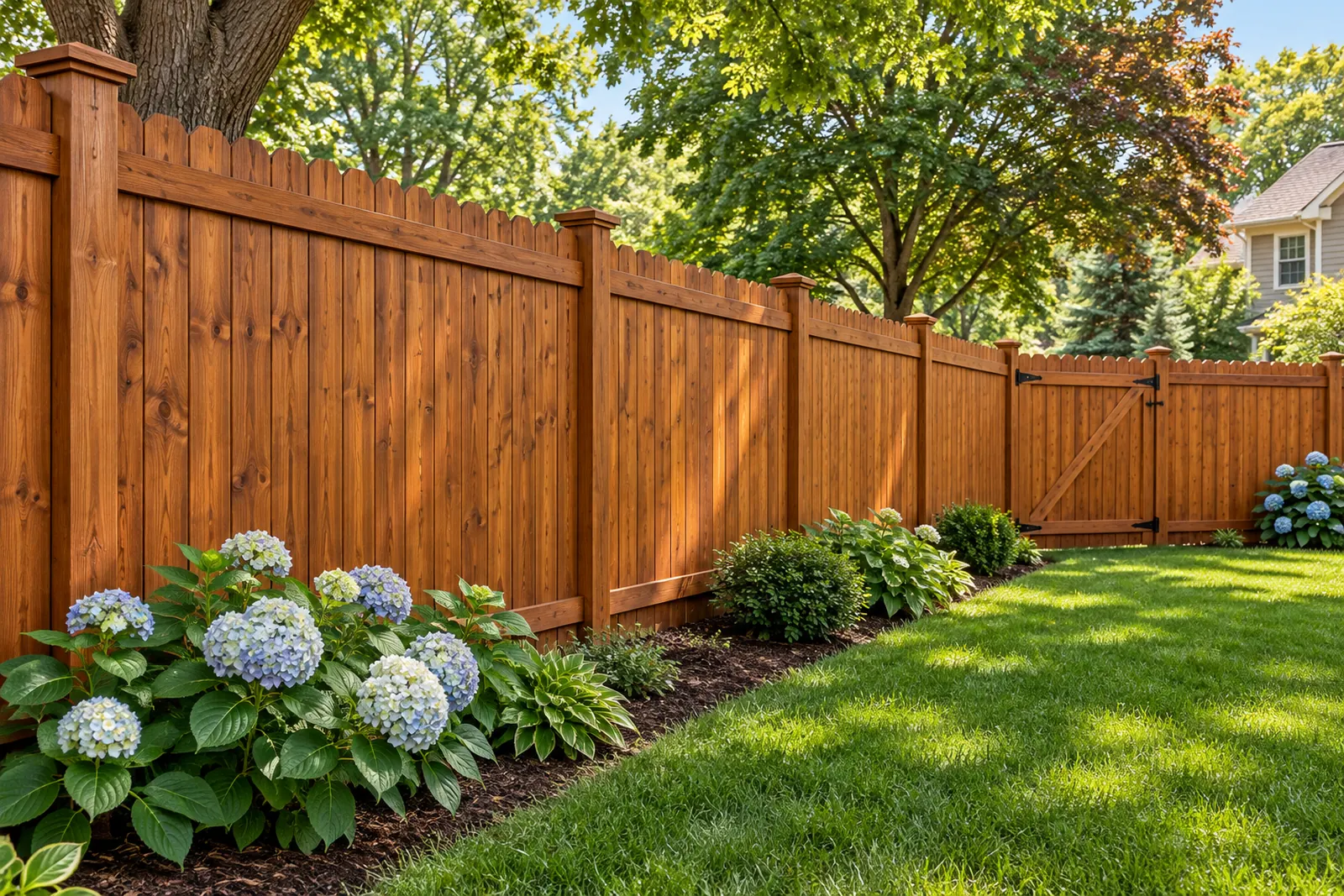
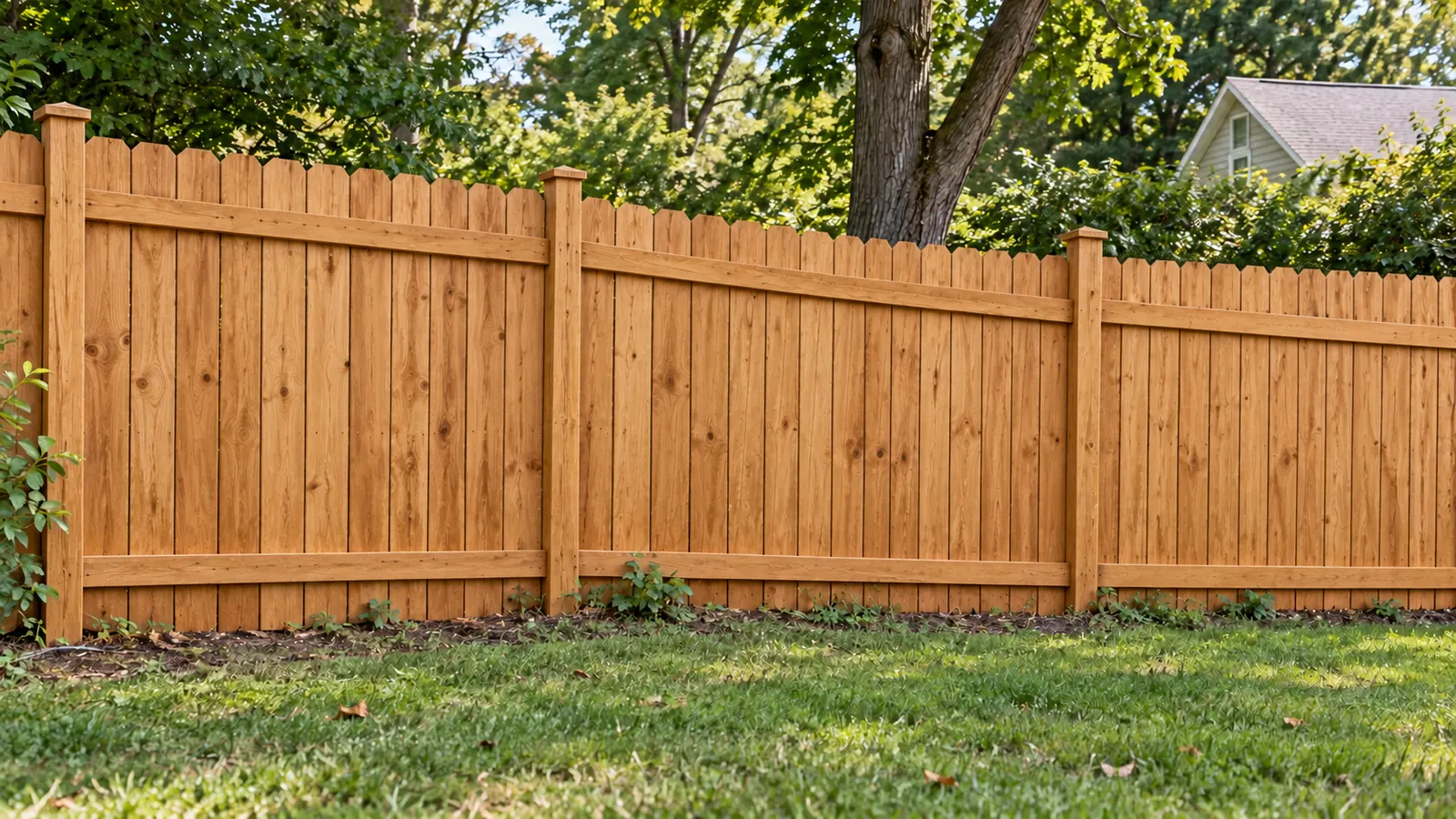
We fix those first: reset or replace posts, swap failed boards, refasten rails with screws, and rehang the gate. Then we clean and stain the whole fence so the new boards blend in. The repaired and stained fence in the photo was done that way. For repair work on its own, see The Fence Repair Guys of Glen Burnie.
Protecting Siding, Plants, Patios, and the Car Next Door
Stain is meant to soak in, and it soaks into things you do not want stained: vinyl siding, concrete patios, brick, your neighbor's car, and the hydrangeas planted along the fence.
Before we open a can, we cover what sits near the fence. Plants get wet down and covered with breathable cloth, since plastic can cook them in summer sun. Patios and walks get drop cloths. Siding within reach of the work gets masked. Gate hinges, latches, and post caps get covered so they do not come out stained.
We brush stain into the wood rather than relying on a sprayer alone. Spraying fast near a neighbor's driveway on a breezy day is how overspray ends up on a windshield. Brushing works stain into the grain and keeps it on the fence.
If your fence borders a neighbor, staining their side needs their go-ahead, since it is their view. Many neighbors are glad to have it done. Talk with them before the staining day so we can plan the access.
The rest of what we do
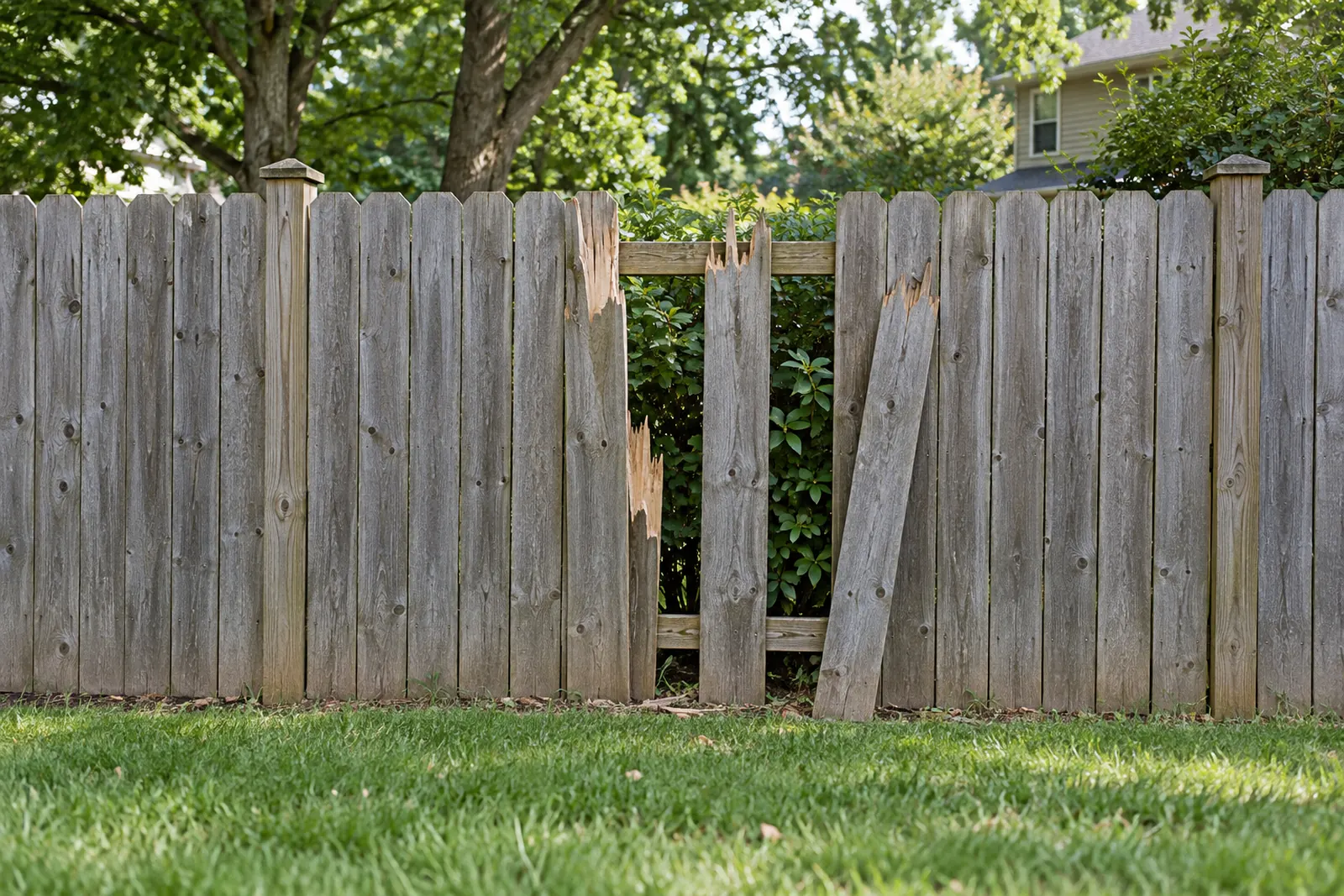
Fence Repair
Posts gone soft at grade, chain link pulled loose from its rail, split pickets and leaning runs. Repair is the job we lead with, on any material.
Fence Repair details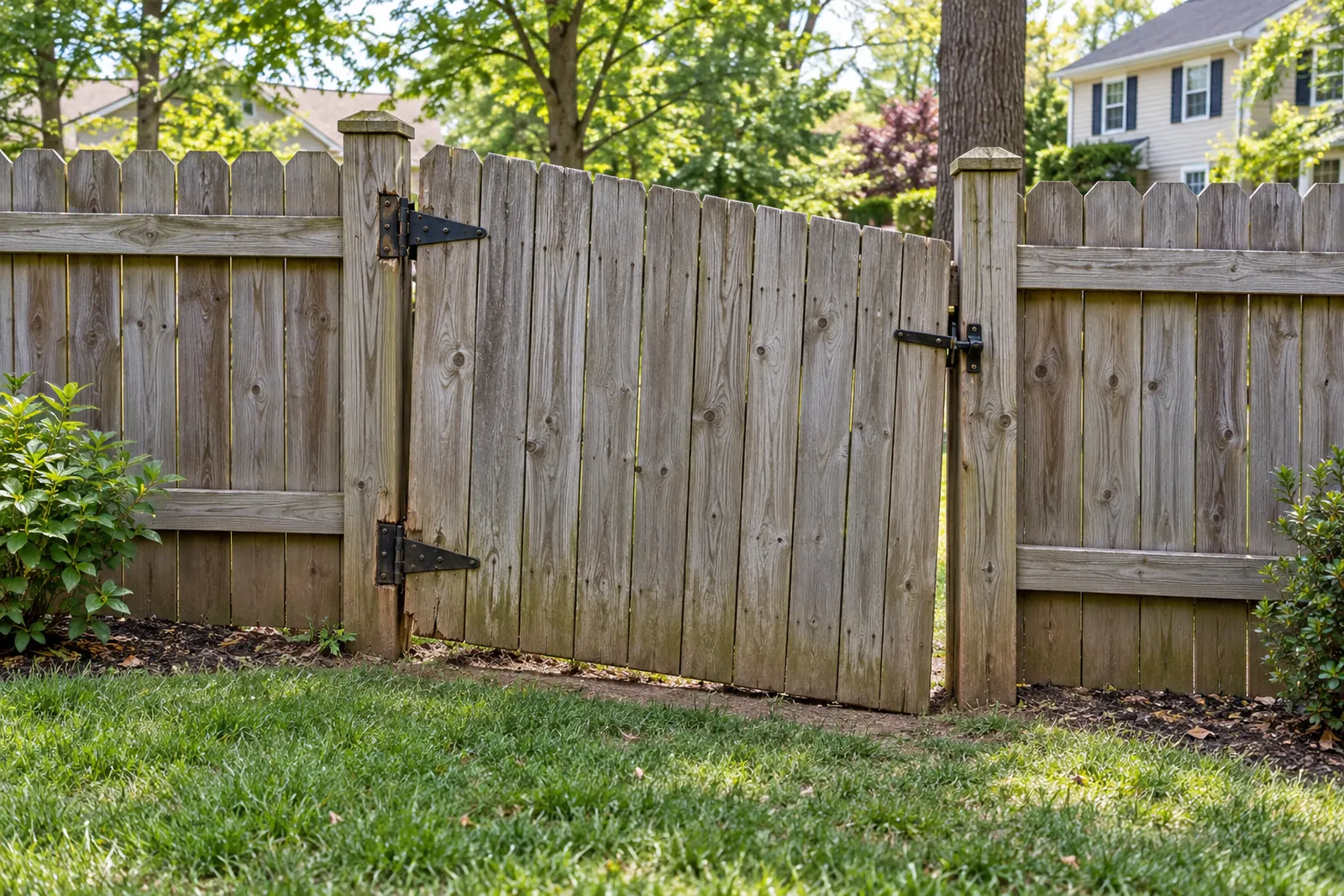
Gate Repair
Alley gates, walk gates and drive gates that sag, scrape or refuse to latch get squared, braced and hung on hardware sized for them.
Gate Repair details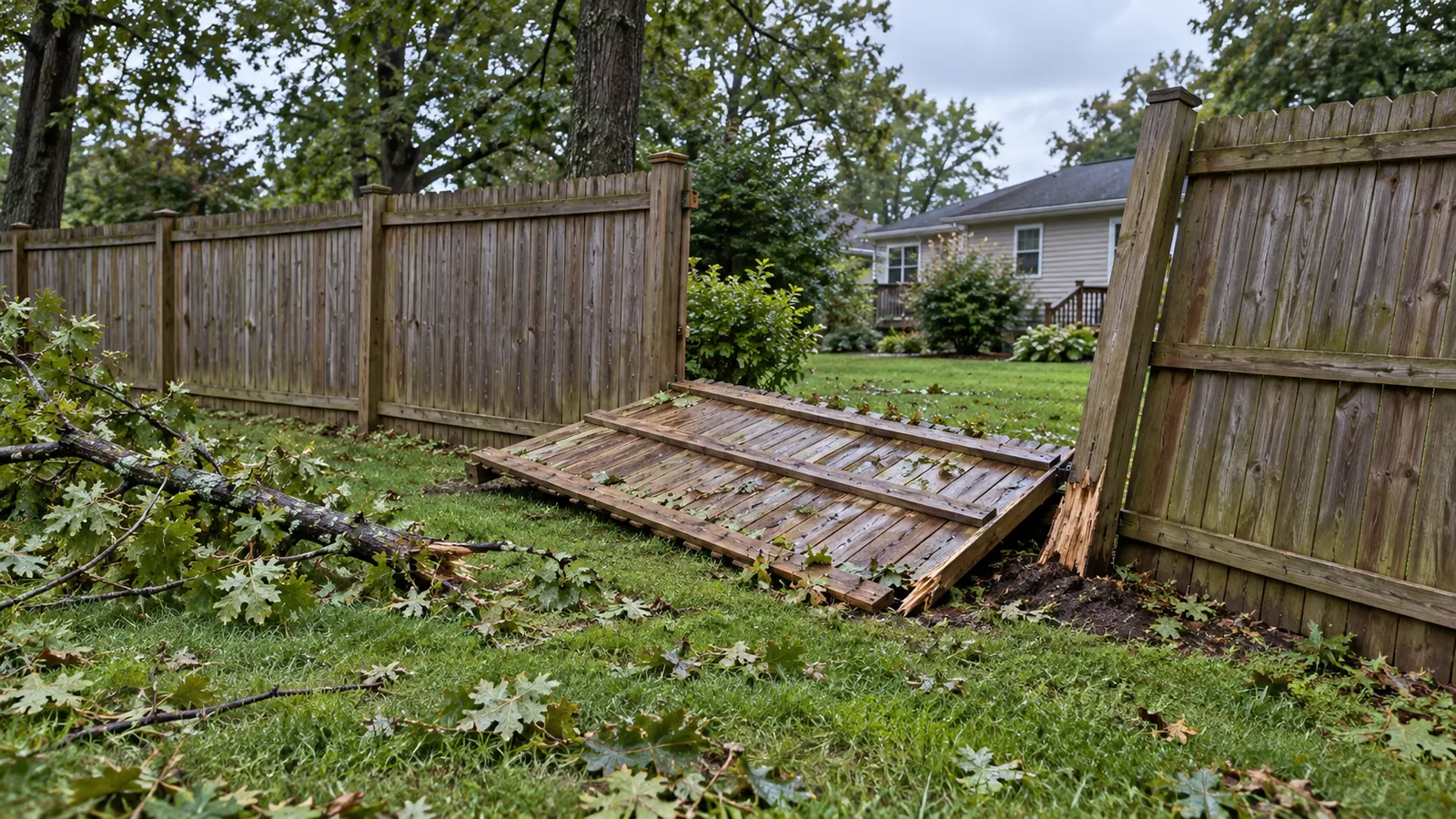
Storm Damage Repair
Wind off the creeks and falling limbs knock runs flat. We close the yard back up first, then rebuild what broke.
Storm Damage Repair details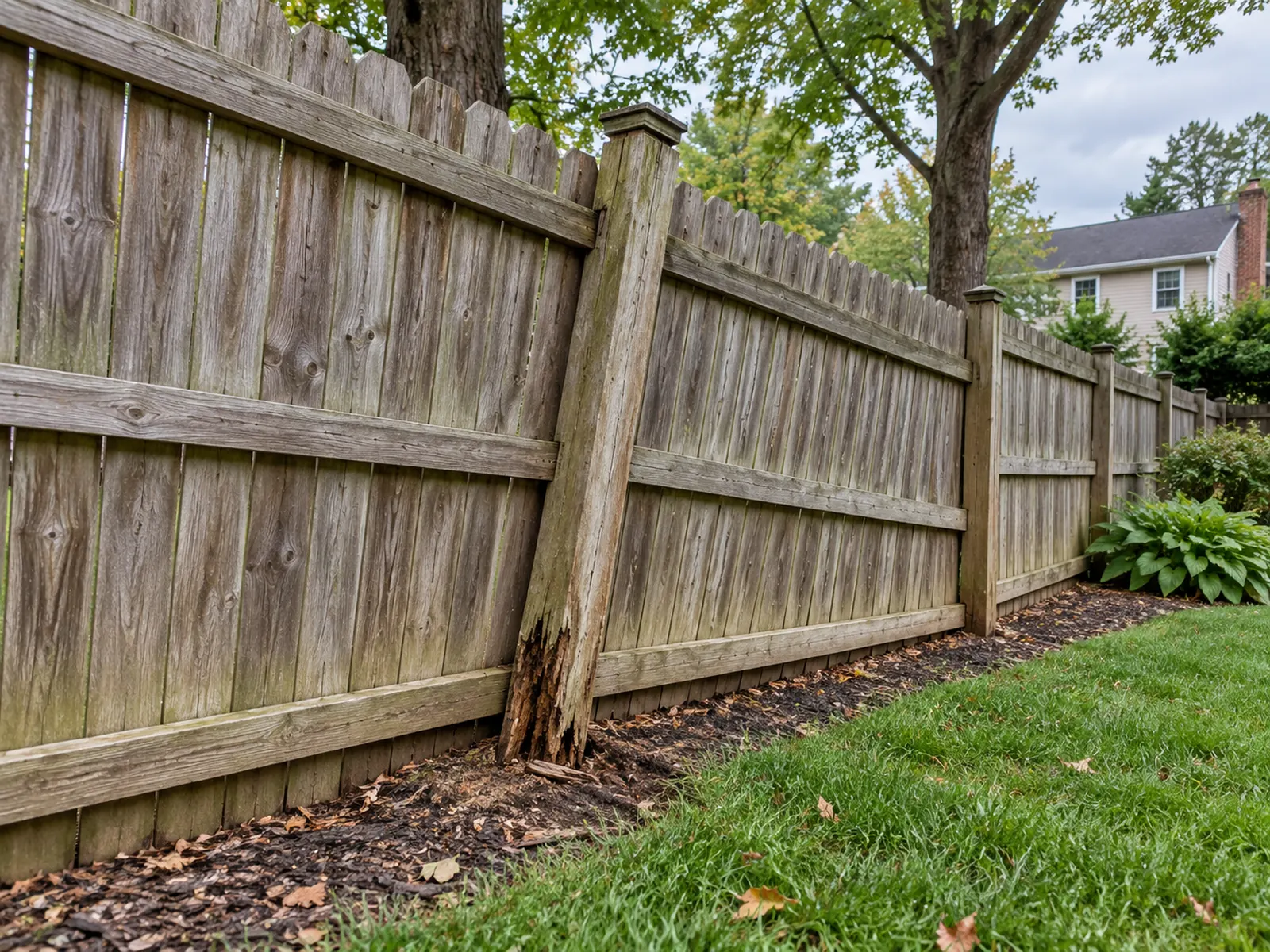
Fence Replacement
Worn-out post-war chain link and tired wood come out and get hauled off, and a new fence goes back in on the line.
Fence Replacement details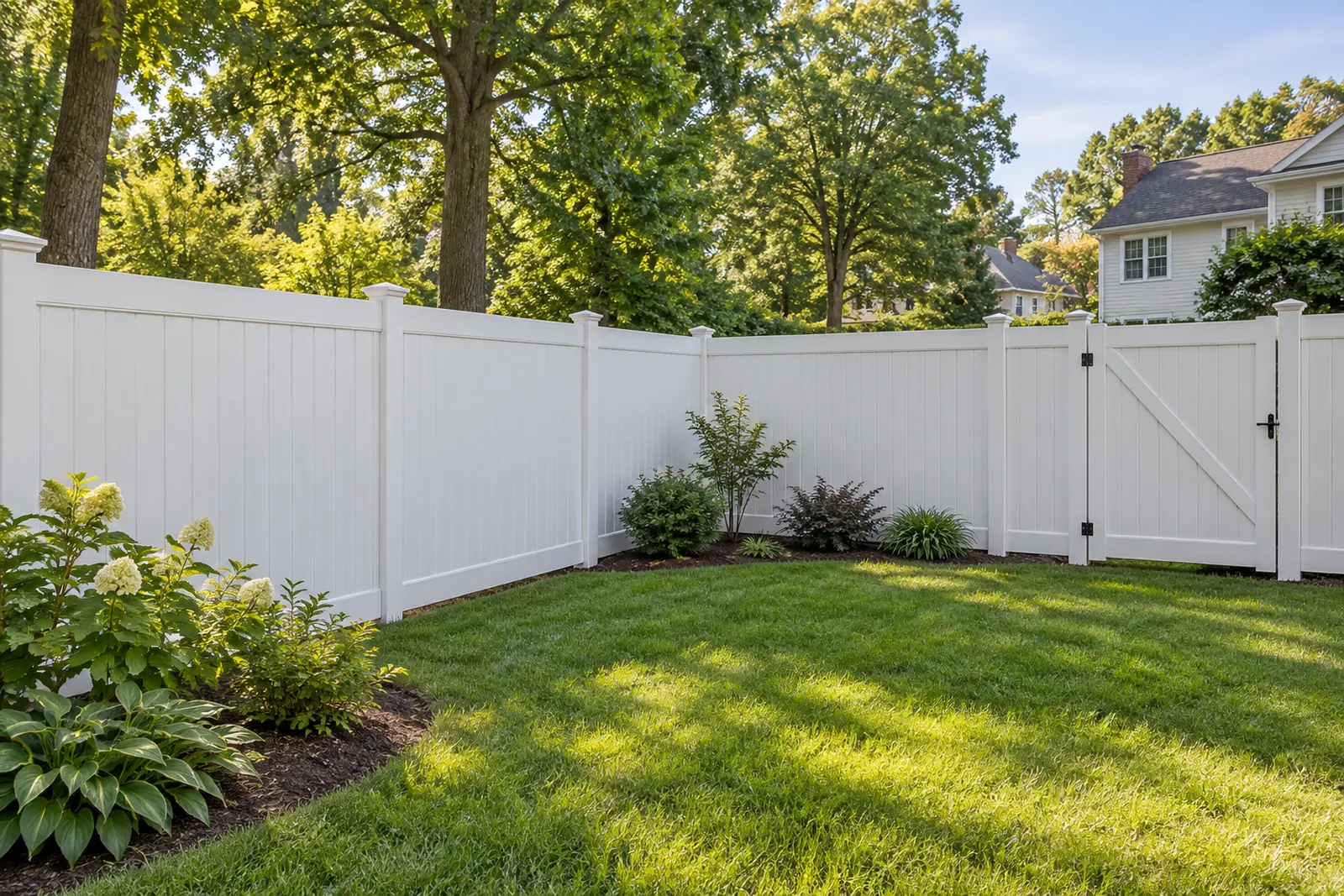
Fence Installation
Dog runs, pool barriers, rowhome rear yards and townhome privacy fences in wood, vinyl, aluminum or chain link.
Fence Installation detailsFence Staining questions, answered
Why does the shady side of my wood fence turn green?
The shady side of a wood fence turns green because algae and mildew grow on wood that stays damp, and shaded wood dries slowly after rain and morning dew. In Glen Burnie yards with big oaks and maples along the lot line, the north-facing or tree-covered side can stay wet for days. Cleaning with a product that kills mildew and algae removes it, and a penetrating stain helps the wood shed water. Trimming overhanging branches and raking leaves away from the base helps the fence dry faster afterward.
How long after a summer rain can my fence be stained?
A wood fence usually needs a couple of dry days after a summer rain before it can be stained, and longer for boards in heavy shade. The surface feels dry while the inside of the board still holds water, and stain cannot soak into wet wood. It sits on top and peels. We check boards with a moisture meter in sunny and shaded spots before staining instead of going by the calendar. Rain in the forecast right after staining matters too, because fresh stain needs time to cure before it gets wet.
Does salt air from the creek affect my fence stain?
Salt air from creeks like Marley Creek, Stoney Creek, and Bodkin Creek can affect fence stain by leaving a residue on the wood and by rusting steel fasteners that then streak through the finish. Stain applied over salt residue does not bond as well, so we rinse waterfront fences thoroughly before staining. The bigger issue is usually hardware. Plain steel nails and hinges rust faster near the water, and the rust bleeds dark lines down the boards. Replacing rusted fasteners with corrosion-resistant screws before staining keeps those streaks from coming back through a fresh coat.
What are the black streaks running down from the nails on my fence?
Black streaks running down from the nails on a wood fence are usually caused by rusting steel nails reacting with the tannins in the wood. Cedar and some other woods contain natural tannins, and when they meet iron and moisture, they turn dark. Staining over them does not fix the problem, because the nails keep rusting and the streaks bleed back through. The fix is to replace rusted nails with corrosion-resistant fasteners, clean the streaks with a wood brightener made for tannin and rust stains, then stain. This shows up most on fences near the water and in damp shade.
Is it worth staining only my side if my neighbor does not want theirs done?
Staining only your side of a wood fence is still worth it, because it protects the face you see and slows weathering, though the unstained side keeps taking in water. A board sealed on one face and bare on the other dries unevenly, which can lead to some cupping and to mildew on the bare side. If your neighbor agrees later, staining their side then improves the fence's protection. In the meantime, keep the top of the fence and the bottom edges well sealed on your side, since that is where water gets in and rot begins.
Do I need to trim my trees before my fence is stained?
Trimming trees before your fence is stained is a good idea when branches touch the fence or hang low over it, because those branches keep the wood wet and drop debris onto fresh stain. Branches resting on boards hold moisture and rub the finish off. Overhanging limbs drip sap and pollen and shade the fence so it dries slowly. Clearing a gap of a foot or two between the branches and the fence lets air move along the boards. Trim before we clean the fence, so the cleaning step removes the dirt and debris from the trimming.
Will staining make my old gray fence look new again?
Staining can make an old gray fence look close to new if the wood under the gray layer is still sound, because cleaning strips the gray off and the stain brings back color. A wood cleaner and brightener remove most of it and show the wood underneath. If boards are split, soft, or rotted, stain will color them but will not make them strong, and they will keep failing. A heavily weathered fence often looks most even with a semi-transparent or solid stain, which hides differences in the old wood better than a clear finish.
Does spring pollen cause problems when staining a fence?
Spring pollen can cause problems when staining a fence because it settles on wet stain and sticks there, leaving a gritty yellow film on the finish. In Glen Burnie and the rest of the Baltimore area, tree pollen is heavy in spring, especially on fences under oaks and pines. When the fence is dusted with pollen, we rinse it off as part of cleaning and stain once it is dry. Penetrating stains that soak into the wood are less affected than film-forming ones, since the finish is inside the wood and not sitting on top for pollen to stick to.
Will fence stain get on my house, plants, or my neighbor's car?
Fence stain should not get on your house, plants, or a neighbor's car when the area is covered and the stain is brushed in rather than sprayed loosely. Before staining, we cover plants with breathable cloth after wetting them, lay drop cloths on patios and walkways, and mask siding and fence hardware. Brushing the stain in keeps it on the wood. Spraying on a breezy day is how overspray travels onto nearby cars and windows, which matters on tight lots where a driveway runs right beside the fence.
The cedar fence that came with my house has never been stained. Can it still be stained?
A cedar fence that has never been stained can still be stained, as long as the boards are not rotted or split through. Most unstained cedar has turned gray from sun exposure, and the first step is a deep clean and brightening to remove that gray layer and any mildew. Cedar takes penetrating stain well once it is clean and dry, because its open grain soaks the stain in. If some boards or posts need replacing, that work happens before staining so the whole fence gets an even coat after repair.
The Fence Repair Guys of Glen Burnie
6709 Ritchie Hwy, Glen Burnie, MD 21061 · (443) 292-6998. Open in Google Maps →
Fence leaning, broken, or down? Let’s get it standing straight.
Call or send a request and we’ll set up a time to look at the fence in person, figure out what actually failed, and tell you straight whether it needs a repair, a rebuild of one section, or a full replacement.
(443) 292-6998 The Fence Repair Guys of Glen Burnie6709 Ritchie Hwy, Glen Burnie, MD 21061
Serving Glen Burnie, Baltimore, and a 20-mile radius