
Storm Damage Fence Repair in Glen Burnie & the Baltimore Waterfront
Storms reach north Anne Arundel and the Baltimore waterfront with wind that has crossed open water before it hits a fence. Our Glen Burnie crew repairs what wind, falling limbs and high water leave behind, on wood, vinyl, aluminum and chain link, and checks the parts of the fence that are hurt but still standing.
- Glen Burnie based
- Serving a 20-mile radius
- Wood · Vinyl · Aluminum · Chain link
Wind Across Open Water
Wind gains strength over open water because nothing slows it down. Homes along the Patapsco, Curtis Creek, Stoney Creek, Bear Creek and Back River take gusts that have crossed a long stretch of water with no trees or buildings in the way. On those lots, the fence is often the first thing the wind meets on land.
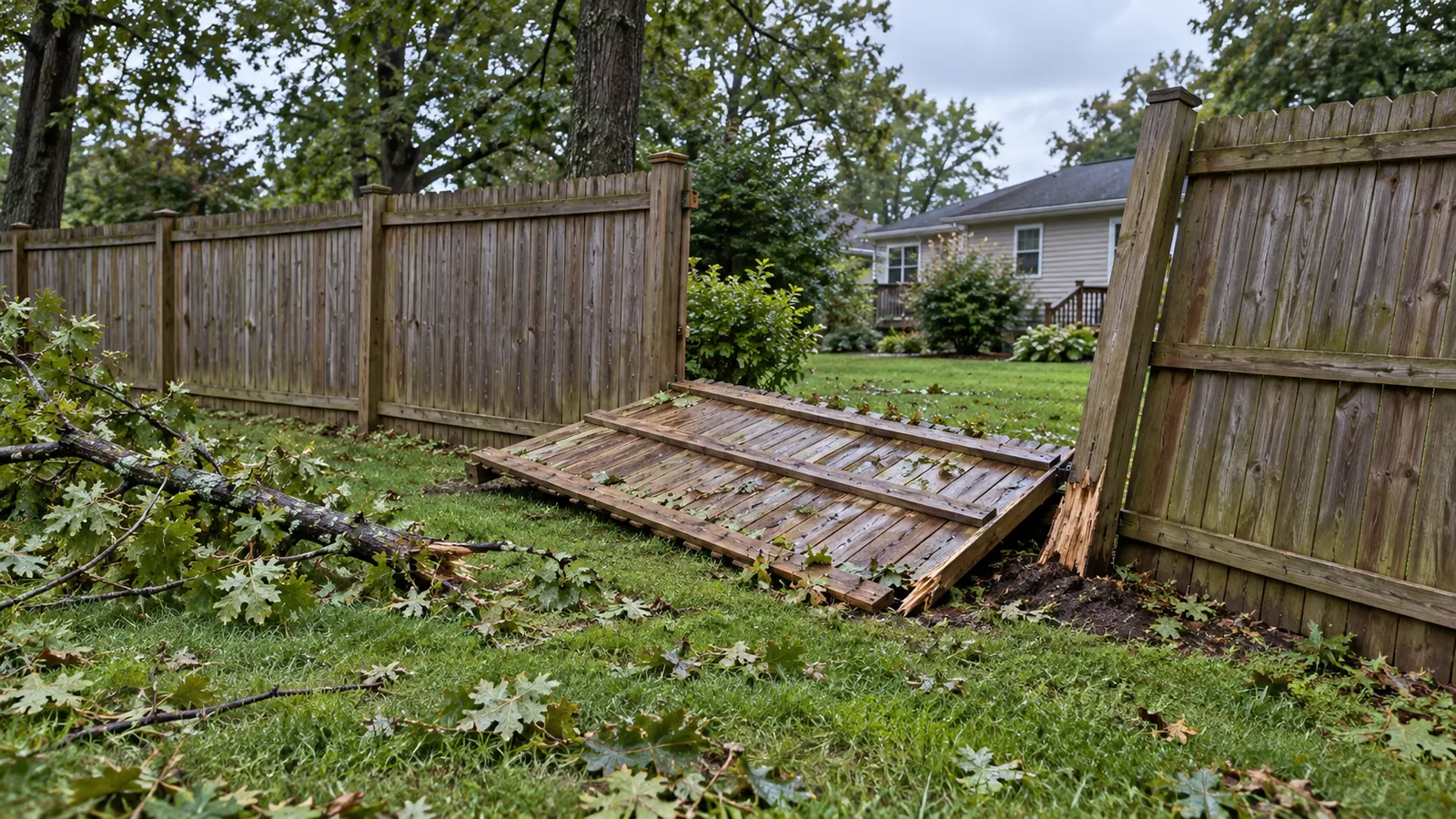
Solid privacy fences take the worst of it, since every board catches wind and the whole load lands on the posts. The damage in this Dundalk photo is typical: a panel flat on the ground, a post broken off, and a limb tangled in the boards.
Inland lots around Glen Burnie see a different version of the same storm. Houses and trees break up the wind, so the fence often survives the gust and gets hit by what it brings down: limbs, whole trees, a shed roof, or patio furniture thrown into the run. We inspect the two differently. Wind failures start at the posts and travel along the line. Impact failures start where something landed and spread out from there.
After High Water: Flooded Lots and Saturated Ground
Low shoreline lots can take water from storm surge or an extreme high tide, not only rain. Hurricane Isabel pushed water into Fells Point and the low shoreline neighborhoods of eastern Baltimore County, and nor'easters can pile water up in the creeks for a day or more.
Saturated ground loses its grip on a post. Instead of snapping, a post in soft soil rotates in its hole, so a whole run tips over with the footings still attached. Floating debris piles against the fence and shoves it over at the base. Brackish water leaves a line of grime and salt on boards and hardware.
After a flood, wait for the ground to firm up before resetting posts. A post pushed back to plumb in mud leans again as the soil settles. Once the ground dries, we pull the tipped posts, clean out the holes, and set the posts on gravel in fresh concrete. We rinse salt off the boards we keep and replace any hinges or fasteners the water has started to rust.
Not sure if it needs a repair or a replacement? We’ll look at it and tell you straight.
Call (443) 292-6998Chain Link After a Tree Comes Down
Chain link handles wind well because air passes through it, so storm damage to chain link around Glen Burnie, Ferndale and Linthicum almost always comes from a falling limb or tree. The top rail kinks where the limb landed. The fabric stretches and bellies out, sometimes tearing free of its ties. Line posts on either side bend near the ground, and if the limb was heavy, a terminal post leans and the whole run goes slack.
Chain link is very repairable after a storm. Once a tree service has lifted the limb off, we sleeve in new top rail, replace bent line posts, and reset any terminal post that moved. Fabric that stretched but did not tear can usually be re-tensioned with a come-along and a reset tension bar.
Torn fabric gets a new piece woven in: we unweave one wire picket, set the new section in place, and weave a picket back through to join old and new. Then the ties go back on every post and along the top rail, so the run hangs tight instead of bellied and held up with scrap wire.
Alleys, Rowhomes and Wind-Thrown Debris
In Baltimore City and the denser blocks of Dundalk and Essex, storm damage tends to be smaller in scale and messier. Trash cans, recycling bins, loose siding and roofing get thrown down alleys and into back fences. A wood fence shared by three rowhomes can end up half down with a neighbor's gate hanging off it.
Safety comes first. Many alleys carry overhead power and cable lines, so if any wire is down in the alley or touching the fence, stay well clear and report it to the utility. Then get the yard closed off, especially if you have a dog, because an open back fence is a straight path to the street.
On these jobs we carry materials in through the alley gate by hand. Much of the work is resetting posts that debris knocked loose, replacing broken boards on a shared run, and rehanging gates torn off their hinges. We confirm the rowhome, shared-fence and permit requirements for the address before posts come out. For city addresses, see how The Fence Repair Guys of Glen Burnie work Baltimore blocks.
Damage You Will Not See From the Back Door
The section lying on the ground is obvious. The damage that causes the next failure is not, so after a storm we walk the full line and check what is still standing.
- Posts that stayed up but loosened. If a post shifts in its footing when you push the fence, the storm broke its grip.
- Cracked concrete footings that now let water run down to the wood.
- Rails pulled off their brackets or fasteners backed partway out.
- Vinyl post pockets cracked where a panel flexed hard, even if it snapped back in.
- Gates knocked out of square, so they drag or will not latch.
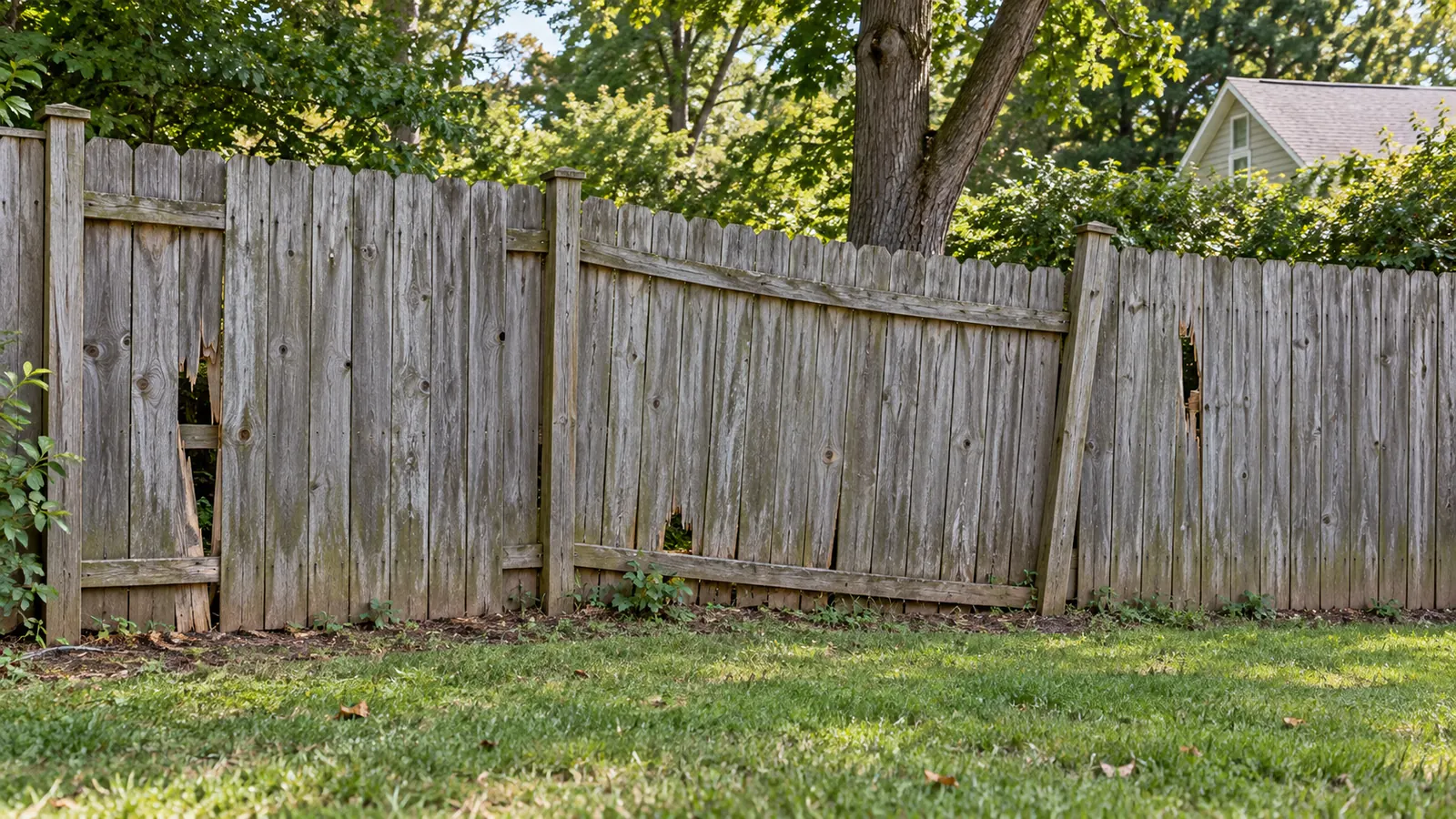
The fence in this photo was already leaning before the wind arrived, and the storm finished what years of loose posts started. A storm finds the weakest parts of a fence, so the posts beside a break get as close a look as the break itself. If a gate took the hit, The Fence Repair Guys of Glen Burnie can square and rehang it on the same visit.
Rebuilding So the Next Storm Does Less
A storm repair is a chance to fix the reasons the fence went down, not just stand the same weak fence back up.
On posts, that means replacing every post that broke or loosened, setting each on a gravel base, and finishing the concrete above grade so it sheds rain. On exposed waterfront runs, we look at tighter line post spacing and heavier posts at the ends and gates, where loads concentrate. On vinyl, metal inserts in the windward posts stiffen the run.
Fence style matters too. A board-on-board or shadowbox layout lets some air pass while still blocking the view, and a run facing open water can switch to aluminum or chain link where privacy is not needed. Near salt, stainless or hot-dip galvanized fasteners keep hardware from rusting out before the next storm season.
If a limb over the fence line is dead or cracked, have an arborist look at it before the next blow. If the storm showed that the whole fence is near the end, The Fence Repair Guys of Glen Burnie is the next conversation, and we can walk the line with you to plan it.
The rest of what we do
Fence Repair
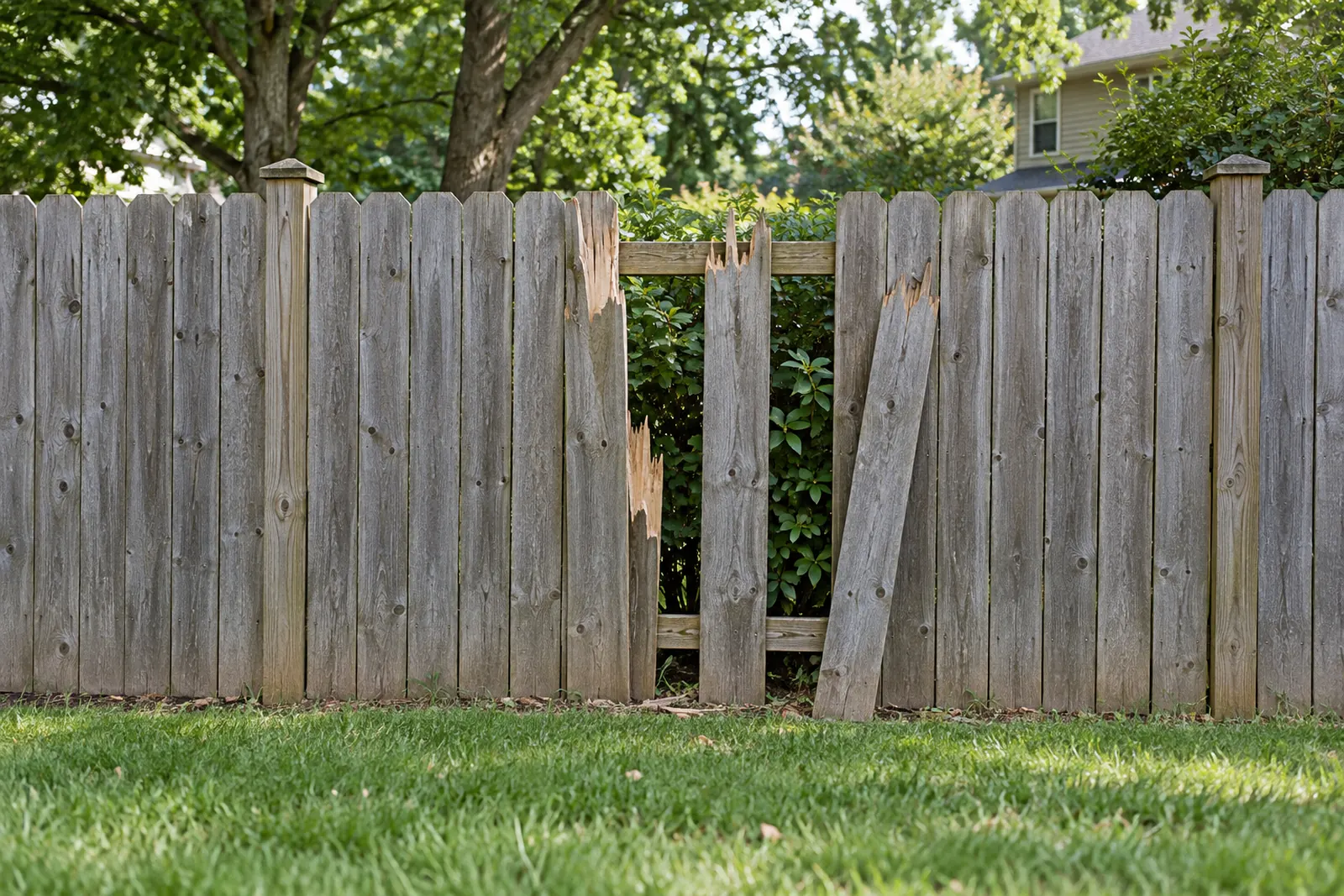
Posts gone soft at grade, chain link pulled loose from its rail, split pickets and leaning runs. Repair is the job we lead with, on any material.
Fence Repair details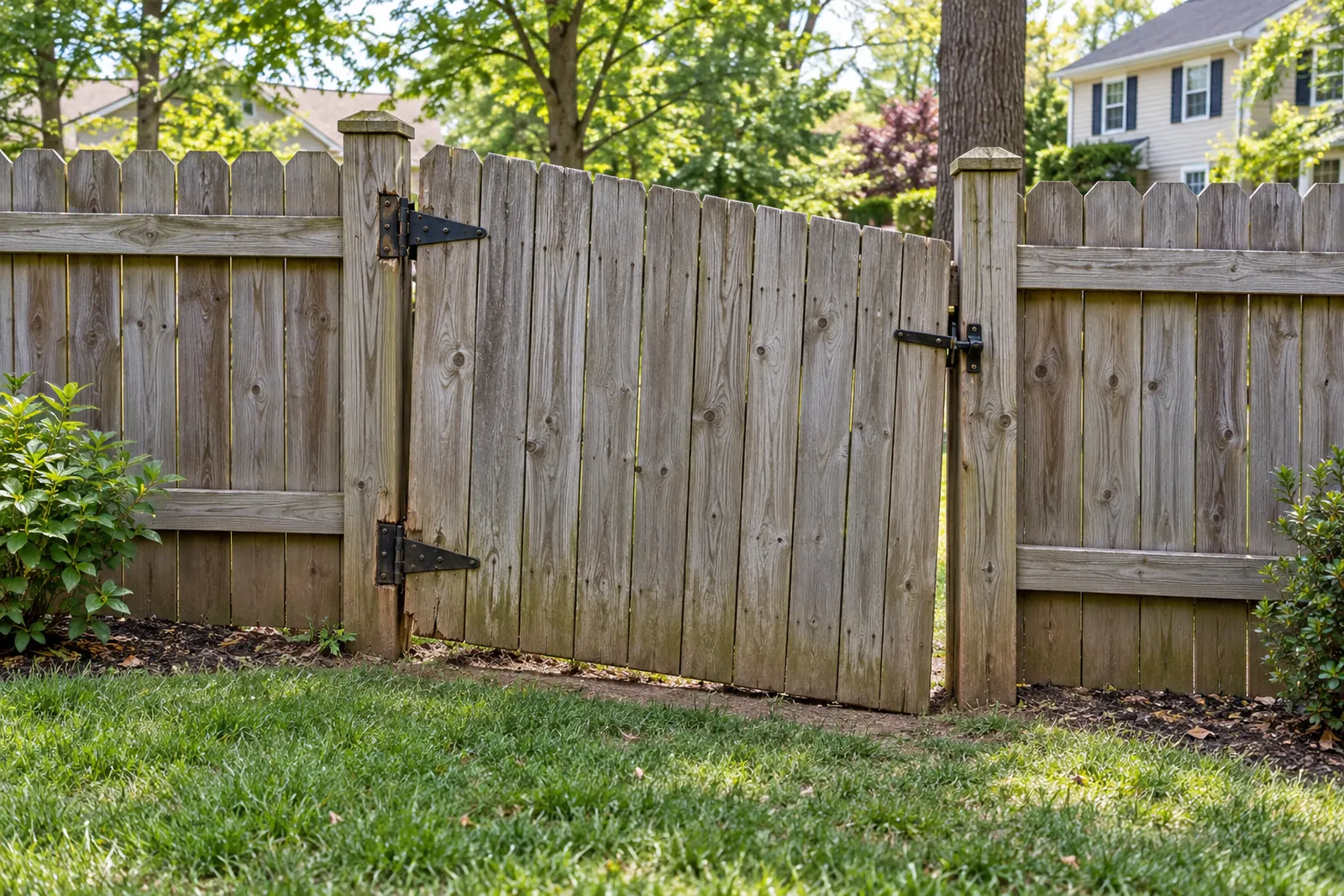
Gate Repair
Alley gates, walk gates and drive gates that sag, scrape or refuse to latch get squared, braced and hung on hardware sized for them.
Gate Repair details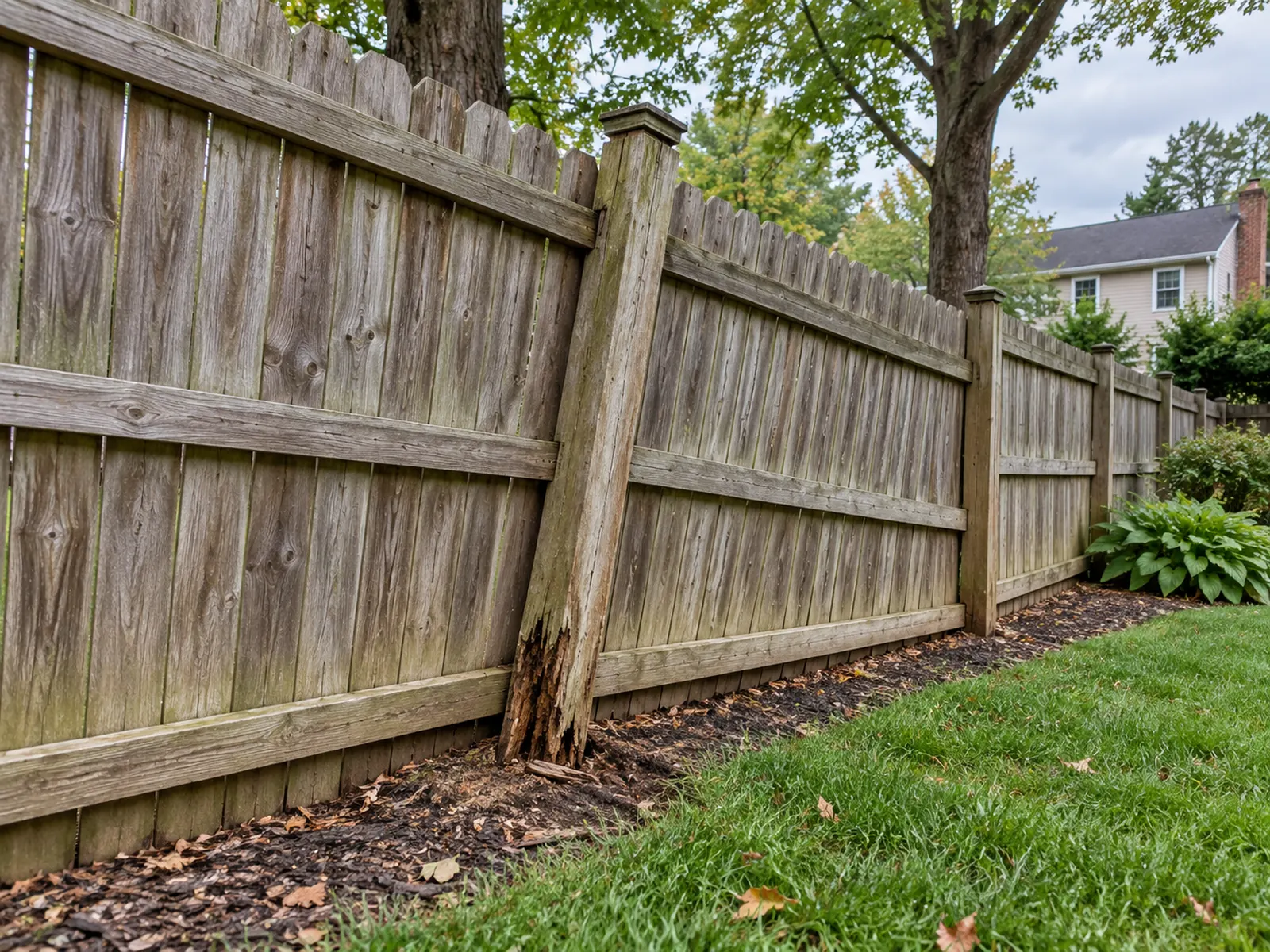
Fence Replacement
Worn-out post-war chain link and tired wood come out and get hauled off, and a new fence goes back in on the line.
Fence Replacement details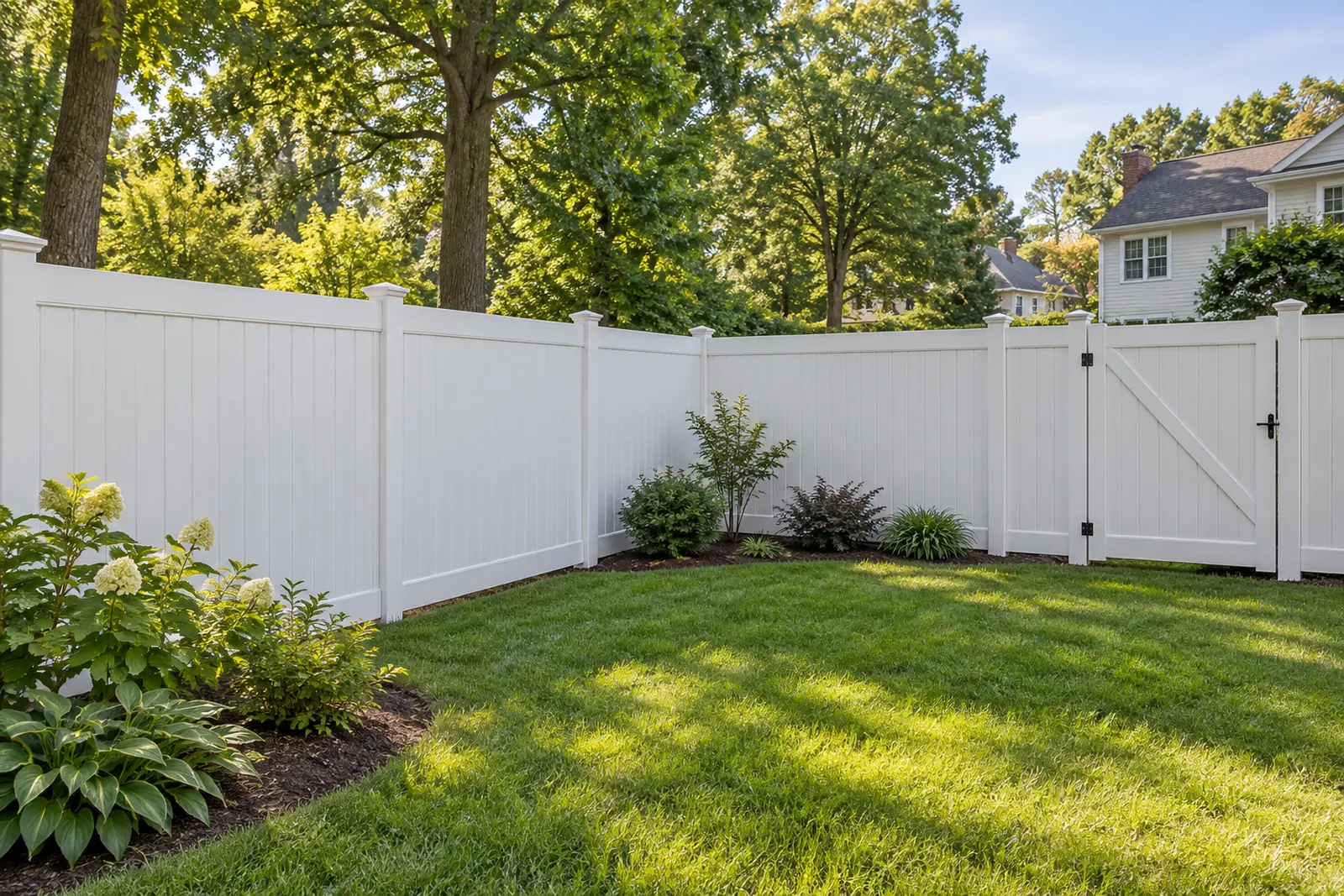
Fence Installation
Dog runs, pool barriers, rowhome rear yards and townhome privacy fences in wood, vinyl, aluminum or chain link.
Fence Installation details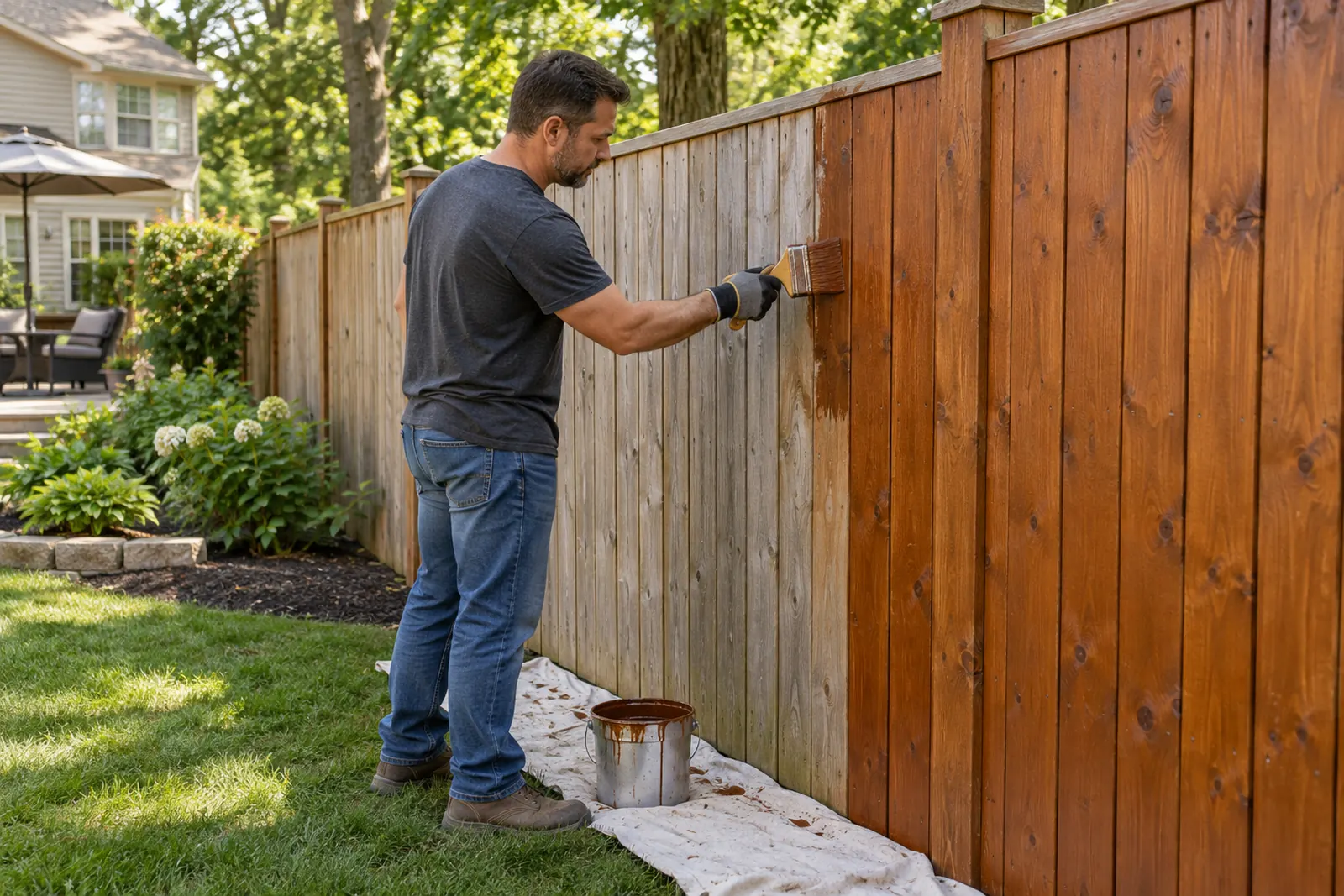
Fence Staining
Cleaned, brightened and stained wood that holds up to humid summers, shade and salt air near the water.
Fence Staining detailsStorm Damage questions, answered
Why did my fence blow over when my neighbor's fence didn't?
A fence blows over while the neighbor's stands because of differences in post condition, fence style and exposure, not luck. A solid privacy fence catches far more wind than picket, aluminum or chain link that lets air through. On waterfront lots near the Patapsco and the creeks, a fence facing open water takes harder gusts than one sheltered by a house. Most of all, posts already soft at the ground line or set shallow give way first. The broken posts usually show how much rot was there before the storm.
Does salt water from a flood ruin a wood fence?
Salt water from a flood does not automatically ruin a wood fence, but it speeds up corrosion of the hardware and leaves the wood dirty and salty if it is not rinsed. On low lots near Stoney Creek, the Patapsco or the eastern Baltimore County shoreline, brackish water can soak the lower part of a fence during a surge. The boards usually survive a short soaking. The bigger risks are posts that tipped in saturated ground and nails, hinges and latches that start rusting soon after, which we replace.
How long should I wait after a flood before you reset my fence posts?
Fence posts should be reset after a flood only once the ground has drained and firmed up, which usually means you can walk the fence line without sinking in. A post reset in mud does not hold: as the soil settles and dries, it leans again and the concrete sets out of plumb. On low waterfront lots, that wait may be longer after a surge than after ordinary rain. Meanwhile, a tipped run can be propped or tied to sound posts to keep pets in. Then we set the posts on gravel in fresh concrete.
A tree fell on my chain link fence. Can the fabric be reused?
Yes, chain link fabric can often be reused after a tree falls on it, as long as it stretched without tearing and the galvanized coating is intact. After a tree service removes the limb, we replace kinked top rail and bent posts first, then loosen the fabric, pull it tight with a come-along, and reset the tension bar and bands. Stretched fabric usually tightens back up well. Where it tore, we weave in a new section. Fabric that is rusted and brittle across the run is better replaced than re-stretched.
Trash cans blew into my alley fence and broke it. Can you fix it?
Yes, we repair alley fences broken by wind-thrown trash cans and debris, one of the most common storm calls from Baltimore rowhomes and the denser blocks of Dundalk. The damage is usually a few broken boards, a rail knocked off its post, a post loosened in its footing, or a chain link section bent inward. We replace boards to match, reattach rails, and reset loose posts in fresh concrete, carrying materials in through the alley. We confirm the rowhome, shared-fence and permit requirements for the address before any post work begins.
My fence is still standing after the storm. Should I have it checked?
A fence still standing after a strong storm is worth checking, because posts can loosen in their footings without falling over. Walk the line and push on the fence beside each post. If a post shifts or the soil around it has cracked open, the storm broke its grip. Also look for rails pulled off brackets, cracked concrete at the base, vinyl panels sitting crooked, and gates that suddenly drag. On waterfront lots in north Anne Arundel, check the runs facing the water first, since a loosened post becomes the next storm's failure.
What fence type stands up to wind on a waterfront lot?
On a waterfront lot, fences that let wind pass through, such as aluminum, chain link or open picket styles, stand up to wind far better than solid privacy fences. A solid board fence facing open water acts like a sail and puts the full gust on its posts. If you need privacy on the water side, a board-on-board or shadowbox design lets some air pass while blocking the view, and closer post spacing on the most exposed stretch spreads the load. Vinyl privacy fences benefit from metal inserts in the posts.
Can you write up the fence damage so I can send it to my insurance company?
Yes, after we inspect a storm-damaged fence we give you a written description of what we found and the repair scope, which you can send to your insurance company with your own photos. It lists which posts broke or loosened, which sections are down or bent, what can be reused, and what needs replacing. We do not file claims or speak with insurers for you, and we cannot say what your policy covers; those questions go to your agent. Take your own photos before cleanup starts, since debris may be moved before we arrive.
Is it safe to start cleaning up my fence if a power line is down in the alley?
No, it is not safe to start cleaning up a storm-damaged fence while a power line is down in the alley or anywhere near the fence. A downed wire can energize a wet chain link fence, a metal gate, or the ground around it, and you cannot tell by looking. Keep everyone, including pets, well away and report the line to the utility. Many Baltimore alleys and older Glen Burnie streets carry overhead lines, so this comes up after high wind. Once the utility clears the line, the fence can be inspected and repaired.
My gate was ripped off in the storm. Can you rehang it?
A storm-damaged gate can usually be rehung if the frame is still square and the gate post is solid; if either is damaged, we repair that first. Wind catches a gate like a door, so storms tear hinges out of the post, bend hinge pins, or rack the frame. We check the gate post for movement and cracks at the footing, replace torn hinges with heavier hardware fastened into solid material, and square or rebuild a twisted frame. On chain link we often replace the bent frame and keep the posts.
The Fence Repair Guys of Glen Burnie
6709 Ritchie Hwy, Glen Burnie, MD 21061 · (443) 292-6998. Open in Google Maps →
Fence leaning, broken, or down? Let’s get it standing straight.
Call or send a request and we’ll set up a time to look at the fence in person, figure out what actually failed, and tell you straight whether it needs a repair, a rebuild of one section, or a full replacement.
(443) 292-6998 The Fence Repair Guys of Glen Burnie6709 Ritchie Hwy, Glen Burnie, MD 21061
Serving Glen Burnie, Baltimore, and a 20-mile radius