
Fence Repair in Crofton, Gambrills & Anne Arundel County
Most fences that look finished are not. A rotted post, a popped rail or a section of smashed pickets can usually be fixed without tearing out the whole run. We repair wood, vinyl, aluminum and chain link fences across Crofton, Gambrills and the rest of Anne Arundel County, and we start by finding what actually failed.
- Crofton, Gambrills based
- Serving a 20-mile radius
- Wood · Vinyl · Aluminum · Chain link
Why Repair Beats Replacement Most of the Time
A fence almost never fails all at once. It fails at a few weak points that drag the rest of the run down. One post rots off at the dirt line, the panels beside it lean, the rails pull their nails, and soon the whole thing looks like it needs to come out. Usually it does not. On most fences we see around Crofton and Gambrills, the pickets and rails still have years left. The problem sits in two or three posts, a few rails, or one section that took a hit.
Fixing those points keeps the good material in service. You keep your layout, your gate openings and the fence your HOA already approved, with less disruption to the yard.
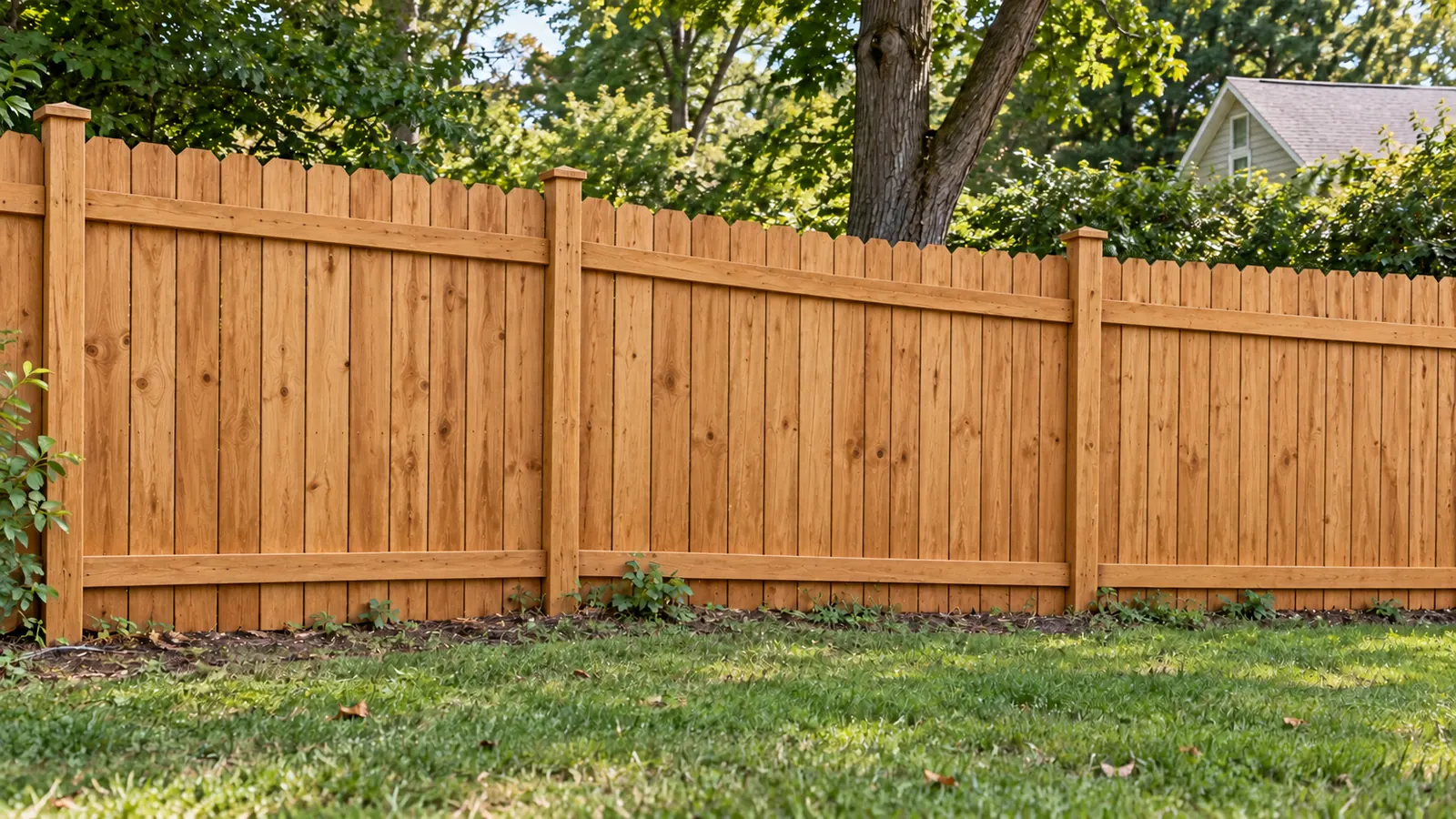
The fence in this photo was leaning and full of holes, but the bones were sound. New posts, a few rails and pickets, and a coat of stain brought it back. Repair is not always the right call. When probing at the ground line shows most posts soft, we show you those posts and recommend replacement instead.
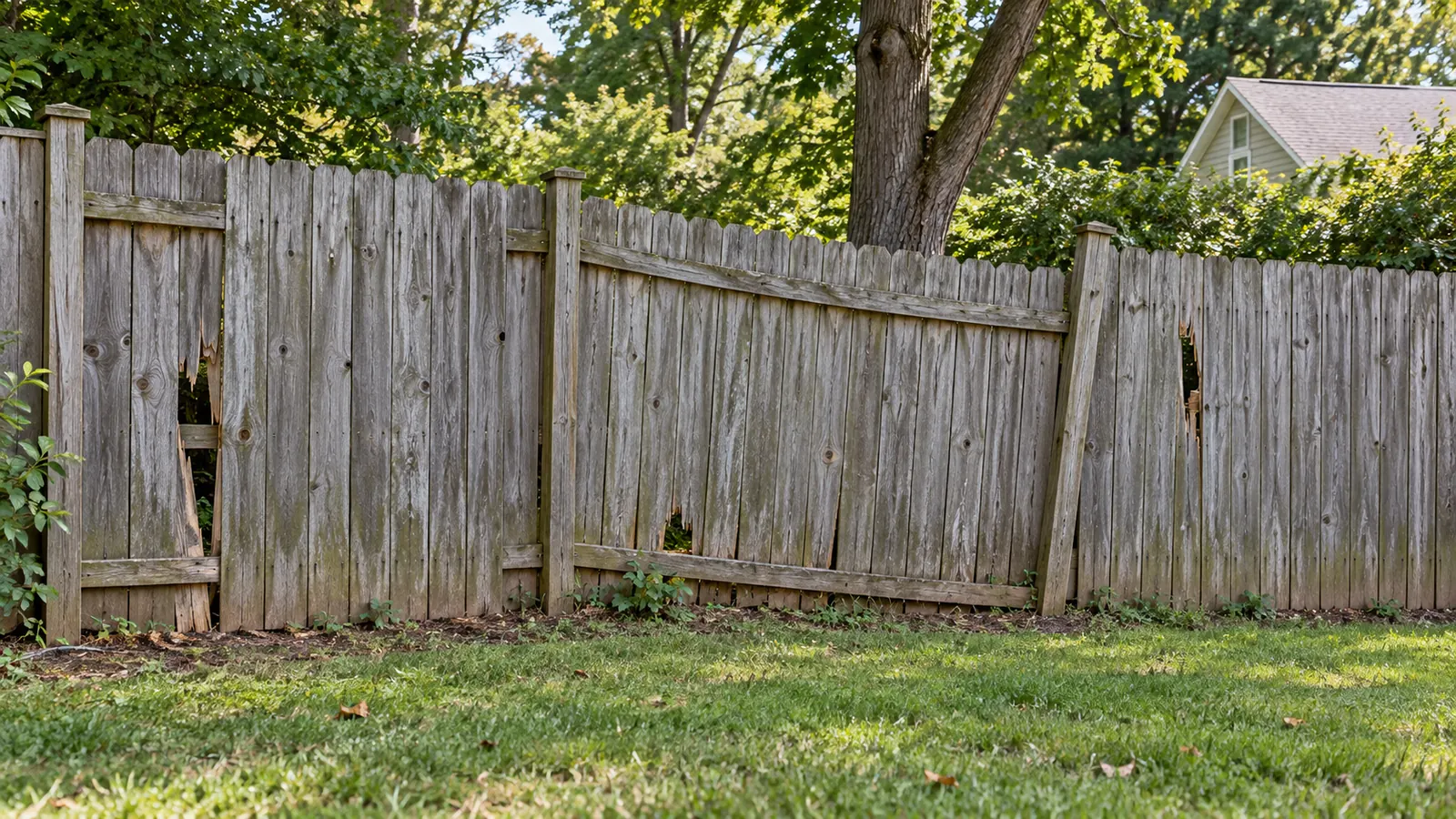 BeforeAfter
Diagnosing Wood Fence Failures: Posts, Rails, Pickets and Fasteners
A leaning run is a symptom. The cause is almost always below it. Here is what we check on every wood fence:
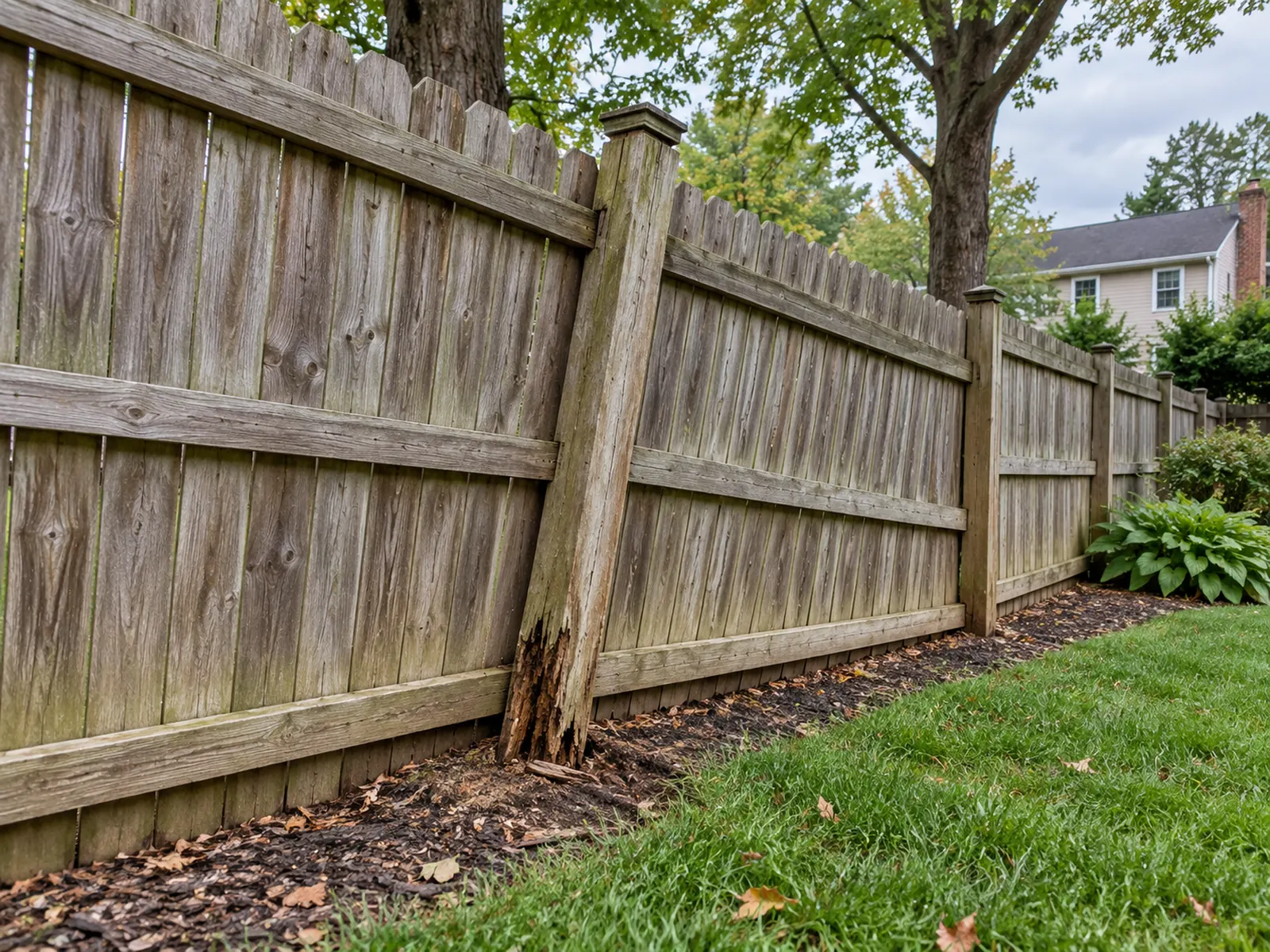
- Post rot at grade. Posts rot where air, water and soil meet. A post can look solid at waist height and be soft an inch below the dirt.
- Frost heave. The clay-heavy subsoil common in this part of Anne Arundel County holds water, freezes, expands and lifts shallow posts. Heaved posts sit high and push rails out of level.
- Leaning runs. One failed post hands its wind load to its neighbors. We sight down the line to find where the lean starts.
- Broken or loose pickets. Impacts, dogs, mowers, and weathered boards that have split around the nails.
- Split or sagging rails. Rails (stringers) crack at knots, sag on long spans, and rot where they meet the post.
- Failed fasteners. Smooth nails back out as wood swells and shrinks each season, letting pickets rattle loose and rails drop.
Not sure if it needs a repair or a replacement? We’ll look at it and tell you straight.
Call (240) 712-4826Vinyl, Chain Link and Aluminum Fence Problems
Vinyl. White vinyl privacy fence shows up in a lot of newer neighborhoods in this area. The usual calls are panels popped out of their rail pockets after high wind, cracked bottom rails, and leaning posts. Cold makes vinyl brittle, so a branch in January can crack a rail that would have flexed in July. We reseat popped panels, replace cracked parts with matching profiles, and reset leaning posts.
Chain link. Galvanized chain link fails through fabric sag, broken tension bands, or top rail bent by a falling limb. Once tension is gone the bottom curls up, which is how dogs get out. We replace bent top rail and bands and re-stretch the fabric.
Aluminum. Pickets bend on impact and rail brackets crack or lose screws. We replace bent sections and brackets and re-level posts. If a tree or a windstorm did the damage, read how The Fence Repair Guys of Crofton handle storm work.
How We Fix Posts: Sistering vs. Full Replacement
Posts are where most repair work happens, and there are two ways to deal with a bad one.
Sistering means setting a steel post mender or short pressure-treated post alongside the damaged one and bolting them together. It works when the post is sound above ground and the damage is limited to the base. It is not a fix for a post rotted through or heaved badly out of plumb.
Full post replacement is the permanent fix. We pull the old post and its concrete and dig a fresh hole. Gravel goes in the bottom so water drains away from the end grain. The new post is set plumb in concrete crowned at the top so water sheds away from the wood. That drainage detail is the difference between a post that lasts and one that rots out again in a few years.
On a long run with several bad posts, we often replace the worst and sister the rest.
Rails, Pickets, Re-Hanging and Matching the Old Wood
Split or sagging rails get replaced with new pressure-treated or cedar stock. Loose rails are re-hung with exterior screws or ring-shank nails, whose threads and rings lock into the wood fibers instead of sliding out as the boards swell and shrink. Where rail ends have rotted, we add rail brackets so the new connection is not relying on soft wood.
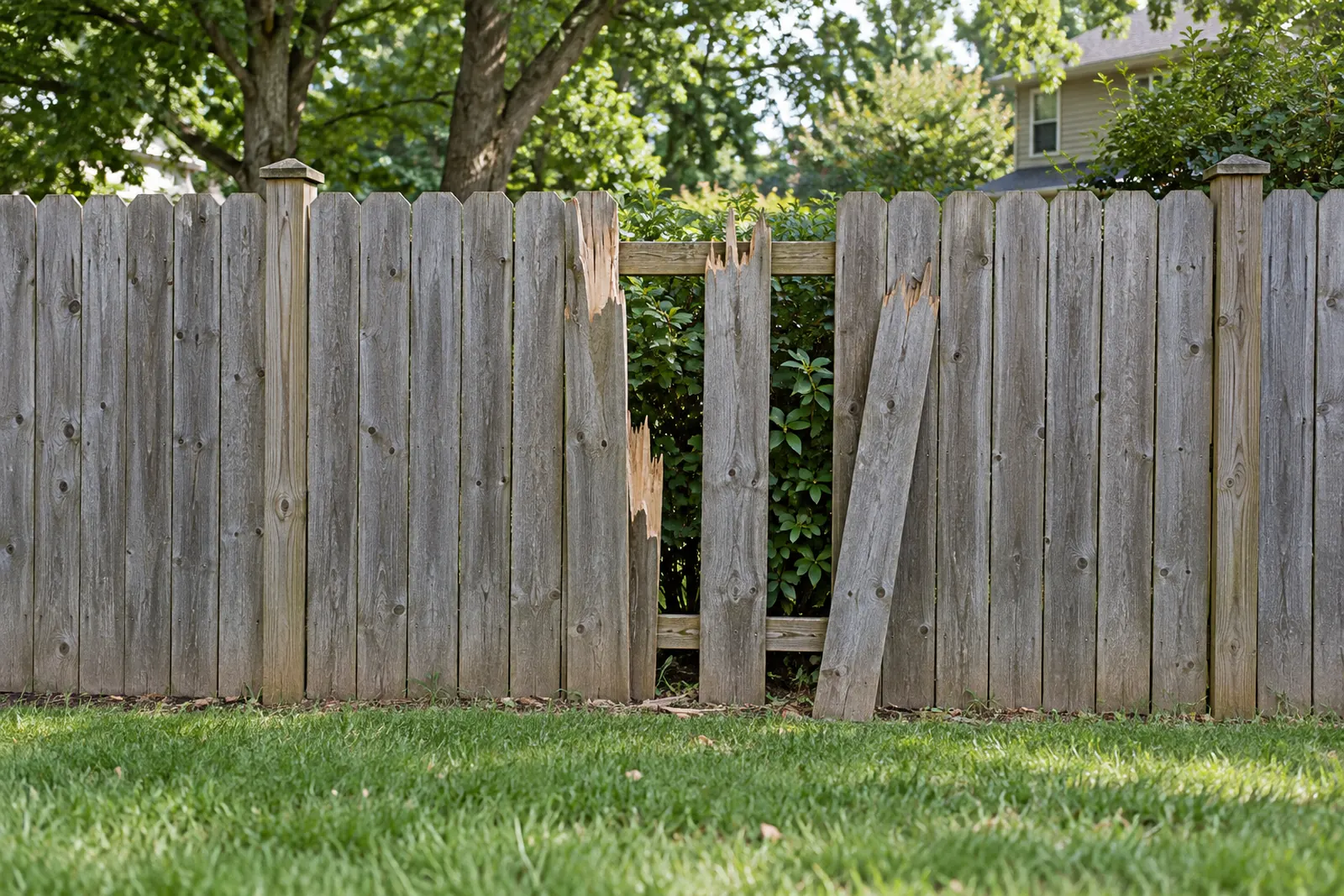
We match the width, height and top style of your pickets: dog-ear, flat top, gothic or scalloped. Broken boards, like the smashed section in this photo, get replaced board for board so the spacing stays consistent. Loose pickets get refastened with new hardware instead of being renailed into the same worn holes.
New wood never matches weathered gray wood on day one, so a patch can stand out for a year or more. Let it weather in, or blend the section with stain. That is how the Gambrills fence above went from patched gray to uniform honey-brown. Stain also slows the moisture cycling that loosens fasteners in the first place.
When Repair Stops Making Sense
Fence repair is our specialty, and most fences we probe can be saved. But there is a point where patching only buys a season before the next post fails. These are the signs:
- A large share of the posts are rotted at grade, or posts are failing one after another every season.
- The pickets are soft, split and crumbling across the whole fence, not just in one section.
- The fence was built with untreated or undersized lumber that was never going to last.
- The vinyl has gone chalky and brittle throughout, and parts for that profile are no longer made.
- You want a different height, material or layout anyway, or the HOA now requires something the current fence does not meet.
Sometimes the answer is a hybrid: replace the worst run and repair the rest. If a full tear-out is smarter, we handle fence replacement too. We base that call on what the probe finds at grade on every post, and we show you the soft ones so you can see the same thing we do.
What to Expect When We Come Out
We walk the full fence line, not just the section you called about, because the post next to the broken one is often the next to go. We probe posts at grade, check rails and fasteners, swing the gates, and explain what is failing and why.
If the repair involves digging new post holes, underground utilities have to be marked first. We place the Miss Utility request (811) and wait for the marks before any digging starts. We also confirm permit and HOA requirements for your address before work begins.
On the work day we haul away old posts, concrete and broken boards and leave the line clean. Gates are adjusted so they swing and latch before we leave. If a gate is dragging or will not latch, The Fence Repair Guys of Crofton can fix it on the same visit. See the full list of towns The Fence Repair Guys of Crofton serve.
The rest of what we do
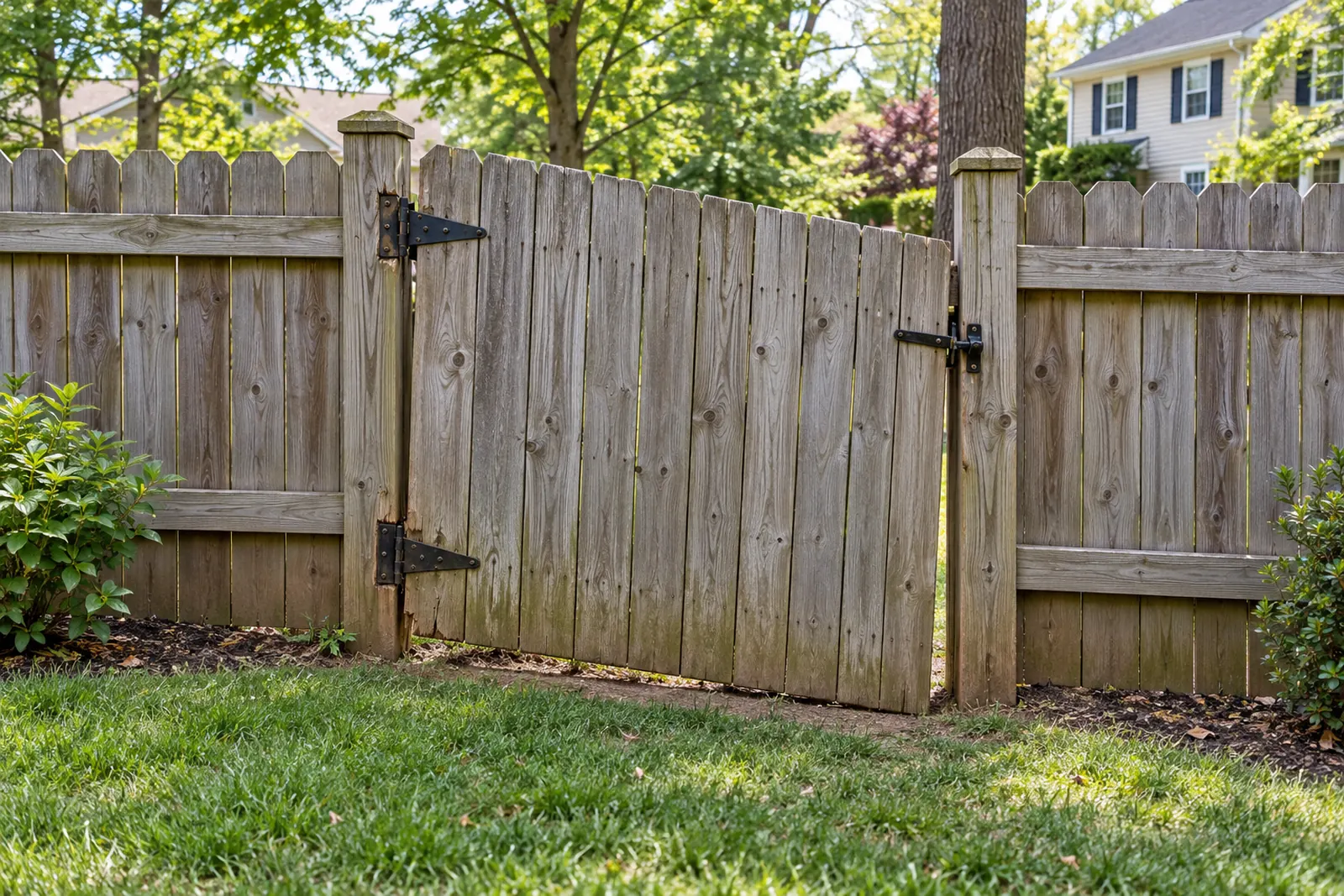
Gate Repair
Dragging, sagging, or won’t-latch gates rebuilt square, re-hung on the right hardware, and set to swing and close cleanly.
Gate Repair details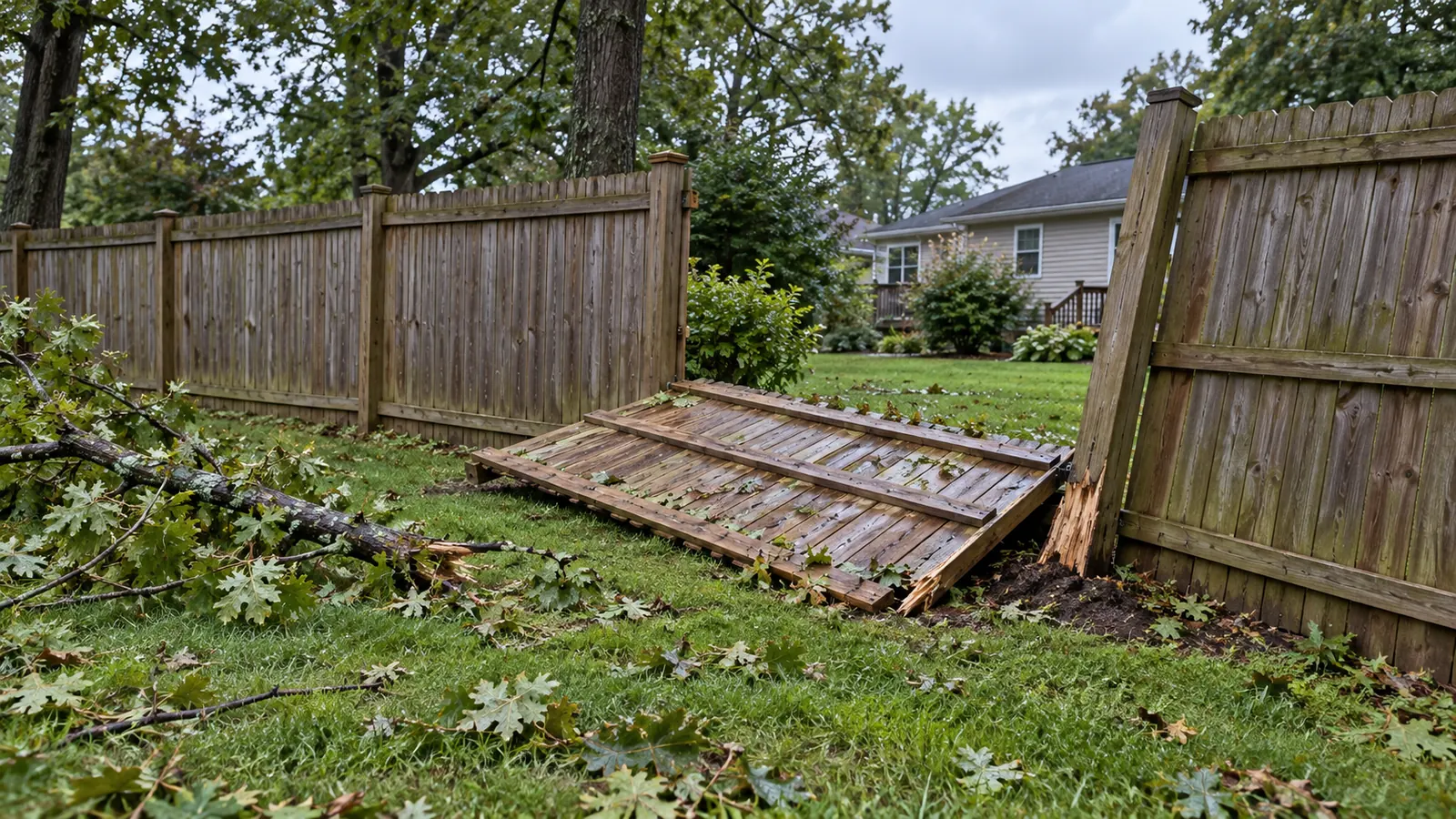
Storm Damage Repair
Wind and falling limbs flatten sections fast. We secure the yard, document the damage, and rebuild the run the right way.
Storm Damage Repair details
Fence Replacement
When a fence is past saving, we tear it out, haul it off, and set a new one on the same line, or a better one.
Fence Replacement details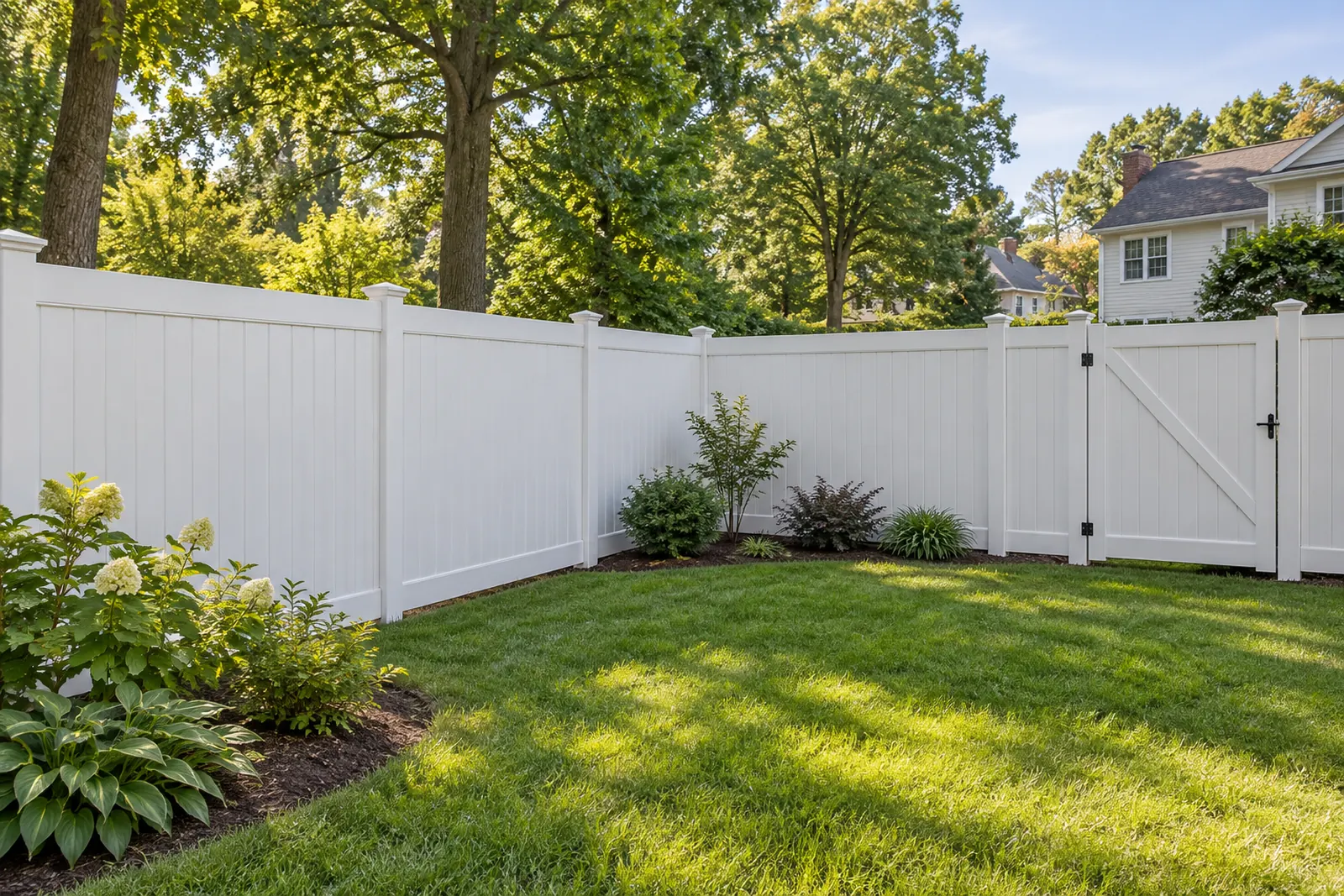
Fence Installation
Wood privacy, white vinyl, black aluminum, and galvanized chain link, laid out right and set deep with drainage under every post.
Fence Installation details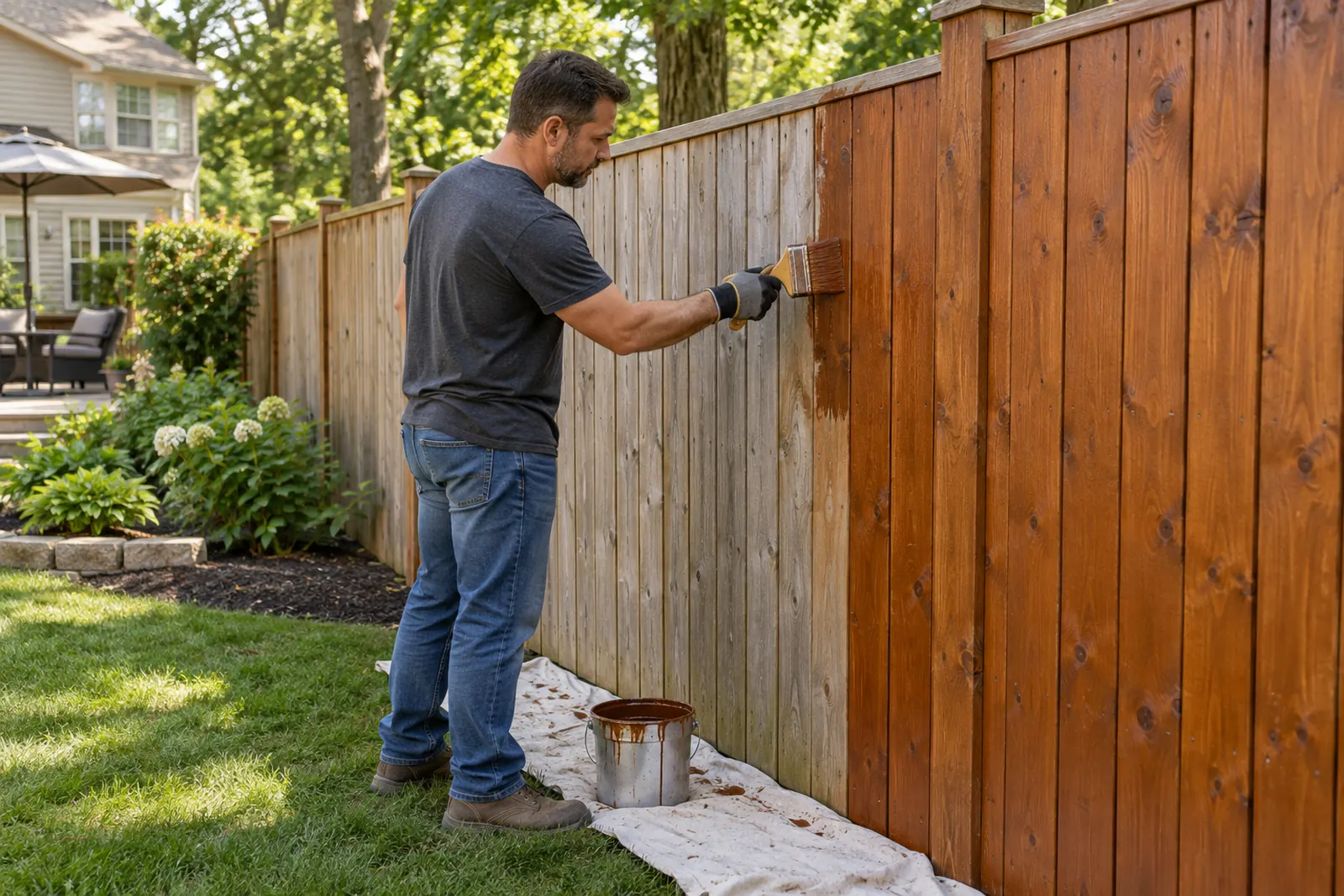
Fence Staining
Cleaning, brightening, and penetrating stain that stops graying and mildew and blends repaired boards into the old fence.
Fence Staining detailsFence Repair questions, answered
Can you fix just one section of my fence or do I have to replace the whole thing?
Yes, the Fence Repair Guys can fix just one section of your fence without replacing the whole thing, as long as the posts on either side are sound. Most fence failures are local: one or two posts rotted at grade, a split rail, or a bay of pickets a limb landed on. We pull the damaged bay, set new posts in concrete over a gravel base, and rebuild it to match the existing pickets and rails. While we are there we probe every post on the line at the soil, because posts set the same year tend to rot at the same rate. If the neighbors of your broken section are soft too, we show you so you can decide whether to fix them now or watch them.
Why does my fence keep leaning after every storm?
A wood fence that leans further after every storm in Crofton or Gambrills almost always has failing posts below the dirt line, not a problem with the boards. The posts are rotting at grade, were set too shallow, or have been lifted by frost in the clay-heavy subsoil common here. A solid privacy fence acts like a sail, so each gust levers against those weakened posts and pushes the run over a little more. A two-by-four prop slows it down but fixes nothing. The repair is replacing or resetting the failed posts with gravel under them and a crowned concrete collar so water drains off, then pulling the line back to plumb and refastening the rails.
How can I tell if my fence post is rotted?
You can tell a wood fence post is rotted by checking it at the ground line, because that is where posts rot first, often while the wood looks fine at waist height. Push on the fence beside the post: if the post rocks at the base while the panels stay put, it is compromised. Pull back an inch or two of soil and press a screwdriver into the wood. Sound pressure-treated wood resists the tip, while rotted wood lets it sink in and feels spongy or stringy. Also look for dark staining, fungus at the base, and a gap where the soil has pulled away from the post. On every repair visit we probe each post this way.
Can you match the pickets on my old fence?
Yes, we can match the pickets on your old fence in size, shape and species, and we handle the color difference with stain. We match board width, thickness, height and top cut (dog-ear, flat top, gothic or scalloped) and use cedar for cedar and pressure-treated pine for pressure-treated, so the repaired bay reads as part of the same fence. Color is the part nobody matches on day one, because new wood is lighter or greener than boards that have weathered for years. You can let new pickets gray out over a season or two, or have the repaired section or the whole fence cleaned and stained so old and new boards end up the same tone.
Can you fix a vinyl fence panel that blew out in the wind?
Yes, a vinyl fence panel that blew out in the wind can usually be reseated and locked back into the post pockets, as long as the rails and posts are not cracked. White vinyl privacy fence is common in newer Crofton and Gambrills subdivisions, and high wind flexes a panel until the rail ends pop free of the post. We check the rail ends and pocket edges first. Cold makes vinyl brittle, so a winter impact often cracks a bottom rail, which we replace with a matching profile when that part is still made. If the post itself is leaning, we reset it, and on exposed runs we can add a metal insert inside the post to stiffen it against the next gust.
Is sistering a fence post as good as replacing it?
Sistering a fence post is a sound repair only when the post is solid above ground and the damage is limited to the base; a post that is rotted through or heaved out of plumb needs full replacement. Sistering means setting a steel post mender or a short pressure-treated post beside the damaged one and bolting them together, so the new piece carries the load at grade. It keeps the fence in place with less digging. Full replacement means pulling the old post and its concrete, setting a new post plumb on a gravel base, and crowning the concrete to shed water. On long runs with several bad posts, we often replace the worst ones and sister the rest.
Why do my fence pickets keep coming loose?
Fence pickets keep coming loose because smooth nails back out of the wood as it swells in wet weather and shrinks in dry weather, season after season. Each cycle pushes the nail out a little, until the picket rattles, the rail drops, or the board splits around the hole. Renailing into the same worn holes does not hold for long. On a repair we refasten loose pickets and rails with exterior screws or ring-shank nails, whose threads or rings lock into the wood fibers instead of sliding out, and we drive them into fresh wood beside the old holes. Staining the fence afterward slows the moisture cycling that loosens fasteners in the first place.
Do I need to call Miss Utility before you replace fence posts?
No, you do not need to call Miss Utility yourself before we replace fence posts, because we place the Maryland 811 request as part of any repair that involves digging. Once the ticket is in, the utility companies mark their buried lines with paint or flags, and we wait for those marks before a post hole is opened. Gas, electric, cable and fiber lines often run along property lines, which is exactly where fence posts go. The marks cover public utilities only, so tell us about private lines like irrigation, landscape lighting, a feed to a shed or an invisible dog fence wire. Repairs that only involve rails, pickets or fasteners need no marking.
My fence is shared with my neighbor. Can you still repair it?
Yes, we can repair a fence shared with your neighbor, and shared fences are common along lot lines in Crofton and Gambrills subdivisions. The practical need is access: pulling a post or replacing a rail often means working from the neighbor's side, so it helps when both households know the work is coming. We describe the damage and the repair plan in plain terms you can pass along, so everyone works from the same facts. Who owns the fence and how the work is split is between you and your neighbor, and we stay out of that. If your HOA sets rules on repair materials or appearance, we confirm them before work starts.
How long does a typical fence repair take?
A typical fence repair, such as replacing pickets, re-hanging rails or fixing a section of chain link, is finished in a single visit. Post replacement adds a waiting step, because utilities have to be marked through Miss Utility before digging, and we do not open a hole until the marks are down. Once they are, setting new posts and reattaching the fence goes quickly. Larger repairs that span several sections, or jobs that include staining the repaired area, take longer, partly because stain needs dry wood and a dry forecast. After the inspection we lay out the steps and the order they happen in, and we tell you if weather moves the schedule.
The Fence Repair Guys of Crofton
2390 Brandermill Blvd, Gambrills, MD 21054 · (240) 712-4826. Open in Google Maps →
Fence leaning, broken, or down? Let’s get it standing straight.
Call or send a request and we’ll set up a time to look at the fence in person, figure out what actually failed, and tell you straight whether it needs a repair, a rebuild of one section, or a full replacement.
(240) 712-4826 The Fence Repair Guys of Crofton2390 Brandermill Blvd, Gambrills, MD 21054
Serving Crofton, Gambrills, and a 20-mile radius