
Storm Damage Fence Repair in Crofton, Gambrills & Anne Arundel County
A summer thunderstorm, a nor'easter or the leftovers of a tropical system can flatten a fence line in minutes. We help Anne Arundel County homeowners secure the yard, document the damage, and rebuild the fence with new posts on gravel in crowned concrete so the ground line drains instead of rotting.
- Crofton, Gambrills based
- Serving a 20-mile radius
- Wood · Vinyl · Aluminum · Chain link
The Storms That Take Down Fences in Central Maryland
Central Maryland gets hit from several directions. Summer thunderstorms roll through with short, violent gusts that can push over a privacy fence in one blast. Nor'easters bring days of wind and soaking rain in the colder months. Late summer and fall can bring tropical remnants: rain that saturates the ground, then wind that finds every weak post.
A solid privacy fence takes that wind like a sail. Solid boards catch the full gust and hand it to the posts. Picket, aluminum and chain link let wind through, so they usually fail from falling trees instead.
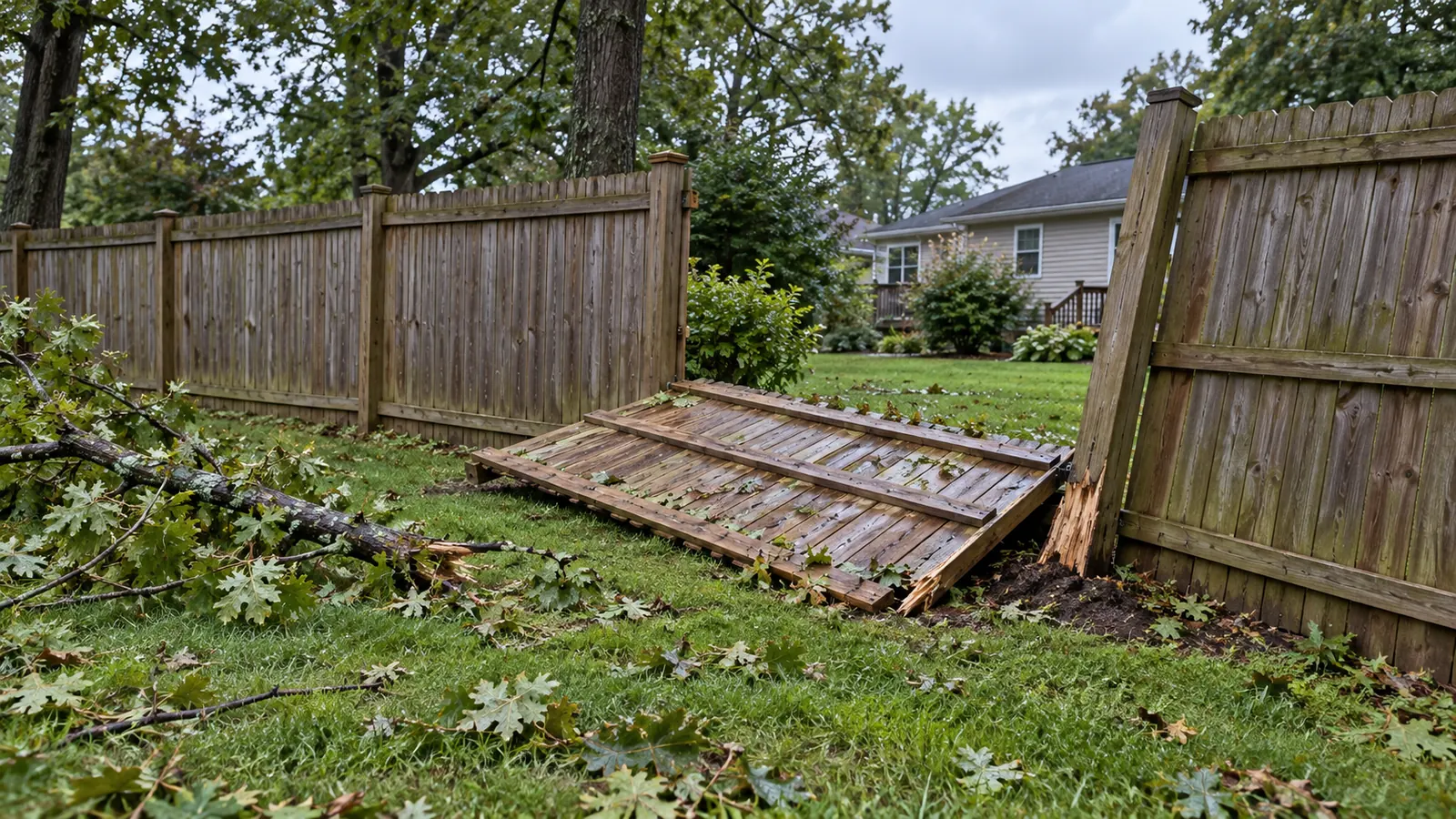
The other half of the problem is trees. Neighborhoods around Crofton, Gambrills, Davidsonville and Annapolis have a lot of mature oaks and tall tulip poplars along property lines, often right over the fence. When a limb lands on a fence it crushes pickets, snaps rails, bends chain link top rail and aluminum panels, and can pull posts right out of the ground. The fence in this photo shows the typical result. If you are on the Annapolis side of the county, see how The Fence Repair Guys of Crofton handle fences there.
First Things First: Secure the Yard
After a storm, deal with safety and containment before anyone talks about permanent repairs.
- Stay away from downed wires. If a power or service line is down on or near the fence, keep everyone back and report it to your utility.
- Keep pets inside or leashed. A gap you have not noticed in a back corner is enough for a dog to get out.
- Close off the pool. If the fence around a pool is down or a pool gate will not latch, keep children and pets away from the area until it is secured again.
- Watch for leaning sections. A run that is hanging at an angle or held up by a branch can drop without warning.
- Leave large limbs to the right people. A branch resting on a fence may be under tension. Big limbs and trees should be cut by a tree service before fence work begins.
Once the area is safe, take a slow walk along the full line and note every spot that is down, leaning, cracked or open. Storm damage is rarely limited to the section you can see from the back door.
Not sure if it needs a repair or a replacement? We’ll look at it and tell you straight.
Call (240) 712-4826Documenting the Damage for Your Insurance Claim
If you plan to file a homeowner insurance claim, documentation matters, and the best time to gather it is before anything gets cleaned up. Take photos and video from a few angles: wide shots that show the whole damaged run and its place in the yard, then close-ups of snapped posts, crushed pickets, bent rails and the limb or tree that came down. Note the date of the storm.
When we come out, we inspect the damage and give you a written description of what we found and the repair scope: which posts are snapped or loosened, which sections are down, what needs replacing and what can be reused. You can share that description and those photos with your insurer as part of your claim.
To be clear about our role: we do not work with insurance companies on your behalf, and we cannot tell you what your policy covers or what a claim will pay. Questions about deductibles, coverage and claims belong with your insurance agent or company. Our job is to describe the damage accurately and repair the fence, with new posts set on gravel in crowned concrete.
Why Posts Snap at the Ground Line
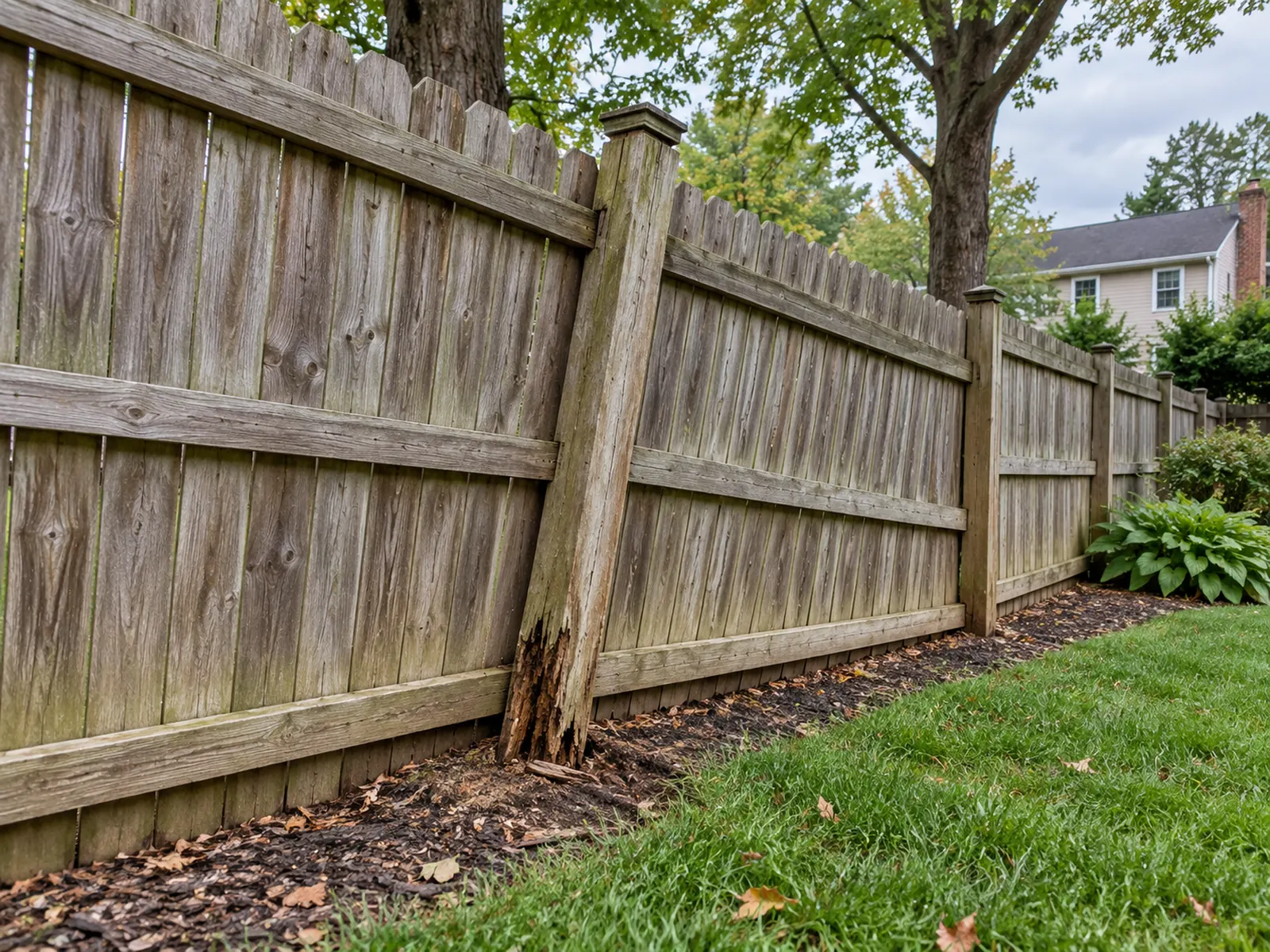
When we look at a fence a storm knocked down, the break is almost always at or just below grade. That is not a coincidence. The ground line is where a wood post rots first, because it sits where air, water and soil meet. Our wet clay subsoil keeps the base damp for long stretches. The post may look perfect from above, but it has lost much of its strength right where the wind puts the most leverage on it.
So the storm is often not the whole story. It found posts that were already weakened, and it finished them off. Shallow posts and posts heaved loose by frost also go over easily.
This matters for the repair. Setting new posts where the old ones snapped is necessary, but the posts on either side of the break took the same load and may be cracked, loosened or partly rotted too. We check every post along the damaged run, and nearby runs, at the ground line. New posts go in this way: utilities marked through Miss Utility first, then gravel at the bottom of the hole for drainage, posts set plumb in concrete, and the concrete crowned so water sheds away from the wood.
Temporary Securing vs. Permanent Repair
Some storm damage can be fixed right away. Some needs a temporary measure first. Utilities must be marked before we dig post holes, and a tree service may need to clear a large limb first. Meanwhile the yard still needs to hold a dog or keep a pool closed off.
Temporary securing is about containment, not appearance. That can mean standing up a downed panel and bracing it, closing a gap with a section of fencing or panels tied to sound posts, or fixing a gate so it latches.
The permanent repair rebuilds what the storm broke: snapped and loosened posts replaced in concrete, broken rails and pickets replaced to match, bent chain link top rail and fabric restored, and damaged vinyl or aluminum sections replaced. Where the storm pulled a gate out of line, The Fence Repair Guys of Crofton re-hang and adjust it so it swings and latches again. If the storm exposed a fence that was failing everywhere, with rotted posts all down the line and boards that are soft throughout, we show you the soft posts and boards we found and lay out whether repair is still the smart move or whether it is time to talk about replacement.
Shared Fences and Neighbor Trees
Storm damage gets complicated when the fence sits on or near a property line, which describes a lot of fences in Crofton and Gambrills subdivisions. A neighbor's tree may have fallen on your fence, your tree may have landed on theirs, or the fence may be shared between two or three yards.
The practical side is simple. Talk to your neighbors early. Let them know what happened, that you are getting it looked at, and that we may need access to their side to pull posts, clear debris or rebuild a section. Our written description of the damage and repair scope gives everyone the same facts to work from.
Who owns the fence, who owns the tree, and who is responsible for what are questions for you, your neighbor and your insurers. We do not take sides in those conversations. If your HOA has rules about fence materials or appearance, we confirm them before work starts so the repaired section matches what is required. For everyday problems like rotted posts and broken pickets, The Fence Repair Guys of Crofton handle that too.
The rest of what we do
Fence Repair
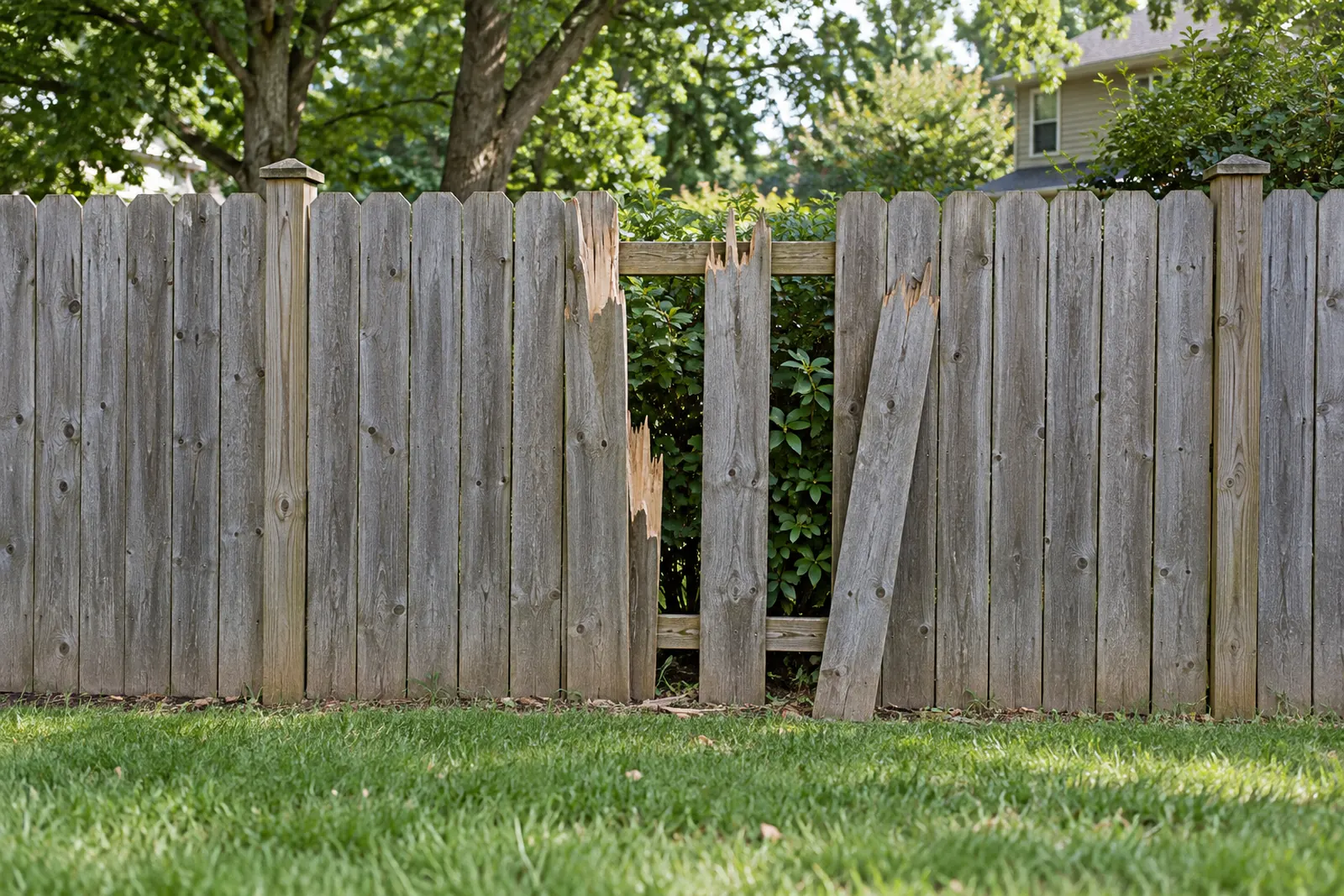
Rotted posts, leaning runs, broken pickets and rails, popped vinyl panels, sagging chain link. This is our main trade, on every fence material.
Fence Repair details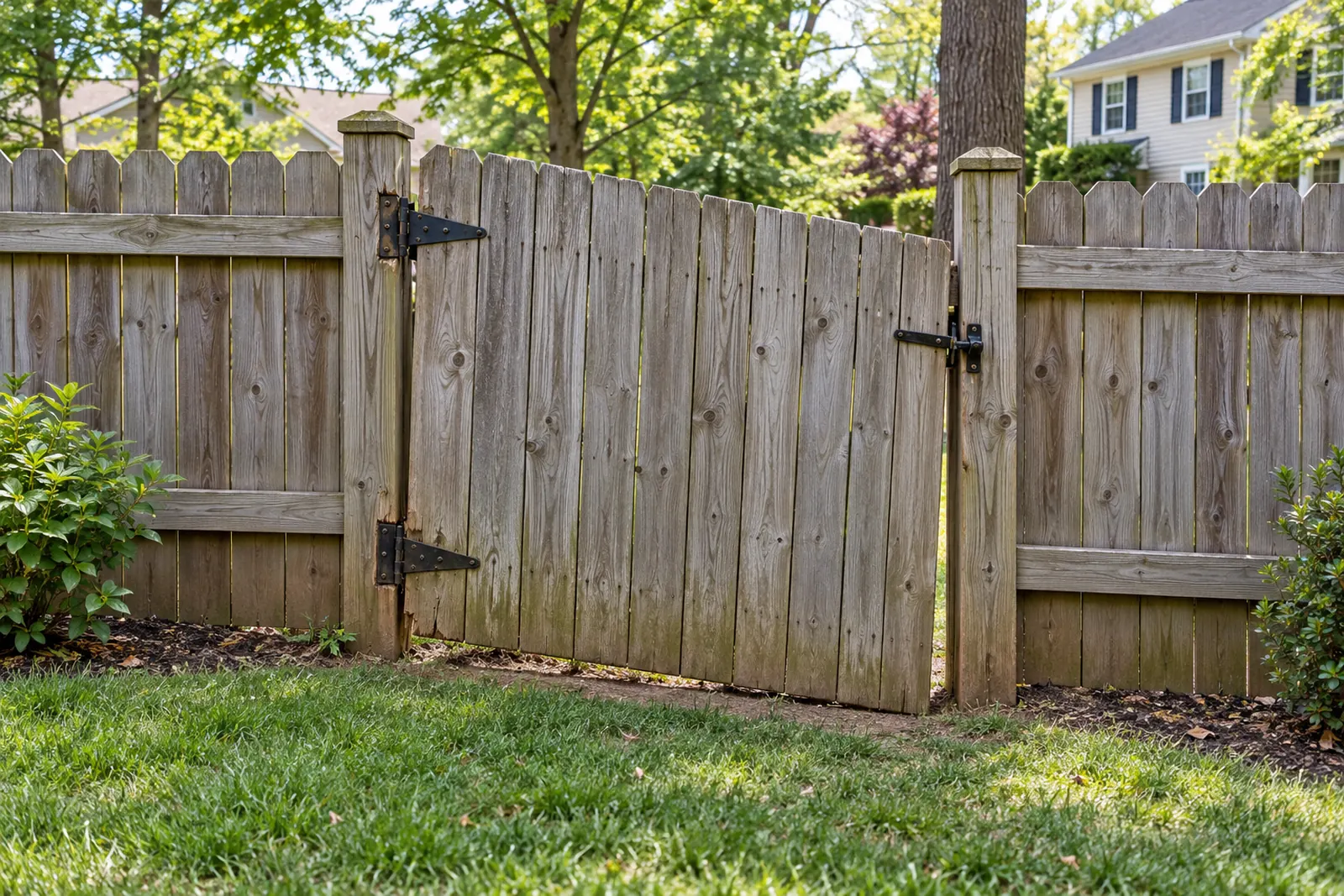
Gate Repair
Dragging, sagging, or won’t-latch gates rebuilt square, re-hung on the right hardware, and set to swing and close cleanly.
Gate Repair details
Fence Replacement
When a fence is past saving, we tear it out, haul it off, and set a new one on the same line, or a better one.
Fence Replacement details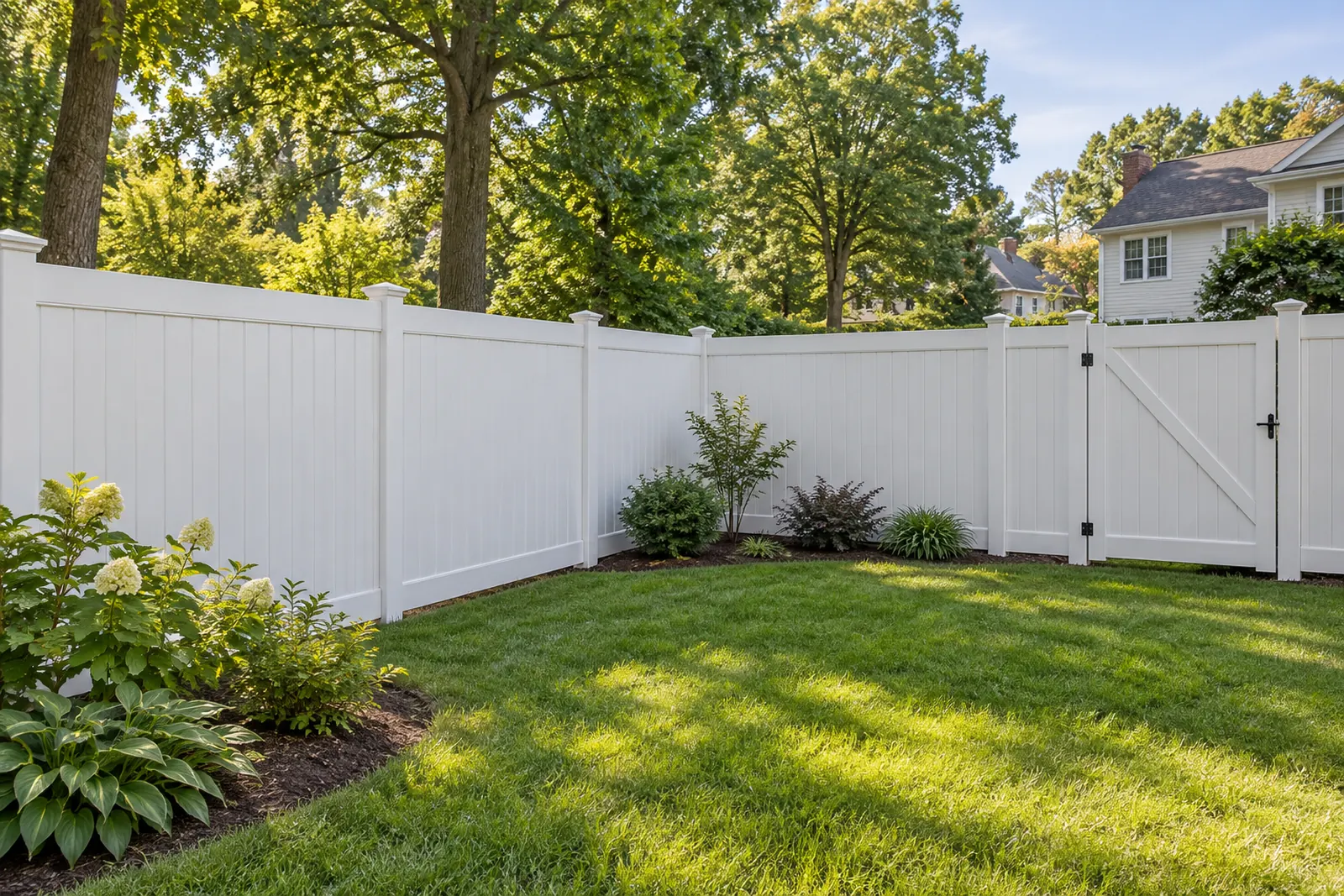
Fence Installation
Wood privacy, white vinyl, black aluminum, and galvanized chain link, laid out right and set deep with drainage under every post.
Fence Installation details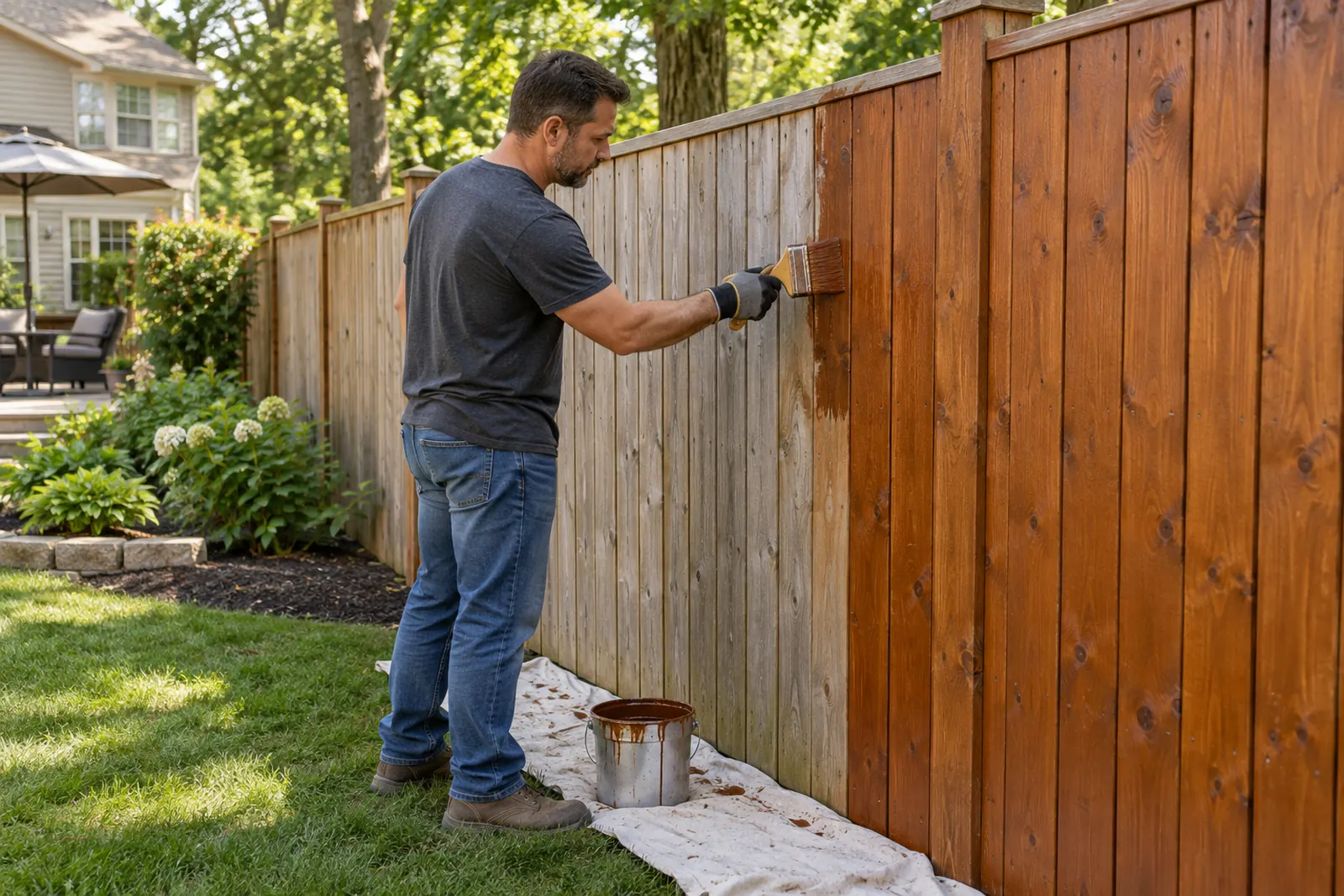
Fence Staining
Cleaning, brightening, and penetrating stain that stops graying and mildew and blends repaired boards into the old fence.
Fence Staining detailsStorm Damage questions, answered
A tree limb fell on my fence. What should I do first?
When a tree limb falls on your fence, first make sure no power or service lines are involved; if a line is down near the fence or tangled in the limb, keep everyone back and call your utility. Next, keep pets inside and children away, since a branch resting on a fence can shift and a leaning section can drop. Photograph the limb, the fence and the tree before anything moves. Then have the limb removed. Big limbs or whole trees are a job for a tree service, because a branch resting on a fence is often under tension. Once the debris is cleared, we inspect the fence and give you a written description of the damage and repair scope.
Will my homeowners insurance cover storm damage to my fence?
Whether homeowners insurance covers storm damage to your fence depends entirely on your policy and your insurer, and only your agent or insurance company can answer that. Coverage, deductibles and claim decisions belong with them. What we can do is help you document the fence damage. When we inspect, we give you a written description of what we found and the repair scope (which posts snapped, which sections are down, what needs replacing and what can be reused) along with photos. You can share that with your insurer as part of your claim. We do not file claims or deal with insurance companies on your behalf; our part is describing the damage accurately and repairing the fence.
What photos should I take of my storm-damaged fence?
Take photos of your storm-damaged fence before anything is cleaned up or moved, starting with wide shots and then close-ups of each break. The wide shots should show the whole damaged run and where it sits in the yard, with the house in the background so the location is clear. Then get close-ups of each snapped post, crushed pickets, bent rails, popped vinyl panels or bent chain link top rail. If a tree or limb caused it, photograph the limb on the fence, the break or stump on the tree, and the tree itself. A short video walking the fence line helps too. Note the date of the storm alongside the photos.
Why did my fence posts snap at the ground?
Fence posts snap at the ground in storms because the ground line is where wood posts are weakest, usually from rot that has been working there for years. That is where air, water and soil meet, and the damp clay subsoil around Crofton and Gambrills keeps a post base wet for long stretches, so the wood breaks down just below the surface while it still looks solid at eye level. When a strong gust hits a privacy fence, all that force levers against the weakest point, and the post breaks right there. Shallow posts and posts loosened by frost heave also go over easily. That is why we probe the neighboring posts at grade before rebuilding.
Can you put up something temporary until the fence is fixed?
Yes, a storm-damaged fence can often be temporarily secured until the permanent repair, so dogs stay in and pools stay closed off. Temporary securing can mean standing up and bracing a downed panel, closing a gap with panels tied to sound posts, or getting a gate to latch again. It is about containment, not looks. Permanent repairs often have to wait a short time, because new post holes cannot be dug until utilities are marked through Miss Utility, and large limbs may need a tree service first. The temporary fix buys time for the permanent posts to be set on gravel in crowned concrete instead of rushed. Keep receipts for temporary work in case your insurer asks.
My neighbor's tree fell on our shared fence. Who handles the repair?
When a neighbor's tree falls on a shared fence, who pays and who is responsible is between you, your neighbor and your insurers, and we stay out of that part. What we suggest is talking with your neighbor early, sharing photos, and agreeing to have the fence inspected. We provide a written description of what broke and the repair scope, which gives both households the same facts to work from. If we need access to your neighbor's side to clear debris, pull posts or rebuild a section, we coordinate that with both of you. Shared fences are common along lot lines in Crofton and Gambrills subdivisions, and we repair them regularly.
Can a storm-damaged fence be repaired, or does it need to be replaced?
Most storm-damaged fences can be repaired rather than replaced, because wind and falling limbs usually break a few posts and a section or two while the rest of the line stays sound. We replace snapped and loosened posts in concrete over gravel, rebuild or replace the damaged sections, and match pickets and rails to your existing fence. Sometimes a storm exposes a bigger problem, such as posts rotted at grade all down the line or boards soft throughout. Repairing one section of that fence only sets it up for the next storm. In that case we show you the soft posts and boards and walk through whether a larger repair or a replacement makes more sense.
How do I keep my fence from blowing down in the next storm?
The way to keep a fence from blowing down in the next storm is to make sure its posts are sound at the ground line, because that is where nearly every storm failure starts. Posts set with gravel at the bottom and concrete crowned to shed water stay dry at grade much longer than posts sitting in a cup of wet soil. Replace soft posts before a storm finds them. Keep rails and pickets fastened tight, since a loose board flaps and works the rest of the fence loose. Have dead or overhanging limbs above the fence line checked by a tree service. Keeping wood fences stained slows the moisture cycling that rots posts and loosens fasteners.
Can a vinyl or aluminum fence be repaired after a storm?
Yes, vinyl and aluminum fences can usually be repaired after a storm by replacing only the damaged panels, rails or posts. Wind tends to pop white vinyl privacy panels out of their post pockets, and cold-weather impacts crack vinyl rails, so we reseat panels that are intact and replace cracked parts with matching profiles where they are still made. Black aluminum usually fails from a falling limb: bent pickets, bent rails and cracked brackets. We swap the bent section or brackets and re-level the posts. Bent galvanized chain link top rail gets replaced and the fabric re-stretched. If a post moved in the ground, we reset it in concrete so the run stands plumb again.
Should I take down the leaning section of my fence myself before you come out?
No, it is usually safer to leave a leaning storm-damaged fence section in place, braced or roped off, than to take it down yourself before the inspection. A section held up by a branch or hanging off a cracked post can be under tension and drop or swing when you start pulling on it. Leaving it also preserves the damage for your photos and for our written description of the repair scope. If the section blocks a path, threatens a car, or leaves a dog run open, prop it with a board or tie it off to a sound post. Pull loose boards with exposed nails out of walkways and set them aside rather than hauling them off.
The Fence Repair Guys of Crofton
2390 Brandermill Blvd, Gambrills, MD 21054 · (240) 712-4826. Open in Google Maps →
Fence leaning, broken, or down? Let’s get it standing straight.
Call or send a request and we’ll set up a time to look at the fence in person, figure out what actually failed, and tell you straight whether it needs a repair, a rebuild of one section, or a full replacement.
(240) 712-4826 The Fence Repair Guys of Crofton2390 Brandermill Blvd, Gambrills, MD 21054
Serving Crofton, Gambrills, and a 20-mile radius