Fence Replacement When Repair Stops Making Sense
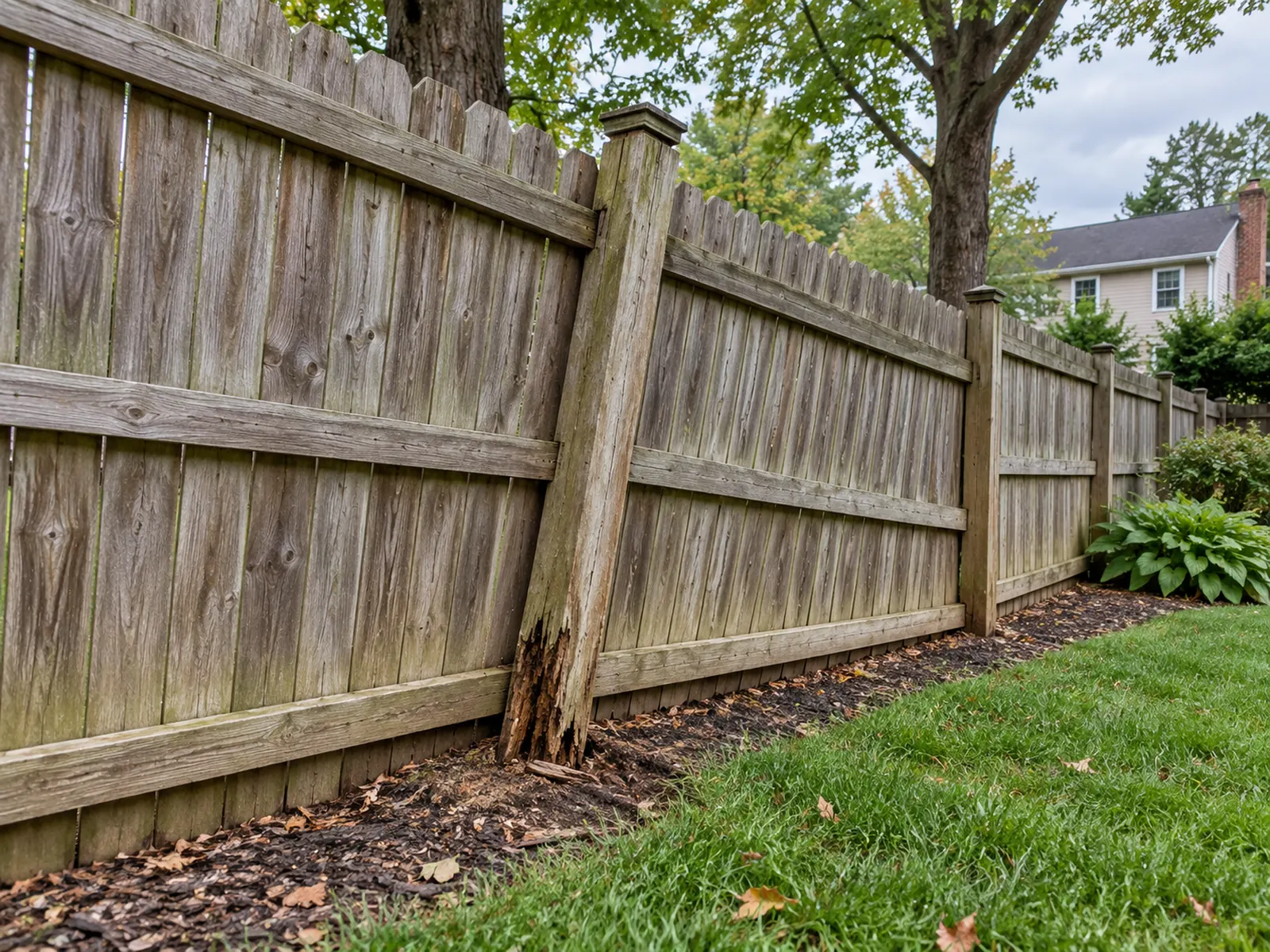
When posts are rotting down the whole run and every storm knocks another section loose, patching just buys time. The Fence Repair Guys of Crofton tear out the old fence, haul it away, and build a new one on your existing line in wood, white vinyl, black aluminum, or chain link.
- Crofton, Gambrills based
- Serving a 20-mile radius
- Wood · Vinyl · Aluminum · Chain link
How We Decide a Fence Is Past Repair
Fence repair is our specialty, and many fences can be fixed with a few posts, some rails, and a section of boards. But there is a point where another repair only buys a year or two. We decide where a fence stands by probing posts at grade and testing whether boards still hold a fastener, and we show you what we find.
Here is what we check on a walk-through:
- Widespread post rot. We push on posts down the line. If a good share of them move at the ground, the rot is not isolated.
- More than a fraction of posts failing. Swapping two or three posts on a long run is a repair. Swapping half of them means taking most of the fence apart anyway.
- Brittle gray boards everywhere. Wood that has gone silver, split, and soft along the bottom edge will not hold new fasteners.
- Repeated storm damage. If the same sections blow down every few years, the structure underneath is tired.
If only part of your fence is in that shape, The Fence Repair Guys of Crofton can repair the solid sections and replace only the worst runs.
Tear-Out and Haul-Off
Taking an old fence down is more work than most people expect, and doing it carelessly causes problems for the new fence. We pull boards and rails off in sections and stack them for removal. Then we deal with the posts. Old posts set in concrete come out with the footing attached, which can mean a chunk of concrete close to the size of a five-gallon bucket on each one.
Posts that snapped off at grade years ago are the tricky ones. The stub and footing are still in the ground, right where a new post might want to go. We either remove them or shift the new layout slightly so each new footing sits in firm, undisturbed soil instead of loose backfill.
Everything we take out gets hauled off. We fill the old holes, rake the line, and keep the work area tight so lawns, beds, and shrubs along the fence take as little damage as possible.
Not sure if it needs a repair or a replacement? We’ll look at it and tell you straight.
Call (240) 712-4826Keeping Your Fence Line and Gate Locations
Most replacement jobs follow the old fence line. That makes sense: the line usually matches the property boundary or a line your neighbors already accept, and your yard has been landscaped around it for years.
Following the old line does not mean dropping new posts into the old holes. Those holes are full of broken concrete and loose fill, and a post set in that will lean within a season or two. We lay out the new posts on the same line but offset the holes so each footing goes into solid ground.
Gates get the most attention. We keep openings in the same spots unless you want them moved. We also look at why the old gate failed. A gate that sagged because the hinge post was undersized or set too shallow will sag again if we copy it. On replacement, gate posts get set deeper and heavier than line posts, and openings are sized for what actually goes through them: a push mower, a wheelbarrow, trash cans, or a riding mower on bigger lots. If the gate is the main problem on a fence that is otherwise sound, The Fence Repair Guys of Crofton can usually fix the gate and leave the rest of the run alone.
Upgrading Materials When You Replace
Replacement is the best time to change materials, since the old fence is coming out anyway. These are the upgrades we see most:
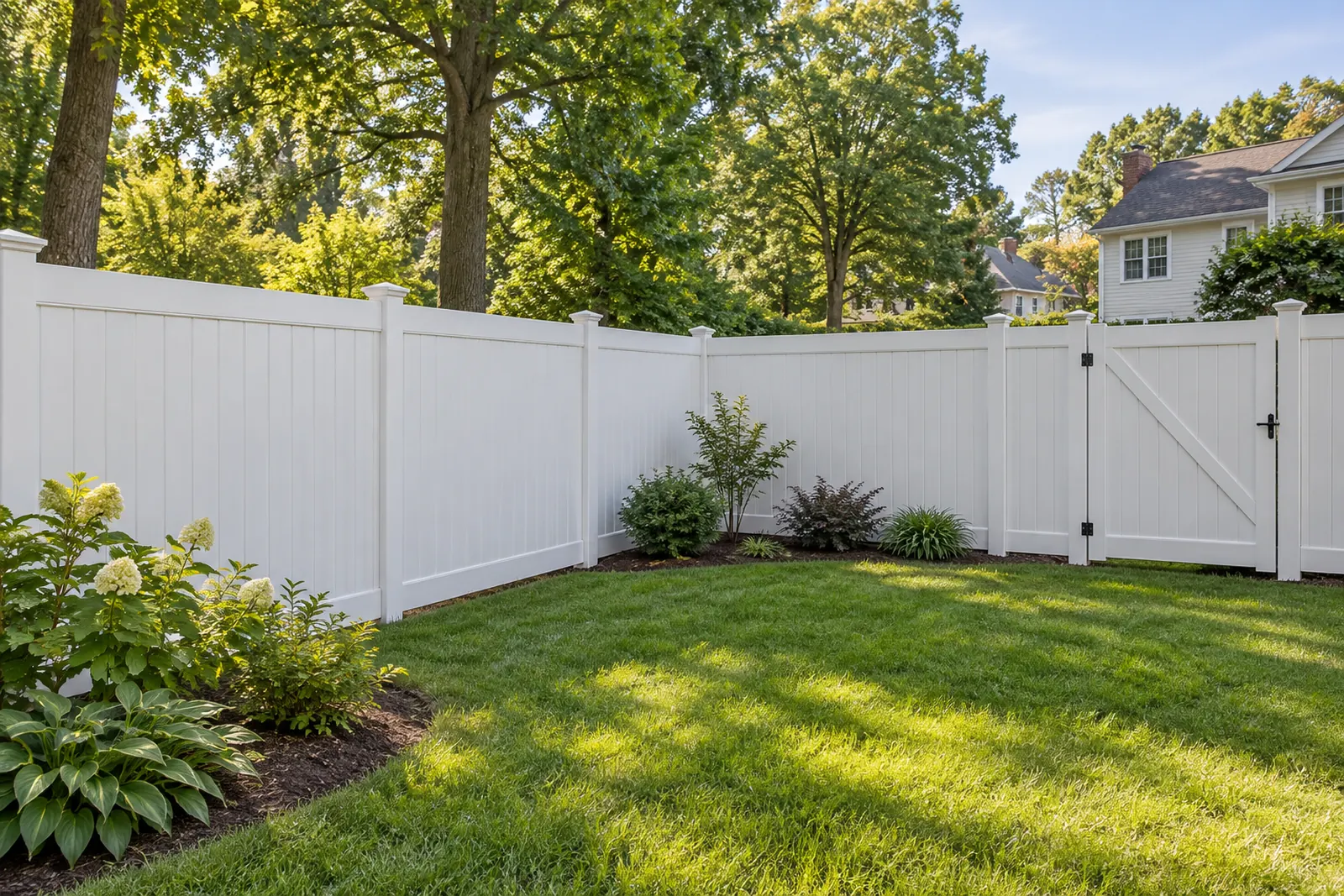
- Wood to white vinyl. Homeowners tired of staining and swapping boards often move to vinyl privacy. It does not rot, does not need paint or stain, and cleans up with a hose.
- Wood or chain link to black aluminum. Aluminum ornamental fencing works for front yards, pool areas, and backyards where you want a boundary without blocking the view.
- Chain link to privacy. Plenty of older homes came with chain link around the backyard. When it starts sagging and rusting, many owners switch to wood or vinyl privacy to get screening from neighbors and the road.
- Old wood to new wood. Staying with wood is a perfectly good choice. A new cedar or pressure-treated pine fence that gets stained once it has dried out holds its color longer, because the stain pigment blocks UV and the brushed-in finish slows water getting into the boards.
We walk through the upkeep each option needs and how it fits your yard. More detail on each material is on the new fence page from The Fence Repair Guys of Crofton.
HOA Approval in Anne Arundel and Prince George's Subdivisions
A large share of the neighborhoods we work in around Crofton, Gambrills, Odenton, and Bowie have a homeowners association, and many of those HOAs run an architectural review process. A fence replacement can need approval even when the new fence goes exactly where the old one stood. Changing material, color, height, or style almost always means a review.
A typical application asks for a drawing of the fence on your plat, the material, the height, the style, and sometimes a photo or product sheet. Some communities limit fencing in front yards, require the finished side to face out, or restrict colors. Approval can take a few weeks, so submit early.
We help by giving you the details committees usually ask for: material, height, style, and a layout drawn to match your plat. We confirm permit and HOA requirements for your address before work starts, and we do not dig until your approval is in hand. Building without approval can lead to a violation letter and a demand to change or remove the work, which is the last thing anyone wants on a brand-new fence. Planning the paperwork first keeps the project on track.
Property Lines, Surveys, and Miss Utility
Before a new fence goes in, two things need to be settled: where the property line is, and what is buried along it.
Confirming the property line is the homeowner's responsibility. We work from your plat or from survey markers, the metal pins set at the corners of your lot. If the markers are missing, or you and a neighbor disagree about where the line runs, a surveyor is the right person to settle it before we build. Replacing on the old line is usually simple, but if the old fence was never on the true line, replacement is your chance to correct it.
Before any post hole is dug, Miss Utility, Maryland's 811 call-before-you-dig service, needs to mark the public utility lines. Miss Utility does not mark private lines, so tell us about anything installed after the house was built: irrigation, landscape lighting, a power line to a shed, a propane line, or an invisible dog fence wire. We hand-dig carefully near anything that is marked.
The rest of what we do
Fence Repair
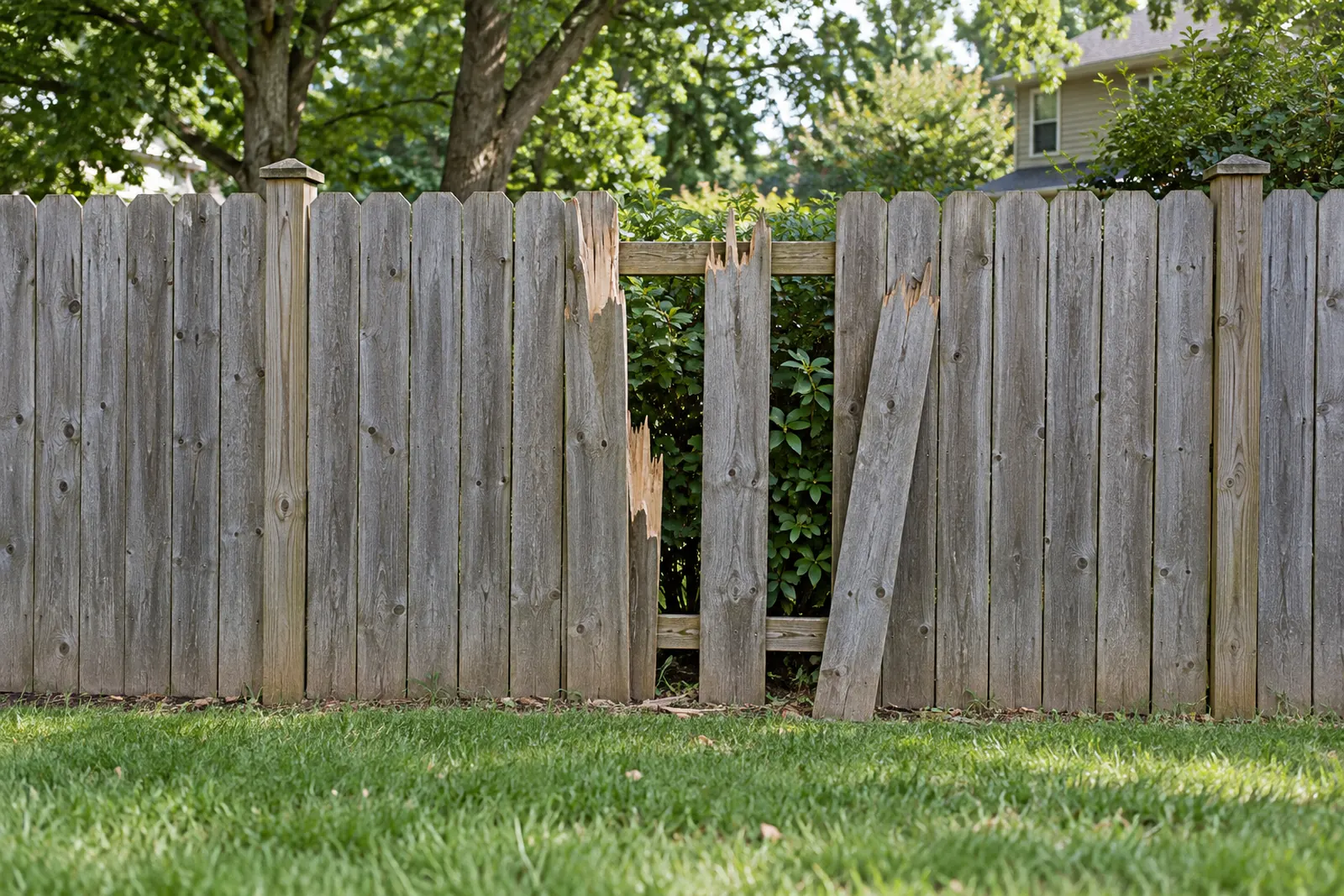
Rotted posts, leaning runs, broken pickets and rails, popped vinyl panels, sagging chain link. This is our main trade, on every fence material.
Fence Repair details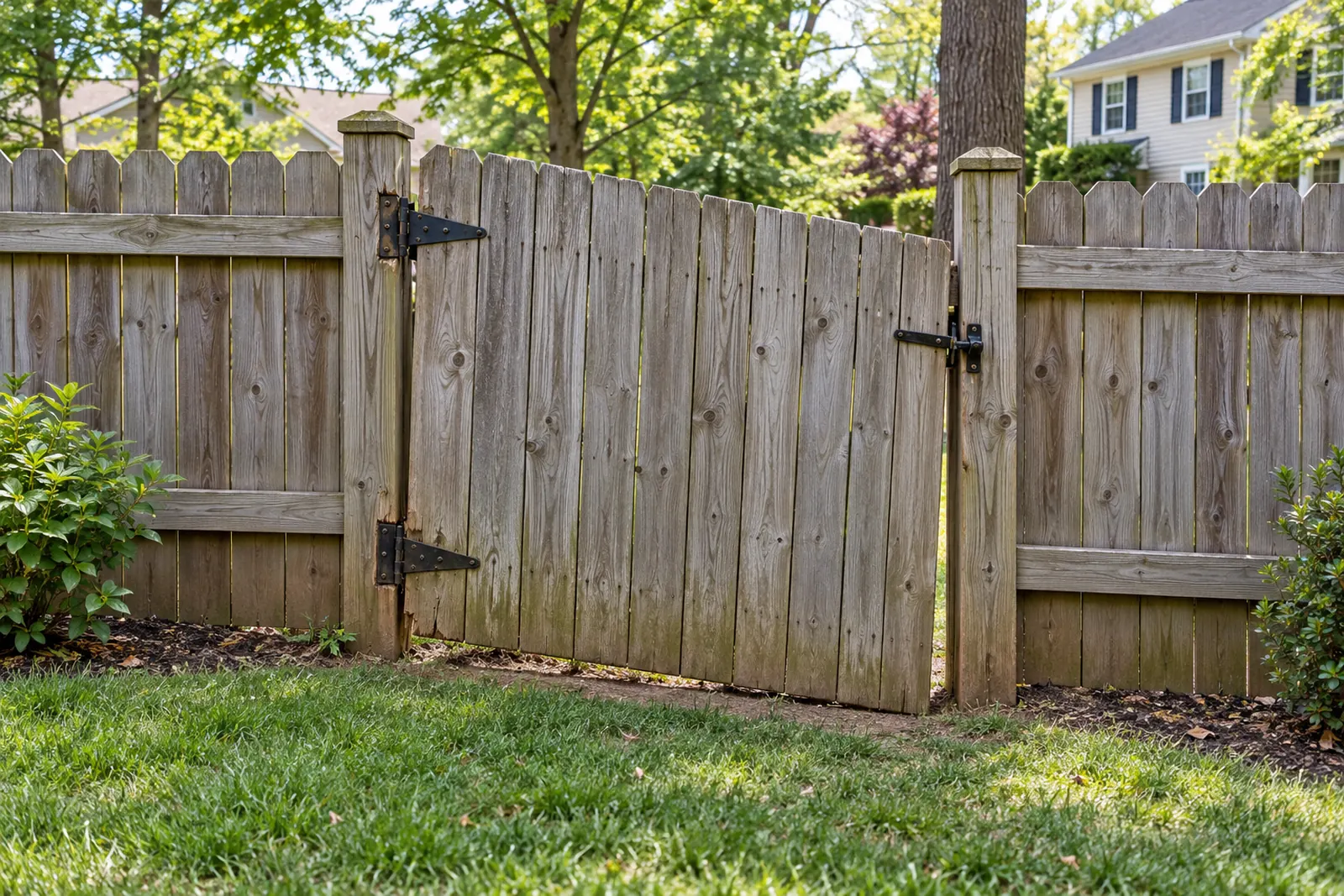
Gate Repair
Dragging, sagging, or won’t-latch gates rebuilt square, re-hung on the right hardware, and set to swing and close cleanly.
Gate Repair details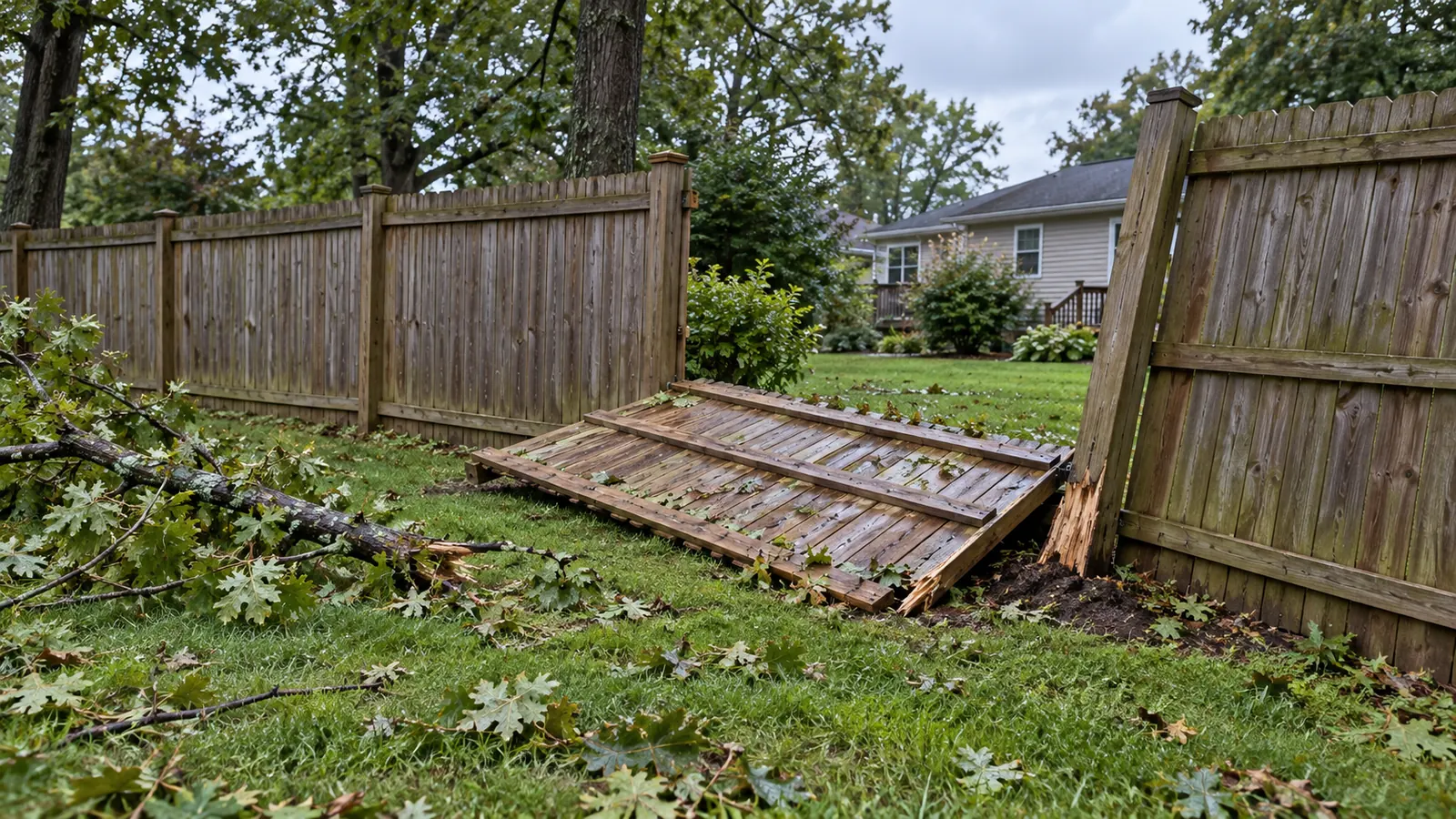
Storm Damage Repair
Wind and falling limbs flatten sections fast. We secure the yard, document the damage, and rebuild the run the right way.
Storm Damage Repair details
Fence Installation
Wood privacy, white vinyl, black aluminum, and galvanized chain link, laid out right and set deep with drainage under every post.
Fence Installation details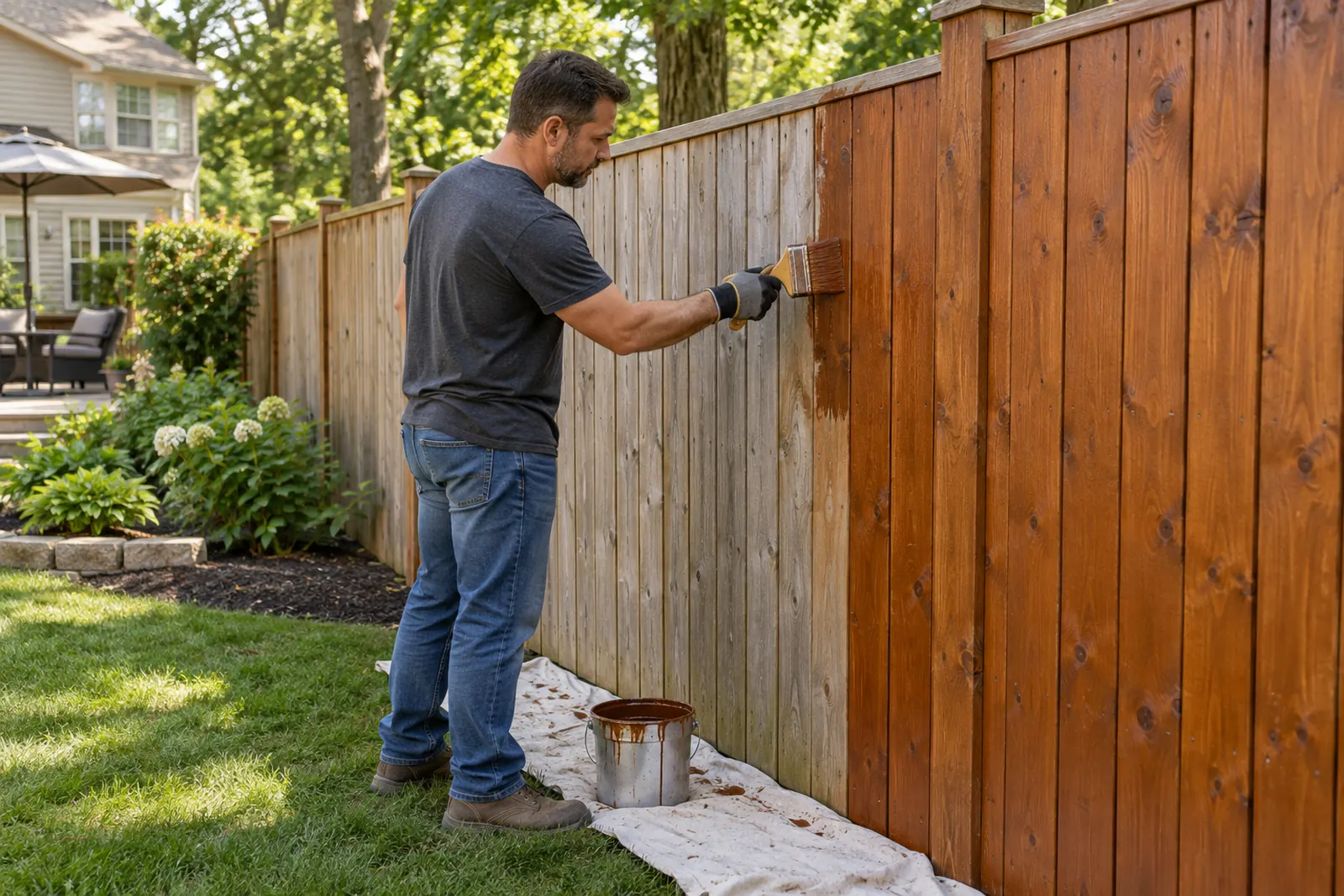
Fence Staining
Cleaning, brightening, and penetrating stain that stops graying and mildew and blends repaired boards into the old fence.
Fence Staining detailsFence Replacement questions, answered
How do I know if my fence needs to be replaced or just repaired?
Your fence needs replacement rather than repair when most of the posts move at the ground, the boards are too soft or split to hold new fasteners, or the same sections keep failing storm after storm. Start by pushing on each post down the line. One or two that wobble is a repair; most of them moving means the posts are failing as a group. Then check the bottom edges of the boards. Gray, split wood that crumbles there will not hold a nail or screw, so fixing one section just moves the problem. We walk the fence with you, probe posts at grade, and show you which ones are soft so the decision rests on what you can see.
Can you replace just part of my fence instead of the whole thing?
Yes, we can replace just part of your fence, and partial replacement is common on long fences where one run takes more shade, water or wind than the others. A back run along a wooded edge in Crofton or Gambrills is often rotted out while the side runs near the house are still sound. In that case we tear out and rebuild the bad run and repair what is left. Plan for appearance: new wood beside old wood looks different at first, and cleaning and staining the whole fence afterward ties it together. If you are switching materials on one run, we make the transition at a corner or gate post so it looks planned rather than patched.
Do you take away the old fence when you replace it?
Yes, tear-out and haul-off of the old fence are part of every fence replacement we do. We remove the boards, rails, pickets, hardware and posts, including the concrete footings that come up attached, and take all of it with us. Old pressure-treated lumber and concrete chunks are heavy, and most curbside trash pickup will not take them, so this is a real part of the job. After the posts are out, we fill the old holes and rake the line so the yard is ready for the new fence. Where an old footing sits right where a new post needs to go, we dig it out or shift the new hole into firm soil.
Can the new fence go in the same spot as my old fence?
Yes, a new fence can go on the same line as your old fence, and most homeowners choose that because the old line usually follows the property boundary and the beds and lawn are shaped around it. We keep the same line and gate locations unless you ask for changes. What we do not do is reuse the old post holes. They are full of broken concrete and loose fill, and a post set there will lean within a season or two. We offset each hole slightly along the line so every footing sits in undisturbed soil. If you doubt the old fence was ever on your property line, check your plat or survey pins before we start.
Do I need HOA approval to replace my fence with the same kind of fence?
Often, yes: many HOAs around Crofton, Gambrills, Odenton and Bowie require architectural approval to replace a fence even when the new one matches the old one exactly. Rules vary by community, so check your covenants or call your management company before scheduling. If you are changing material, color, height or style, plan on submitting an application. Most ask for a plat drawing of the fence line plus the material, height and style, and we can give you those details in writing to attach. We confirm permit and HOA requirements for your address before work starts and wait for your approval letter before digging. Submit early, since some committees meet only monthly.
Who is responsible for figuring out where my property line is?
The homeowner is responsible for confirming where the property line is before a fence replacement, not the fence contractor. We are fence builders, not surveyors, so we build from what you provide: your plat, a survey, or the metal pins at your lot corners. If you know where the pins are, we stretch a string line between them and set posts to it. If the pins are missing or buried and nobody is sure where the line runs, hire a surveyor to mark it first, especially when a neighbor is involved or the old fence wandered. Many owners set the new fence a few inches inside the line to avoid ownership questions and leave room to maintain the outside face.
Can I switch from a wood fence to vinyl or aluminum when I replace it?
Yes, you can switch from a wood fence to white vinyl or black aluminum when you replace it, and replacement is the natural time because the old fence is coming out anyway. Wood to vinyl privacy is the most common switch, usually from owners done with staining and swapping boards. Wood or chain link to black aluminum is popular around pools and front yards where people want a boundary without losing the view. Most HOAs treat a material change as a new application, so get approval first. Vinyl and aluminum come in set panel widths, so post spacing changes from the old wood layout, and we plan it around your corners and gate openings so the panels fit cleanly.
Do you call Miss Utility before digging new post holes?
Yes, we have Miss Utility, Maryland's 811 service, mark the public utility lines before we dig any post holes for a replacement fence. That covers buried gas, electric, water, phone and cable lines, which commonly run along back and side property lines in Anne Arundel and Prince George's subdivisions. Marking is free and required before digging. Miss Utility does not mark private lines, meaning anything added after the utilities went in: sprinkler lines, landscape lighting, a power feed to a shed or detached garage, a propane line, or an invisible pet fence wire. Point those out before work starts. Where marks run close to the fence line, we hand-dig and adjust post spacing to stay clear.
Can you make my gate opening wider when you replace the fence?
Yes, we can widen a gate opening when we replace your fence, and replacement is the easiest time to do it because the posts are being reset anyway. Many older backyard gates in Crofton and Gambrills were sized for foot traffic, and owners later find they cannot fit a riding mower, a loaded wheelbarrow or a shed delivery through them. Measure the widest thing that needs to pass and add a few inches of clearance. A wider single gate puts more weight on the hinge post, so we set gate posts deeper and heavier than line posts and add a diagonal brace to the gate. For openings too wide for one leaf, a double gate with a drop rod splits the load between two posts.
Will a fence replacement tear up my lawn and flower beds?
A fence replacement disturbs only a narrow strip along the fence line, and we keep the work area tight so lawns, beds and shrubs beside it take as little damage as we can manage. Expect some trampled grass along the line, soil from the post holes, and tracks where old posts and concrete are carried out. We stack old boards in one spot, carry footings out rather than dragging them across the lawn, fill the old holes, and rake the line when we finish. Before work starts, trim back plants growing into the fence and move pots, furniture and decorations off the line. Flag sprinkler heads and low-voltage lighting so we can work around them.
The Fence Repair Guys of Crofton
2390 Brandermill Blvd, Gambrills, MD 21054 · (240) 712-4826. Open in Google Maps →
Fence leaning, broken, or down? Let’s get it standing straight.
Call or send a request and we’ll set up a time to look at the fence in person, figure out what actually failed, and tell you straight whether it needs a repair, a rebuild of one section, or a full replacement.
(240) 712-4826 The Fence Repair Guys of Crofton2390 Brandermill Blvd, Gambrills, MD 21054
Serving Crofton, Gambrills, and a 20-mile radius