
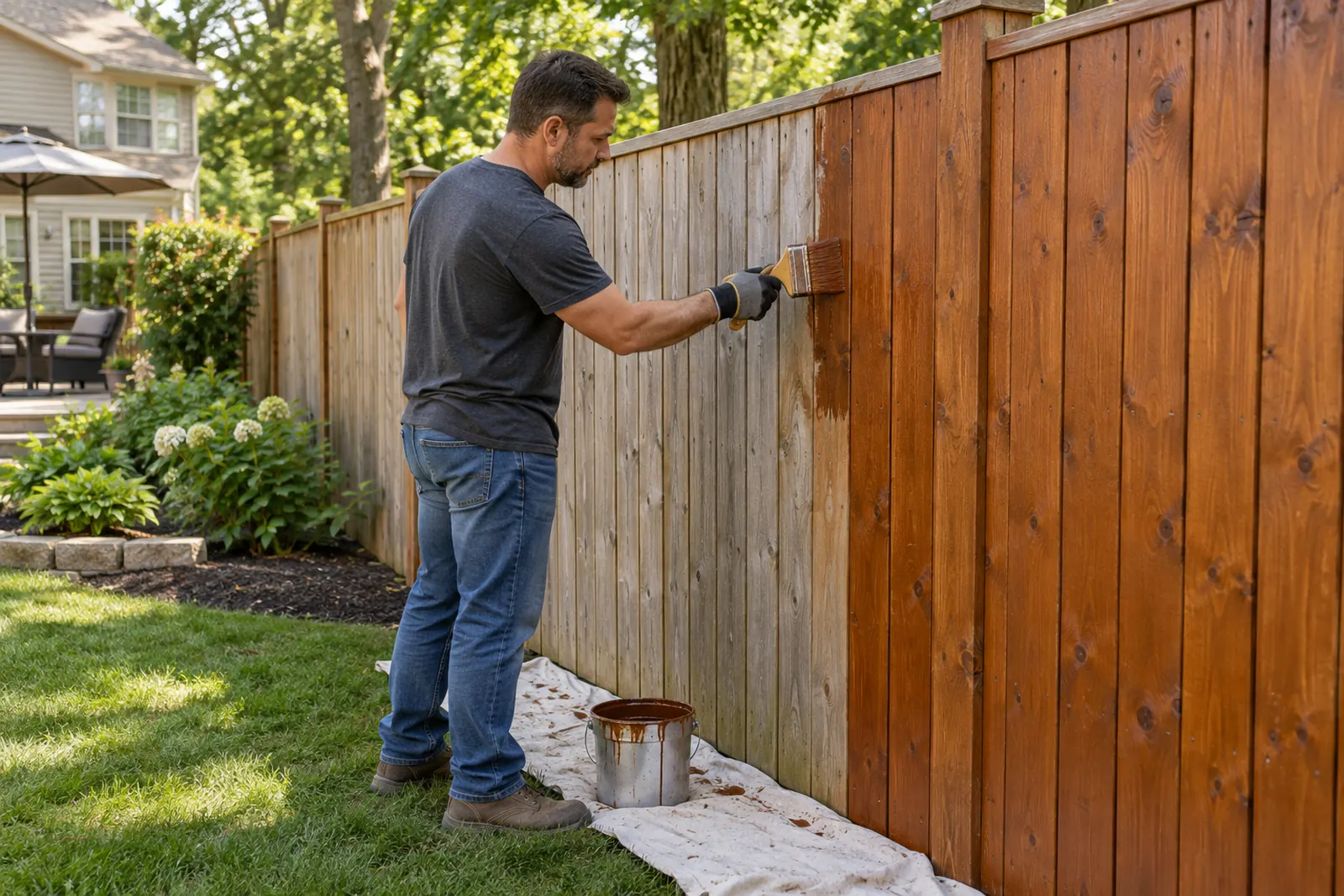
Fence Staining That Actually Soaks In
Sun, humidity, and shade wear a wood fence down faster than most people think. We clean the wood, let it dry, and work a penetrating stain into both sides so your cedar or pressure-treated fence sheds water, and the pigment slows the UV graying that bare wood shows within a season.
- Crofton, Gambrills based
- Serving a 20-mile radius
- Wood · Vinyl · Aluminum · Chain link
Why Wood Fences in Maryland Need Stain
Bare wood does not last long outdoors here. Three things work on it at once.
- UV graying. Sunlight breaks down the surface fibers of the wood. The gray layer is weak, loose wood that sheds water poorly and lets the next layer start breaking down too.
- Moisture cycling. Maryland gets humid summers, heavy rain, and freeze-thaw winters. Bare boards soak up water, swell, dry out, and shrink, over and over. That cycling causes the cracks, splits, cupped boards, and popped nails we see on fences everywhere.
- Mildew and mold. Fences along wooded lot lines, under big oaks, or on the north side of a house stay damp for days after a rain. Shaded, humid yards grow black and green mildew on the wood, and damp wood rots faster at the bottom of the boards and around the posts.
A good penetrating stain slows all three. It adds pigment that blocks UV, it repels water so the wood does not swell and shrink as hard, and it gives mildew less to grab onto. If your boards are already rotted through or your posts are leaning, The Fence Repair Guys of Crofton handles the repairs first, and then the stain protects the finished job.
Cleaning and Brightening Before Stain
Stain is only as good as the surface under it. Brushing stain over a gray, dirty, mildewed fence locks the problem in, and the stain will peel or fade unevenly within a year or two.
So we start with cleaning. A wood cleaner breaks up the dirt, mildew, and that gray layer of sun-damaged fibers. Then we rinse it off with a controlled amount of water pressure. The goal is to lift the dead surface off, not to blast grooves into the wood. Too much pressure raises the grain and leaves fuzzy, splintered boards that soak up stain unevenly.
After cleaning, a wood brightener restores the wood's natural color and evens out dark spots like water stains and tannin marks.
Then the fence has to dry. Wood that is wet inside will not let stain penetrate, and the stain sits on top where it peels. In normal weather that means waiting a couple of dry days after cleaning before we stain. If rain moves in, we wait longer. Rushing this step is the most common reason a stain job fails early.
Not sure if it needs a repair or a replacement? We’ll look at it and tell you straight.
Call (240) 712-4826New Pressure-Treated Wood Has to Dry First
Pressure-treated pine leaves the lumberyard soaked with the treatment, and the boards are often wet to the touch. If you stain right away, the stain cannot soak in. It sits on the surface, looks blotchy, and peels.
New pressure-treated wood needs time to dry out. How long depends on the weather, how much sun the fence gets, and how wet the lumber was to start. Many fences need a few months, and some along shaded lot lines take longer.
You can test it yourself. Sprinkle some water on a few boards in different spots, including a shady section. If the water beads up and sits there, the wood is still too wet or still has mill glaze on it. If it soaks in within a few minutes, the wood is ready for stain.
Cedar is different. It does not come soaked with treatment, so it can usually be stained much sooner. A light cleaning first helps remove mill glaze so the stain can bite. When The Fence Repair Guys of Crofton builds a new wood fence, we tell you when to expect it to be ready and can schedule the stain then.
Choosing a Stain: Transparent, Semi-Transparent, or Solid
Stains are sorted by how much pigment they carry. More pigment means more UV protection and more color, but it also hides more of the wood grain.
- Transparent or clear. Very little pigment. Shows all the grain, especially on nice cedar. Offers the least UV protection, so it fades soonest and needs the most frequent recoating.
- Semi-transparent. The most common choice for fences, and the one we recommend most. Enough pigment to block a good share of UV and even out color, while the grain still shows through. It soaks into the wood rather than forming a film, so it wears away gradually instead of peeling.
- Solid. Heavy pigment, closer to paint in look. Covers mismatched or older wood well and gives the most UV protection. The catch is that solid stain forms more of a film on the surface, so when it wears it can peel, and future recoats usually have to stay solid.
Oil-based vs water-based. Oil-based stains generally penetrate deeper into the wood and wear off gradually, which makes recoating easier. Water-based stains dry faster, clean up with water, and hold color well. Product formulas vary a lot, so we pick the product based on the wood, how weathered it is, what is already on the fence, and how you want it to look.
Back-Brushing, Both Sides, and Timing
Application is where most stain jobs fall short. Spraying stain on a fence is fast, but spray alone often leaves a thin coat on top that never gets worked into the wood, along with runs, drips, and missed gaps between boards.
We back-brush. Stain goes on, then we work it into the wood with a brush, pushing it into the grain, the end cuts, the checks and cracks, and the gaps between boards. That brushing is what gets real penetration, and penetration is what makes stain last.
We stain both sides of the fence whenever we can get access. A fence stained on one side still soaks up water from the other. That keeps it cycling wet and dry, which leads to cupping, warping, and mildew on the unstained face.
Timing matters as much as technique. We stain when the wood has been dry for a few days, no rain is expected for at least a day after, and temperatures are moderate. We avoid direct midday sun, where stain flashes off the surface before it soaks in, so we follow the shade around the yard. Spring and fall are usually the best seasons here. As for recoating, transparent stains need it most often, semi-transparent lasts longer, and solid lasts longest. When water stops beading on the boards and the color looks washed out, it is time.
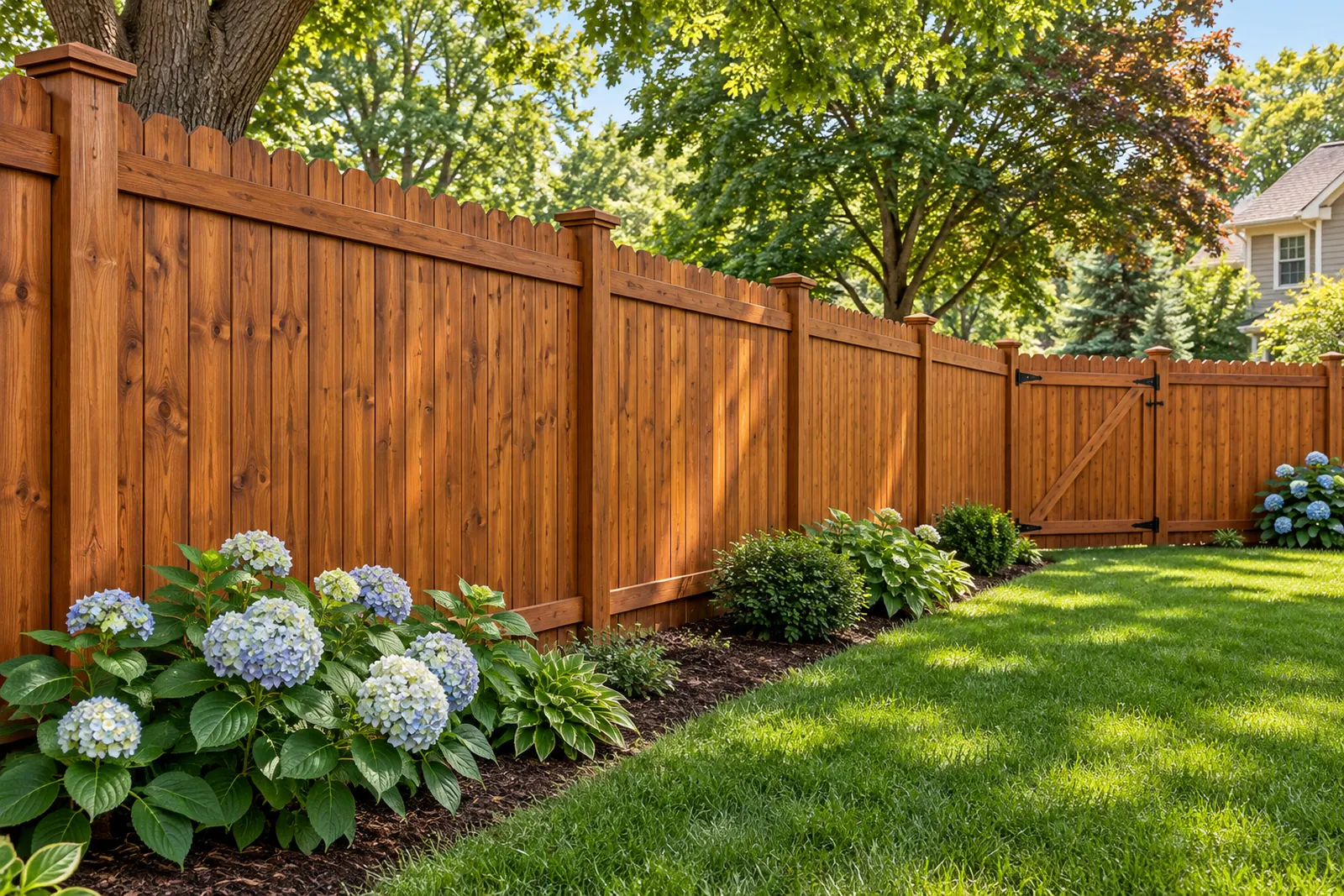
Staining After Repairs to Blend New Boards
Fence repair is our specialty, and after a repair the new boards stick out. Fresh cedar or pressure-treated wood is bright tan or greenish, right next to old boards that have gone gray or a faded brown. It looks like a patch because it is one.
Staining fixes that. After a repair, we clean and brighten the whole fence so the old boards lose their gray layer, give the new wood time to dry if needed, and then stain the whole thing. A semi-transparent or solid stain in the right color evens out the difference between old and new.
This pairing makes sense on fences that were starting to gray anyway, because the cleaning step that blends the new boards also strips the weak gray layer off the old ones. The before and after photos from our Gambrills work show exactly this: a weathered, leaning privacy fence with holes, repaired and stained a warm honey-brown. The Fence Repair Guys of Crofton does that kind of repair and stain combination throughout the area.
The rest of what we do
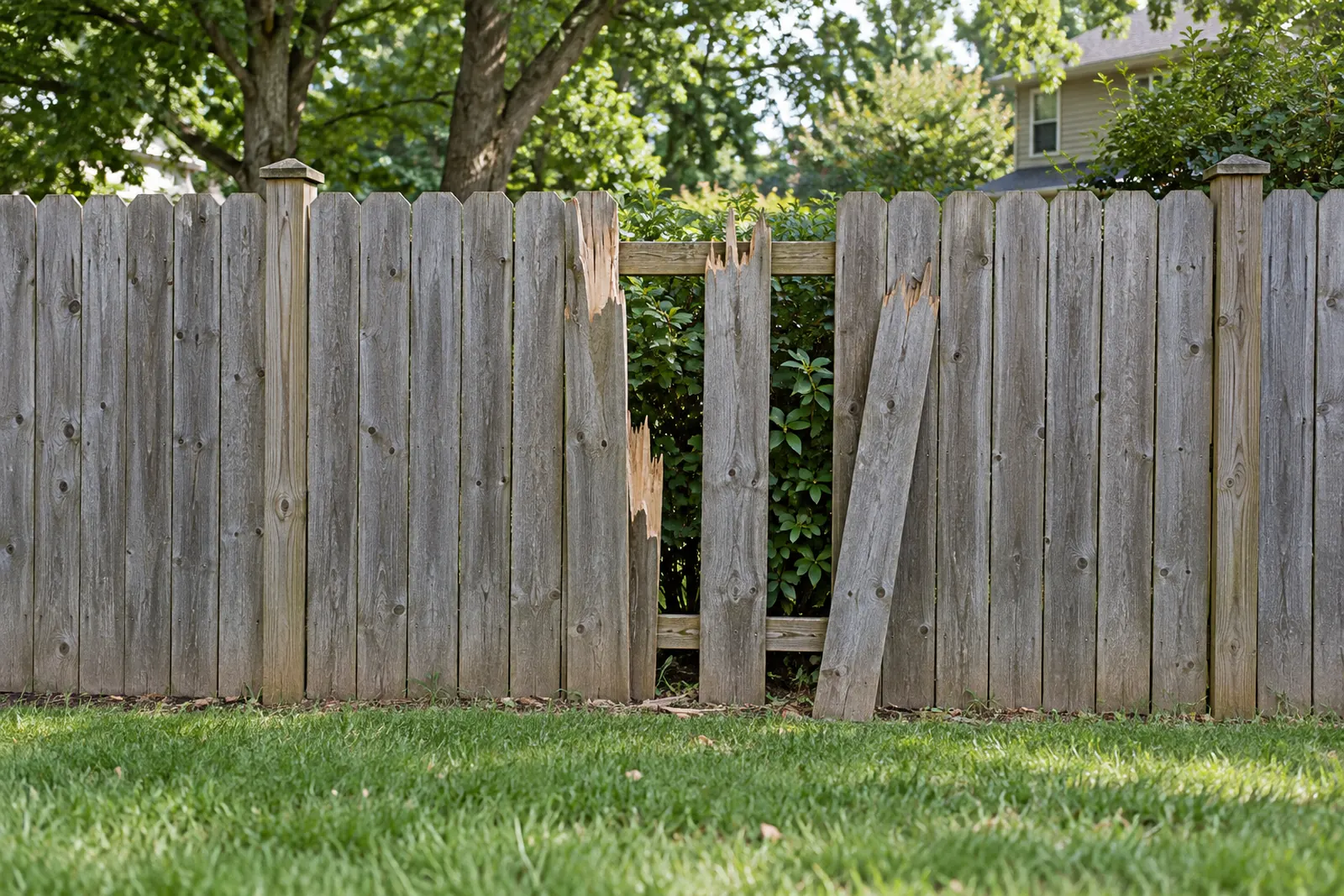
Fence Repair
Rotted posts, leaning runs, broken pickets and rails, popped vinyl panels, sagging chain link. This is our main trade, on every fence material.
Fence Repair details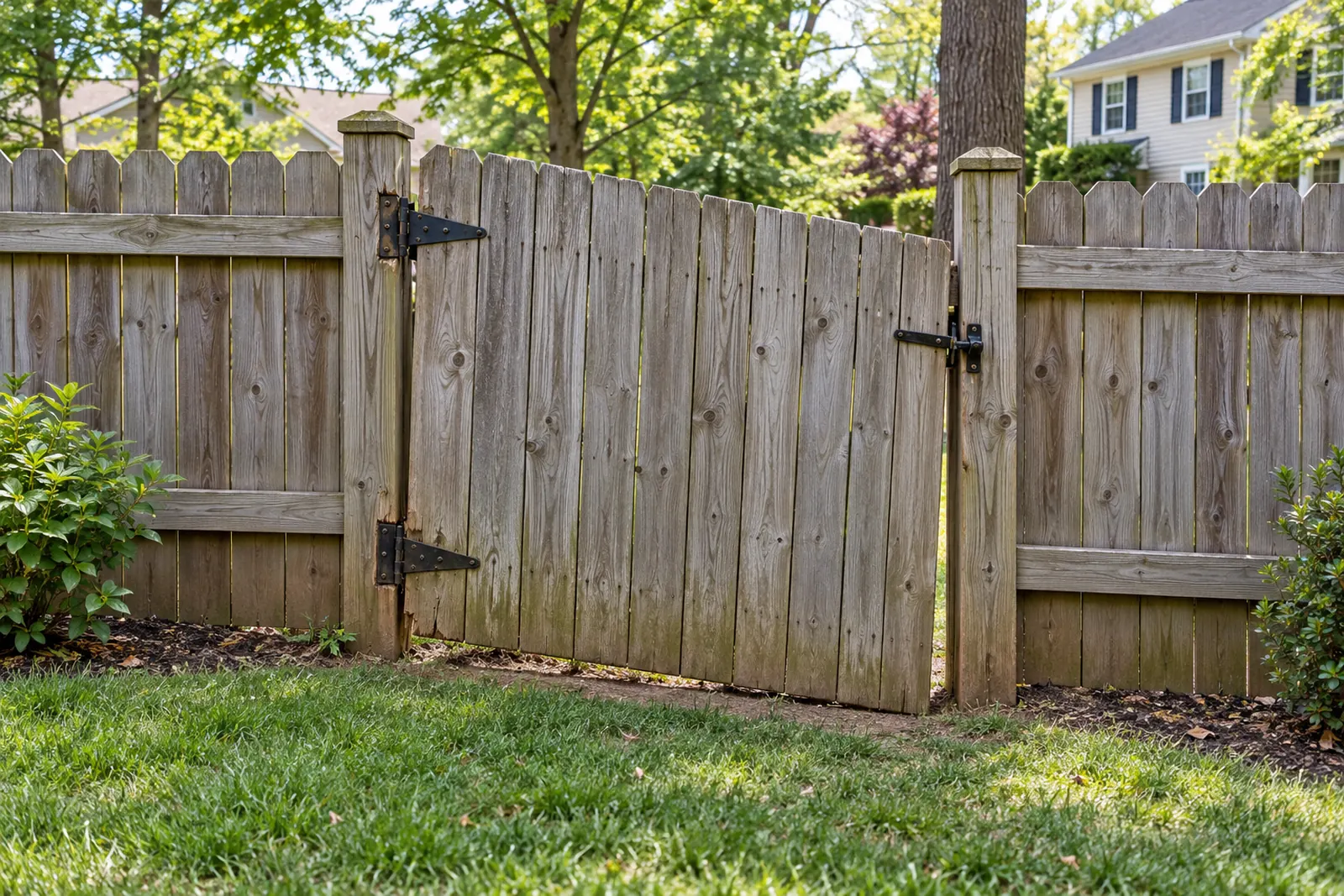
Gate Repair
Dragging, sagging, or won’t-latch gates rebuilt square, re-hung on the right hardware, and set to swing and close cleanly.
Gate Repair details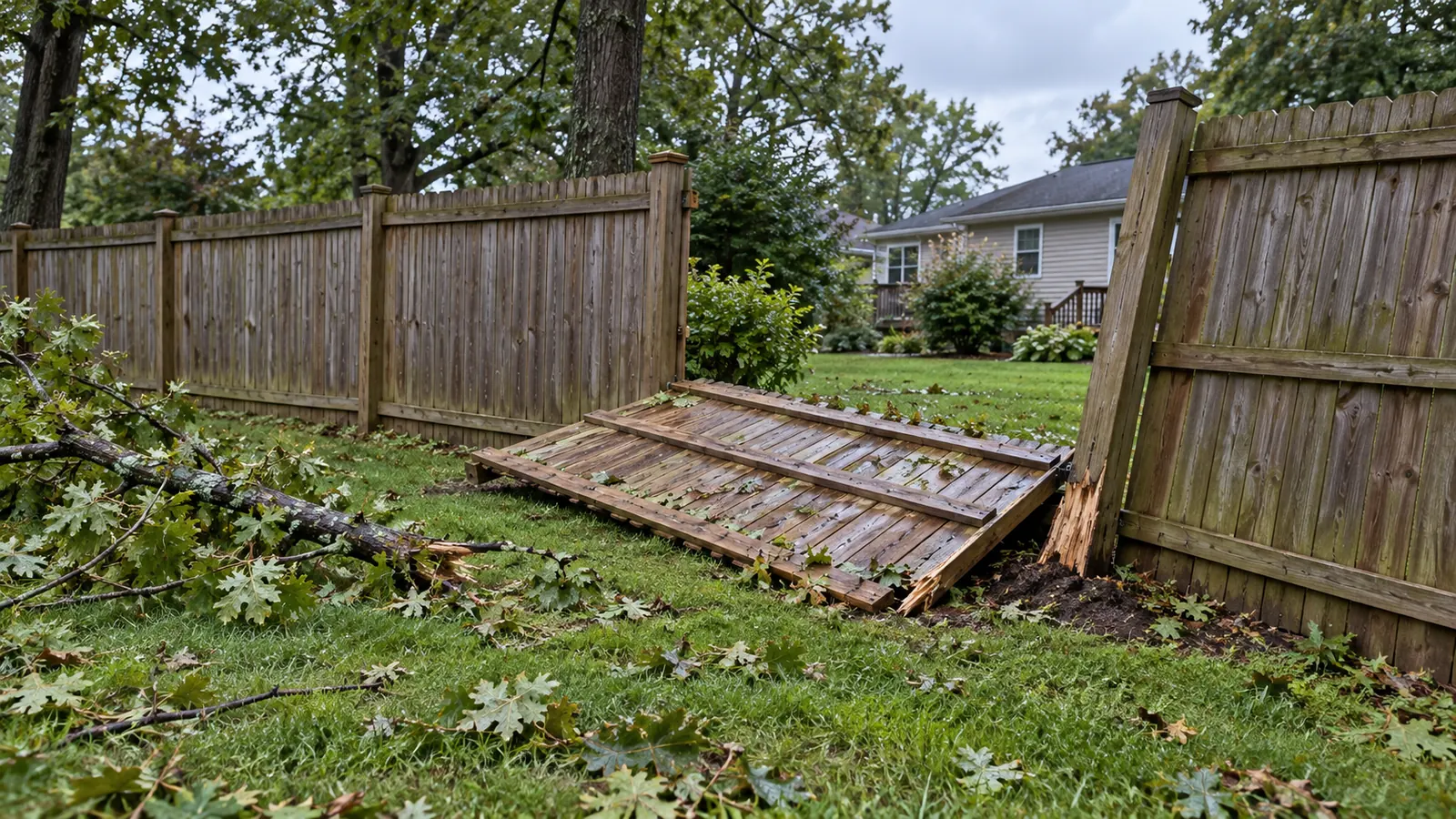
Storm Damage Repair
Wind and falling limbs flatten sections fast. We secure the yard, document the damage, and rebuild the run the right way.
Storm Damage Repair details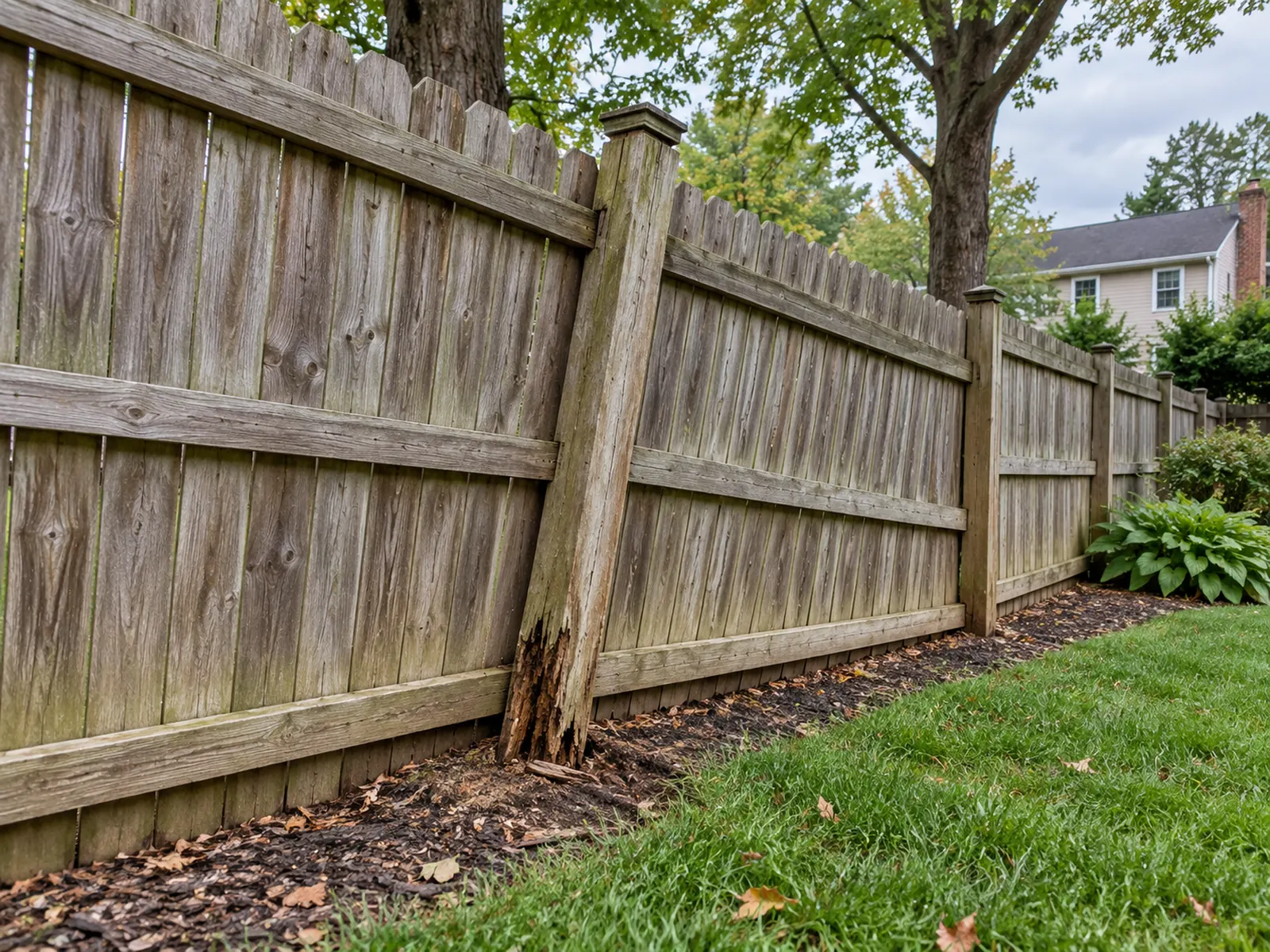
Fence Replacement
When a fence is past saving, we tear it out, haul it off, and set a new one on the same line, or a better one.
Fence Replacement details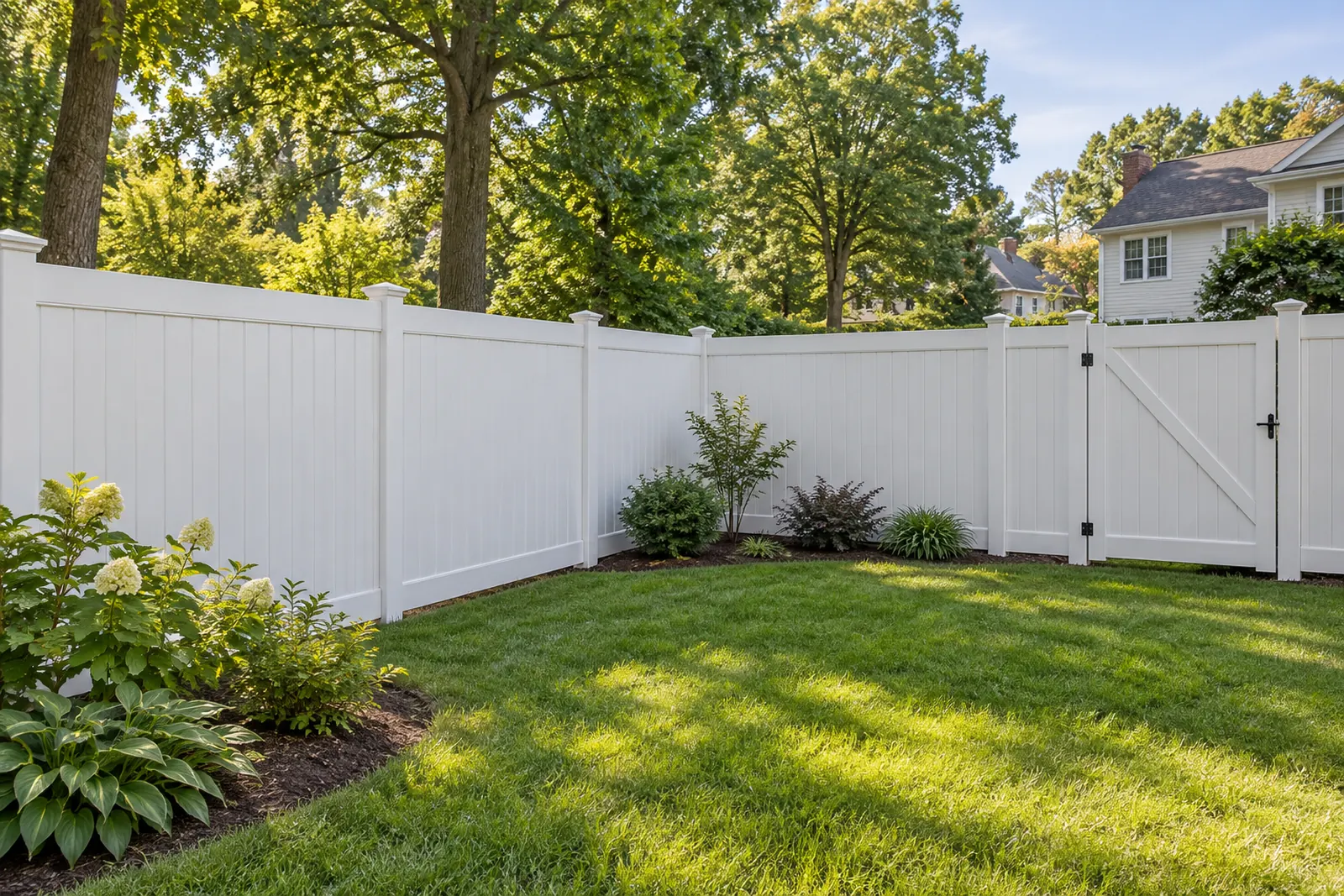
Fence Installation
Wood privacy, white vinyl, black aluminum, and galvanized chain link, laid out right and set deep with drainage under every post.
Fence Installation detailsFence Staining questions, answered
How often should I stain my wood fence?
A wood fence needs restaining whenever water stops beading on the boards and the color looks washed out, which comes soonest with transparent stain, later with semi-transparent, and latest with solid stain. Sun exposure changes the schedule too: a fence side facing full afternoon sun fades faster than a side under shade trees, so two faces of one fence can wear at different rates. Rather than going by the calendar, sprinkle water on the boards each spring. If it beads, the stain is still working. If it soaks in, recoat. Recoating while some stain remains is easier and gives a more even result than waiting until the fence goes gray and needs heavy cleaning.
How long should I wait to stain a new pressure-treated fence?
A new pressure-treated fence should wait to be stained until the wood has dried out, which often takes a few months in Maryland's climate and longer along shady lot lines. New pressure-treated pine is wet from the treatment process, so stain applied too soon cannot soak in; it sits on top, looks blotchy, and peels. Test it by sprinkling water on boards in a few spots, including a shaded section. If the water beads up, wait. If it soaks in within a few minutes, the wood is ready. Cedar does not come soaked and can usually be stained much sooner after a light cleaning. Do not wait too long, because a fully gray fence needs more cleaning first.
Should I use a transparent, semi-transparent, or solid stain?
Semi-transparent stain is the right choice for most wood fences, because it carries enough pigment to block much of the UV and even out color while the grain still shows. It soaks into the wood rather than forming a film, so it wears away gradually and recoats without stripping. Transparent stain shows off good cedar but fades fastest and needs recoating most often. Solid stain looks closer to paint, hides mismatched or older wood, and gives the most UV protection, but it forms more of a surface film that can peel, and once a fence goes solid it generally stays solid. For a fence with new and old boards after repairs, semi-transparent or solid blends them better.
Do you stain both sides of the fence?
Yes, we stain both sides of the fence whenever we can get access, because a fence stained on one side still soaks up water through the unstained face. Those boards keep swelling and shrinking, which leads to cupping, warping and mildew, and the stained side wears faster as a result. If the outside faces a neighbor's yard, we talk with you about asking for access. If it faces a wooded strip or common area, we still need a walkable path along the fence to reach it. When only one side is possible, the side we can reach gets a full, brushed-in coat, including the posts, rail tops and end grain, where water enters first.
Is it better to spray or brush stain on a fence?
Brushing stain into a fence, or spraying it on and then back-brushing, gets more stain into the wood than spraying alone. A sprayer is fast, but by itself it tends to leave a thin layer sitting on the surface, plus runs, drips and missed spots in the gaps between boards and around rails. When we back-brush, the brush pushes stain into the grain, the end cuts, and the small checks and cracks where water gets in. Penetration is what lets stain wear away gradually instead of peeling, so the time spent brushing shows up later as an even fade rather than flaking patches. Brushing is slower than spraying and walking away, but it decides how long the coat lasts.
Can you get rid of the black mildew on my fence before staining?
Yes, black and green mildew comes off a fence with a wood cleaner and a controlled rinse, and we remove it before any stain goes on. Mildew is common on fences in shaded, humid Maryland yards, especially along wooded lot lines, under big trees and on the north side of houses. After cleaning, a brightener evens out the color. Staining over mildew traps the growth under the finish and the fence looks dirty again quickly. The wood then needs to dry before staining. Afterward, stain helps the boards shed water so they dry faster after rain, and trimming shrubs and branches off the fence lets air move and slows regrowth.
When is the best time of year to stain a fence in Maryland?
Spring and fall are the best times of year to stain a fence in Maryland, because they bring mild temperatures, lower humidity and longer stretches of dry weather. Summer works if the job is scheduled around afternoon thunderstorms and sections in direct midday sun are skipped, since heat makes stain flash dry on the surface instead of soaking in. Winter is generally too cold for stain to cure well. More than the season, the forecast decides it: the wood should be dry for a few days beforehand, and no rain should be expected for at least a day after. When weather moves in, we reschedule instead of staining wet wood.
Can you stain my fence after you repair it so the new boards match?
Yes, staining a fence after a repair is how we make new boards match the old ones, and the two jobs are often done together. Fresh cedar or pressure-treated boards stand out bright tan or green next to weathered gray. We clean and brighten the whole fence so the old wood loses its gray layer, let any new pressure-treated boards dry until they pass the water bead test, and then stain the entire fence. A semi-transparent or solid stain evens out the color difference so it reads as one fence again. With new cedar boards the wait is usually short; with pressure-treated pine we may finish the repair now and return to stain later.
Should I stain or paint my wood fence?
Stain is usually the better finish for a wood fence than paint, because stain soaks into the wood and wears away gradually, while paint forms a film that cracks and peels as the boards swell and shrink. Fence boards move a lot outdoors in Maryland's humid summers and freeze-thaw winters, and they take on water through both faces and the end grain, so moisture works under a paint film and lifts it. Once a painted fence starts peeling, the loose paint has to be scraped before it can be redone. A penetrating stain only needs cleaning and a fresh coat. If you want an opaque, painted look, a solid stain gets close while staying easier to recoat.
Can you restain a fence that has old peeling stain on it?
Yes, a fence with old peeling stain can be restained, but the loose, flaking finish has to come off first or the new coat will peel right along with it. Peeling usually means a film-forming product, such as solid stain or paint, or stain applied over wet or dirty wood. We remove the failing layer by cleaning, using a stain stripper where needed, then rinse and let the wood dry. Then we pick the new product based on what is still on the wood: a fence that had solid stain usually stays solid, while one that had a penetrating stain can often go back to semi-transparent. Sound, faded stain only needs cleaning before recoating.
The Fence Repair Guys of Crofton
2390 Brandermill Blvd, Gambrills, MD 21054 · (240) 712-4826. Open in Google Maps →
Fence leaning, broken, or down? Let’s get it standing straight.
Call or send a request and we’ll set up a time to look at the fence in person, figure out what actually failed, and tell you straight whether it needs a repair, a rebuild of one section, or a full replacement.
(240) 712-4826 The Fence Repair Guys of Crofton2390 Brandermill Blvd, Gambrills, MD 21054
Serving Crofton, Gambrills, and a 20-mile radius